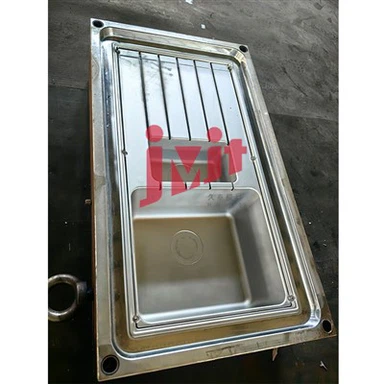
Melamine Dinnerware Mold
Melamine dinnerware, with its core advantages of being shatter-resistant, heat-resistant, and easy to clean, is widely used in various scenarios such as restaurants, schools, and canteens. As the core equipment for the production of melamine dinnerware, the melamine dinnerware mold directly...
- Fast Delievery
- Quality Assurance
- 24/7 Customer Service
Product Introduction
Melamine dinnerware, with its core advantages of being shatter-resistant, heat-resistant, and easy to clean, is widely used in various scenarios such as restaurants, schools, and canteens. As the core equipment for the production of melamine dinnerware, the melamine dinnerware mold directly determines the forming quality, production efficiency, and service life of the dinnerware. This article will provide a systematic and comprehensive analysis of the melamine dinnerware mold from the dimensions of basic understanding, core structure, key technologies, material selection requirements, production process, and maintenance and care. https://www.jiutaimould.net/
I. Basic Understanding of Melamine Dinnerware Molds
The melamine dinnerware mold is a specialized mold used for the forming of melamine resin (melamine formaldehyde resin). Through the combined action of high temperature and high pressure, melamine resin powder is pressed into the preset shape of the dinnerware. The core working principle is based on the thermosetting property of melamine
resin - at a specific temperature (usually 150-180℃) and pressure (usually 15-30MPa), melamine resin powder undergoes cross-linking reactions and solidifies, and the mold provides the precise forming space and necessary heat transfer channels.
Compared with ordinary plastic molds, melamine dinnerware molds have three significant characteristics: first, they need to withstand higher temperatures and pressures, with strict requirements for the mold's strength and heat resistance; second, the surface accuracy of the mold cavity directly determines the smoothness and gloss of the dinnerware, with strict control over processing accuracy; third, considering the curing characteristics of melamine resin and the demolding requirements, the mold must be designed with reasonable exhaust structures and demolding mechanisms to effectively avoid problems such as air bubbles, material deficiency, or demolding damage in the dinnerware.

II. Core Structure of Melamine Dinnerware Molds
The structural design of melamine dinnerware molds is the key to forming quality and production efficiency. Its core structure mainly includes the following four key parts:
1. Cavity and Core
The cavity and core are the core forming components of the mold, jointly constituting the forming space of the melamine dinnerware. The cavity usually shapes the outer surface of the dinnerware, while the core forms the inner surface. The dimensional accuracy and surface roughness of both directly determine the dimensional tolerance and appearance quality of the dinnerware. According to the shape (round, square, irregular) and structure (flat plate, deep plate, plate with edge) of the dinnerware, the cavity and core need to be processed by CNC milling, electrical discharge machining, and precision polishing, ensuring a flawless surface and dimensional error strictly controlled within ±0.1mm.
For dinnerware with patterns or logos, corresponding patterns need to be engraved on the surface of the cavity or core. The depth and precision of the engraving must strictly match the design requirements to ensure clear and three-dimensional patterns after forming. Additionally, to facilitate cleaning and maintenance, the surfaces of the cavity and core are usually treated with nitriding or chrome plating to enhance surface hardness and wear resistance, extending the service life of the mold.
2. Exhaust Structure
When melamine resin powder is formed under high temperature and high pressure, it releases gases such as water vapor and small molecules from the cross-linking reaction. If these gases cannot be promptly discharged, it will lead to serious defects such as air bubbles and surface depressions in the dinnerware. Therefore, melamine dinnerware molds must be designed with efficient and reasonable exhaust structures.
Common exhaust structures include exhaust grooves and exhaust holes. Exhaust grooves are usually set on the parting surface of the cavity, deep parts of patterns, or the end of the material flow, with a width of generally 0.5-1.5mm and a depth of 0.02-0.05mm, achieving a balance between exhaust and preventing overflow of material. For complex structures or molds with dense patterns, additional exhaust holes should be added at key positions in combination with exhaust grooves to ensure thorough exhaust. Moreover, high-end molds may adopt vacuum exhaust technology to further enhance the exhaust effect and reduce air bubble defects.
3. Demolding Mechanism
After the melamine resin solidifies and forms, the dinnerware needs to be smoothly removed through the demolding mechanism without damaging the appearance or dimensions of the product. The demolding mechanism mainly consists of the ejection component, guiding component, and reset component. The ejection components (pins, tubes, blocks, etc.) need to be precisely arranged according to the structure of the dinner plate to ensure uniform ejection force and avoid marks or deformation - deep plates commonly use large-area tubes/blocks, while thin-walled plates use dense fine pins to minimize marks. The guiding components (guide pins, guide sleeves) ensure the precise movement of the ejection mechanism and prevent jamming or deviation. The reset components (reset springs, reset rods) enable the mechanism to return to its original position after ejection, preparing for the next molding cycle. Additionally, molds are typically designed with a 1-3° draft angle to reduce the adhesion between the plate and the mold and improve demolding smoothness.
4. Heating and Cooling Systems
The curing of melamine resin depends on a stable temperature environment, so the mold must be equipped with an efficient heating and cooling system. The heating system mainly uses electric heating tubes or steam heating to precisely control the mold temperature at 150-180°C, ensuring uniform temperature in the cavity and core to avoid uneven curing, cracks, or deformation of the plate due to local temperature differences. Heating tubes should be evenly distributed in the template near the cavity/core area to ensure rapid heat transfer.
The cooling system is used to rapidly cool the mold after molding, shortening the cycle and improving efficiency. It is mainly composed of cooling water channels, which are set inside the template and maintain a reasonable distance from the cavity/core. During cooling, cooling water or oil is introduced to quickly reduce the mold temperature to 60-80°C for demolding. The design of the cooling water channels should follow the principle of "even distribution and small temperature difference between inlet and outlet water" to avoid uneven cooling and plate warping.

III. Key Technologies of Melamine Dinner Plate Molds
1. Precision Machining Technology
The dimensional accuracy and surface quality of melamine dinner plates have extremely high requirements for mold machining accuracy. Precision machining technology is the core of mold manufacturing. Currently, the mainstream equipment includes CNC machining centers, electrical discharge machining machines, and wire cutting machines: CNC machining centers achieve high-precision milling of the cavity/core, with an accuracy of ±0.005mm; electrical discharge machining machines are suitable for complex patterns and deep cavities, with surface roughness controllable below Ra0.4μm; wire cutting machines ensure the dimensional and positional tolerances of templates, pins, and other components.
In addition, after mold machining, precise polishing is required. Through manual or mechanical polishing processes, the surface of the cavity/core is polished to a mirror finish of Ra0.1-Ra0.2μm to reduce the friction between the resin and the mold, enhance the glossiness of the plate, and optimize the demolding effect.
2. Mold Material Selection Technology
The choice of mold material directly determines the strength, heat resistance, wear resistance, and service life of the mold. It needs to be precisely selected based on the production volume, usage environment, and molding requirements of melamine dinner plates. Currently, the mainstream materials mainly include the following three types:
Die steel: such as P20, 718H, S136, etc., features high strength, high hardness and high heat resistance. After heat treatment, the hardness can reach HRC30-45, suitable for mass production. Among them, S136 is a stainless steel material with excellent corrosion resistance and polishing performance, specially designed for food-grade dinnerware molds.
Aluminum alloys such as 6061 and 7075 are lightweight and have good thermal conductivity, which can shorten the heating and cooling cycles. They are suitable for small-scale or small-batch production. However, they have low hardness and poor wear resistance, resulting in a relatively short service life.
Copper alloys, such as beryllium copper, have excellent thermal conductivity and wear resistance, with a hardness of HRC 35-40. They are suitable for complex patterns or high-precision molds. Due to their high cost, they are mostly used in critical components.
No matter what materials are selected, strict quality inspection must be carried out to ensure there are no cracks, inclusions or other defects. At the same time, a reasonable heat treatment process should be formulated based on the material properties to maximize the mechanical properties of the material.
3. Surface treatment technology for mold cavities
Surface treatment technology for mold cavities has the dual functions of enhancing the wear resistance of molds, prolonging their service life, and optimizing the surface quality of the plates. The mainstream technologies include:
Nitriding treatment: Place the mold in a nitriding furnace, introduce ammonia gas at high temperature to allow nitrogen atoms to penetrate the surface, forming a nitrided layer with a hardness of HV800-1000, which significantly enhances wear resistance without affecting surface roughness.
Chromium plating: A chromium layer is electroplated on the surface of the cavity, with a thickness typically ranging from 0.01 to 0.03mm. This process offers excellent wear resistance, corrosion resistance, and smoothness, reducing resin adhesion and enhancing the glossiness of the dinnerware. It is essential to ensure that the coating is uniform and free of pinholes.
Polishing: Through multiple processes including rough polishing and fine polishing, the surface of the cavity is polished to achieve a mirror-like finish with a surface roughness of Ra0.1 to Ra0.2μm. This ensures a smooth surface free of scratches on the dinnerware, enhancing the product's aesthetic appeal and market competitiveness.

IV. Production Process of Melamine Dinnerware Molds
The production process of melamine dinnerware molds is complex and precise, with quality control at each stage directly determining the final performance of the mold. The specific process is as follows:
1. Mold Design
Based on customer samples or design drawings, structural design is carried out in combination with the molding characteristics of melamine resin, covering core contents such as cavity and core dimensions, exhaust structure, ejection mechanism, heating and cooling system, etc. The design process requires the use of professional CAD software such as AutoCAD and UG for 3D modeling and 2D drawing to ensure the accuracy and rationality of the drawings. At the same time, strength verification and molding simulation analysis are required to predict and optimize potential problems in advance.
2. Material Procurement and Pretreatment
Materials such as mold steel and electrodes are purchased according to design requirements, and pretreatment such as blanking, forging, and annealing is carried out: blanking requires precise cutting; forging optimizes the internal structure of the material; annealing reduces hardness for easier subsequent processing, laying the foundation for high-quality processing.
3. Precision Machining
Precision machining is carried out according to the drawings, including CNC milling, electrical discharge machining, wire cutting, drilling, grinding, etc. Key components such as cavities and cores need to be gradually formed through multiple processes to ensure dimensional accuracy and surface roughness. During the machining process, precision instruments such as three-coordinate measuring machines and projectors are used for real-time detection, and parameters are dynamically adjusted to avoid errors.
4. Surface Treatment
After machining, the components undergo surface treatments such as nitriding, chromium plating, and polishing to enhance wear resistance, corrosion resistance, and surface quality. During the treatment process, process parameters such as temperature, time, and concentration need to be strictly controlled to ensure stable and qualified treatment effects.
5. Mold Assembly
The surface-treated components are assembled in sequence according to the assembly drawings, including cavities and cores, ejection mechanisms, heating and cooling systems, guide components, etc. Assembly must ensure the fit accuracy of the components, ensuring that the ejection mechanism is flexible, the guide is precise, and the heating and cooling system has no leakage. After assembly, a comprehensive inspection is conducted to confirm the quality.
6. Mold Testing and Debugging
The assembled mold is installed on a melamine molding machine for testing to verify the molding effect. During testing, the smoothness of the dinnerware surface, dimensional accuracy, and defects such as bubbles, material shortage, and cracks need to be checked. Based on the results, parameters such as heating temperature, molding pressure, holding time, exhaust structure, and ejection mechanism are adjusted until qualified products are produced.
7. Mold Acceptance and Delivery
After successful testing, the mold undergoes comprehensive inspections for dimensional accuracy, surface quality, and service life to ensure it meets customer requirements. After passing the inspection, design drawings, process documents, inspection reports, and other materials are delivered to the customer, along with full guidance on installation, debugging, and maintenance.

V. Maintenance and Care of Melamine Dinnerware Molds
Scientific and reasonable maintenance and care are crucial for extending the mold's lifespan, ensuring production efficiency, and maintaining product quality. Specific measures are divided into the following three categories:
1. Daily Maintenance
After each production run, the residual resin powder and debris in the cavities, cores, and exhaust channels must be promptly cleaned to avoid affecting subsequent molding after curing. Cleaning should be done using specialized tools such as copper brushes and compressed air guns, and hard tools must be avoided to prevent scratching the mold surface. At the same time, the ejection mechanism, guide components, and other
moving parts should be inspected to ensure they are flexible and free of jamming. Any wear or looseness should be repaired or replaced promptly.
2. Regular Maintenance
Regular comprehensive maintenance of the mold is carried out, with core contents including:
Lubrication: Apply special high-temperature lubricating oil to moving parts such as the top pin and guide pins to reduce friction and extend service life. The lubrication cycle is every 500 to 1000 mold cycles.
Fastening: Check the tightness of all connecting bolts and screws, and promptly tighten any loose components to prevent mold displacement and deformation during molding.
Surface inspection: Regularly check for scratches, wear, corrosion and other defects on the surface of the cavity and core, and promptly repair them through polishing, welding and other methods.
System inspection: Verify the unobstructedness of the heating tubes and cooling water channels, and promptly replace damaged heating tubes or clear blocked water channels to ensure stable temperature control.
3. Long-term Storage and Maintenance
When molds are idle for a long time, they should be properly stored: thoroughly clean the residual materials and oil stains on the surface, apply anti-rust oil on the surface of the cavity and core to prevent rust; place them on a dry, ventilated and flat storage rack to avoid squeezing and collision; check the anti-rust effect every 3 to 6 months and reapply if it fails.

VI. Development Trends of Melamine Dinnerware Molds
With the upgrading of the melamine tableware industry, the market's requirements for the quality, appearance and production efficiency of dinnerware continue to rise, driving the evolution of melamine dinnerware molds in the following four major directions:
High precision: In response to consumers' high demands for the precision of appearance and size, the precision of mold processing has been continuously improving. In the future, five-axis linkage CNC machining centers, ultra-high precision electrical discharge forming machines and other equipment will be widely used to achieve micron-level precision processing of cavities and cores.
Efficiency improvement: To enhance production capacity, molds are evolving towards multi-cavity designs and rapid heating and cooling systems - multi-cavity molds can form multiple products at once, and rapid heating and cooling systems (heat pipes, electromagnetic induction heating) can significantly shorten the molding cycle, thereby doubling production efficiency.
Intelligentization: By embedding sensors for temperature, pressure, displacement, etc., real-time collection of molding parameters is achieved and transmitted to the control system, enabling automatic monitoring and adjustment of the molding process to ensure stable quality. Combined with big data and AI technology, the lifespan of molds can be predicted, allowing for early maintenance and reduction of downtime.
Greening: Adhering to environmental protection concepts, mold materials are developing towards being environmentally friendly and recyclable, and processing techniques are being optimized to reduce waste emissions. At the same time, through design and process upgrades, the lifespan of molds is extended, reducing the frequency of replacements and conserving resources.
In conclusion, melamine tableware molds, as the core equipment in the production of melamine tableware, have their design, processing, material selection and maintenance directly influencing product quality and production efficiency. With the development of the industry, molds will continue to advance towards higher precision, greater efficiency, intelligence and environmental friendliness, providing a solid support for the high-quality development of the melamine tableware industry.
Hot Tags: melamine dinnerware mold, China melamine dinnerware mold manufacturers, factory, mould for perfume products, mould for dental products, mould for surveillance products, mould for energy products, mould for beauty products, mould for optoelectronics