- Fast Delievery
- Quality Assurance
- 24/7 Customer Service
Product Introduction
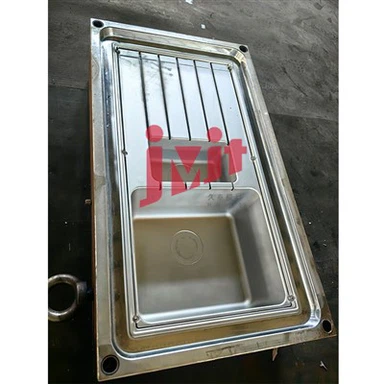
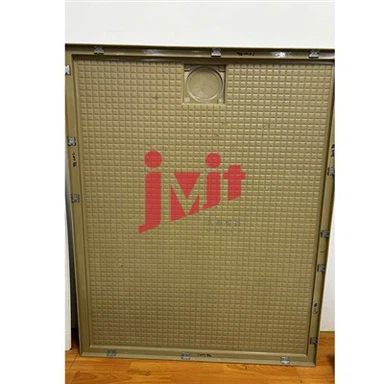
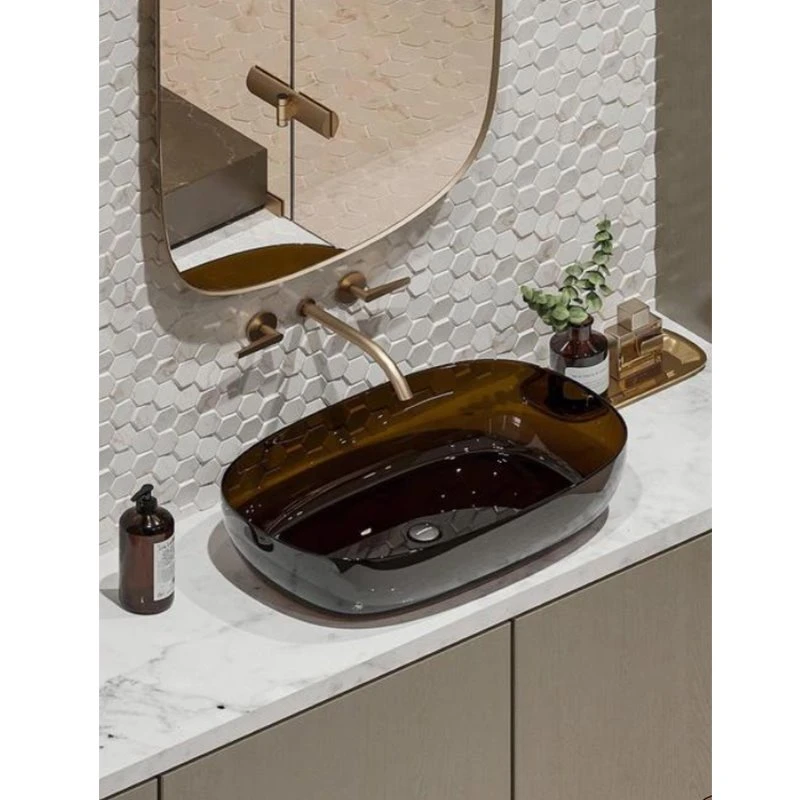
Melamine basins, with their outstanding properties such as wear resistance, high-temperature resistance, and easy cleaning, are widely used in household bathrooms, hotel projects, public facilities, and other fields. The quality precision and production efficiency of melamine basins are fundamentally determined by the rationality of the mould design, manufacturing accuracy, and process adaptability. This article will comprehensively analyze the melamine basin mould from the dimensions of basic understanding, core structure, manufacturing process, key technical points, and maintenance. www.jiutaimould.net
I. Basic Understanding and Core Function of Melamine Basin Mould
1.1 Definition and Adaptability Characteristics
The melamine basin mould is a specialized mould custom-made for the shaping of melamine resin (melamine formaldehyde resin), belonging to the category of thermosetting plastic
moulds. Compared with thermoplastic plastic moulds, it needs to precisely adapt to the cross-linking and curing characteristics of melamine resin under high-temperature and high-pressure conditions, ensuring that the basin has stable dimensional accuracy, fine surface texture, and reliable mechanical properties after shaping.
1.2 Core Function
The core function of the melamine basin mould is concentrated in three aspects: Firstly, it serves as a forming benchmark, precisely replicating the contour, hole diameter, and surface curvature of the basin through the mould cavity to ensure consistency in mass production. Secondly, it plays a role in process adaptation, requiring excellent thermal conductivity and pressure resistance to match the hot-pressing forming process and achieve full curing of the melamine resin. Thirdly, it guarantees efficiency, with a scientific mould structure design simplifying the demoulding process, shortening the production cycle, and enhancing mass production efficiency.

II. Core Structural Components of Melamine Basin Mould
The structural design of the melamine basin mould needs to be customized based on the complexity of the basin shape, forming process parameters, and characteristics of production equipment. The core structure mainly includes the following key parts:
2.1 Cavity and Core
The cavity and core are the core functional components of the mould, jointly forming the shaping cavity of the melamine basin. The cavity corresponds to the outer surface shaping of the basin, while the core corresponds to the inner surface shaping. The processing accuracy of both directly determines the dimensional tolerance level and surface quality of the basin. For basins with overflow holes and installation holes, the mould needs to integrate dedicated punch or die structures at the corresponding positions of the cavity and core. To ensure a fine surface texture of the basin after shaping, the surfaces of the cavity and core usually need to undergo precision polishing, with a surface roughness precision of Ra0.8μm or above.
2.2 Guiding and Positioning System
Due to the high-pressure load of 15-30MPa during the melamine forming process, a high-precision guiding and positioning system must be equipped to prevent misalignment of the cavity and core during mould closing, which could lead to product scrapping. This system mainly consists of guide pins, guide sleeves, and positioning pins. The guide pins and guide sleeves adopt a H7/f6 clearance fit precision grade to ensure smooth mould closing and precise positioning, guaranteeing the uniformity of the basin wall thickness as per design requirements.
2.3 Heating and Temperature Control System
The full curing of melamine resin needs to be completed within a specific temperature range of 150-180℃, making the heating and temperature control system a key functional unit of the mould. The mainstream heating method is to open dedicated heating channels in the mould body, achieving uniform heating by passing through heat transfer oil or embedding electric heating tubes. At the same time, the mould needs to be equipped with multi-point temperature sensors and high-precision temperature control instruments to achieve precise closed-loop control of the temperature in different areas of the cavity, avoiding quality defects such as incomplete curing, surface bubbles, and structural cracks due to uneven local temperatures.
2.4 Demoulding System
After curing, melamine resin has a certain adhesion to the mould surface. A scientific demoulding system design ensures that the product can be smoothly removed without damaging the surface quality. The demolding system is mainly composed of ejector pins, ejector tubes, and demolding plates. The arrangement of ejector pins needs to be optimized based on the characteristics of the basin shape. For deep cavity or complex curved surface basins, a design combining an ejector pin array and a demolding slope (usually 1-3°) should be adopted. The distribution of ejector pins should ensure uniform force application to prevent local deformation of the product during demolding. Some high-precision molds are also equipped with pneumatic auxiliary demolding mechanisms to further improve demolding efficiency and product integrity.
2.5 Exhaust System
During the melamine molding process, if the air inside the cavity and the trace volatile substances produced by the resin curing reaction cannot be discharged in time, it will lead to surface bubbles and local material deficiency in the product. Therefore, the mold must be designed with an efficient exhaust system. Usually, exhaust grooves are set at the parting surface of the cavity, the edge of the core, and the corner of complex structures. The width of the groove is controlled at 0.02-0.05mm, and the depth is set at 0.5-1mm. This can ensure smooth gas discharge and effectively prevent resin overflow and the formation of flash.

III. Manufacturing Process and Flow of Melamine Basin Molds
The manufacturing of melamine basin molds has extremely high requirements for processing accuracy, structural strength, and surface wear resistance. It must strictly follow standardized process flows. The core manufacturing process mainly includes the following key steps:
3.1 Mold Design
Design is the core pre-manufacturing step. It needs to be carried out comprehensively based on the 3D model of the basin, molding process parameters, and equipment specifications. Firstly, a 3D solid model of the mold is constructed using professional 3D design software such as UG and Pro/E, precisely defining the size parameters and surface shapes of the cavity and core. Secondly, the structural layout of the guiding and positioning, heating and temperature control, demolding, and exhaust systems is completed. Finally, CAE simulation analysis is conducted. Through mold flow analysis software, the entire process of resin filling and curing in the cavity is simulated to predict and optimize potential problems such as insufficient filling, residual bubbles, and warpage deformation in advance.
3.2 Mold Material Selection
The selection of mold materials directly determines the service life and stability of the molding quality. For the high-temperature and high-pressure conditions of melamine molding, high-strength and high-wear-resistant alloy steels such as P20 and 718H pre-hardened steels are preferred for the cavity and core. These steels, after pre-hardening treatment, have a hardness of HRC28-35 and possess excellent cutting and mirror polishing properties. For molds with high production volume or high precision requirements, quenched and tempered steels such as H13 and S136 can be used. After quenching treatment, their hardness increases to HRC45-50, significantly enhancing the wear resistance and service life of the mold. Other structural components of the mold, such as guide pins and guide sleeves, are typically made of SUJ2 bearing steel or 45# alloy structural steel to ensure they meet the requirements of strength and wear resistance.
3.3 Mechanical Processing
Mechanical processing is the core step to achieve mold accuracy and mainly includes the following procedures:
Milling processing: High-precision CNC milling machines are used to perform rough and semi-finish machining on the mold blanks, quickly removing excess material and initially forming the cavity, core, and other structural profiles. The machining accuracy can be controlled within ±0.05mm.
Grinding processing: Precision grinding treatment is carried out on key components such as the mold surface, guide pins, and guide sleeves to enhance surface roughness and dimensional accuracy. The flatness can be controlled within 0.02mm/m.
Electrical discharge machining (EDM): For complex curved surfaces, deep cavities, narrow slots and other areas that are difficult to machine by milling in mold cavities, electrical discharge machining technology is adopted. The required shape is formed by discharging and corroding the workpiece with an electrode. The machining accuracy can reach ±0.01mm, and the surface roughness is Ra1.6μm.
Wire Electrical Discharge Machining (WEDM): It is used for processing high-precision hole positions and contours such as mold parting surfaces, ejector pin holes, and positioning holes. The processing accuracy can reach ±0.005mm, ensuring that the assembly accuracy of each component of the mold meets the requirements.
3.4 Surface Treatment
Surface treatment can enhance the wear resistance, corrosion resistance and demolding performance of molds. Common processes include:
Polishing treatment: Gradual polishing process is carried out on the surface of the cavity and core, from coarse polishing (Ra3.2μm) to semi-fine polishing (Ra1.6μm) and then to fine polishing (Ra0.8μm and above), ensuring that the surface of the formed washbasin is smooth and free of defects.
Nitriding treatment: The surface of the mold is subjected to gas nitriding treatment to form a dense nitrided layer with a thickness of 5-10 μm. The surface hardness can reach HV800-1000, significantly enhancing the wear resistance and corrosion resistance of the mold surface and prolonging its service life.
Demolding coating: Some high-precision molds are sprayed with high-temperature resistant demolding coatings such as Teflon on the cavity surface to reduce the adhesion between melamine resin and the mold surface, improving demolding smoothness and product surface integrity.
3.5 Assembly and Debugging
After the processing of each component of the mold is completed, precise assembly and trial mold debugging procedures must be carried out. During the assembly stage, the guiding and positioning, demolding, heating and other systems should be assembled strictly in accordance with the design drawings to ensure that the fit clearances between components are reasonable and the actions are smooth. During the debugging stage, the mold should be installed on the melamine forming equipment, and the forming effect should be verified through small-scale trial production. Key indicators such as product size accuracy, surface quality, and demolding smoothness should be focused on for inspection. Targeted adjustments should be made for any identified issues, such as correcting cavity dimensions, optimizing heating temperature curves, and adjusting the layout of ejector pins, until qualified products can be stably produced.

4. Key Technical Points of Melamine Basin Mold
4.1 Precision Control Technology
Melamine basins have strict requirements for dimensional accuracy, especially for critical parts such as installation holes and the surface for bonding. The tolerance needs to be controlled within ±0.1mm. To achieve high-precision forming, the mold manufacturing process should implement full-process precision control: in the design stage, CAE simulation is used to optimize the mold structure and predict and reduce forming deformation; in the processing stage, high-precision CNC equipment is used in combination with tools such as laser interferometers and ballbar instruments to monitor processing accuracy in real time; in the assembly stage, a three-coordinate measuring instrument is used for full-range precision inspection to ensure uniform and stable fit clearances between the cavity and core.
4.2 Temperature Control Uniformity Technology
Uniform temperature control is a core element for ensuring the curing quality of melamine basins. Excessively high local temperatures can lead to over-curing and brittleness of the resin, while excessively low temperatures can result in incomplete curing and affect strength. To achieve uniform temperature control, the mold design adopts a symmetrical heating channel layout to ensure uniform heat distribution in all areas of the cavity; high-precision electric heating tubes are used in combination with multi-point temperature sensors to build a closed-loop temperature control system; and an insulating layer is set at the connection between the mold and the equipment to reduce heat conduction loss and improve temperature control efficiency and stability.
4.3 Complex Shape Adaptation Technology
For customized melamine basins with irregular shapes, deep cavities, and embossed patterns, the mold needs to have efficient shape adaptation capabilities. For deep cavity structures, the draft angle of the core (typically 1-3°) is optimized and a circular arc transition design is adopted to avoid demolding scratches; for complex curved surfaces, five-axis linkage milling technology is used to ensure the smoothness and accuracy of the cavity surface; for embossed patterns, high-precision electrical discharge machining or laser engraving technology is used to replicate details, and at the same time, micro exhaust slots are set at the edges of the pattern recesses to prevent material deficiency during forming.

5. Maintenance and Service Life of Melamine Basin Mold
5.1 Daily Maintenance and Care
Scientific maintenance and care can significantly extend the service life of the mold. Daily maintenance should focus on the following key points:
Cleaning and maintenance: After each production run, the residual resin on the surface of the cavity and core must be promptly removed. Use a dedicated neutral cleaner in combination with a soft cloth for wiping to prevent the resin from curing and affecting the quality of subsequent molding.
Lubricationandmaintenance:Regularly apply high-temperature resistant lubricating oil to moving parts such as guide columns, guide sleeves, and ejector pins to ensure smooth movement and reduce wear rate.
Temperature control system inspection: Regularly verify the working accuracy of heating tubes and temperature sensors to ensure the precision and reliability of the temperature control system. Replace any damaged components promptly.
Precision inspection: After every 50,000 to 100,000 mold cycles of production, the key dimensions of the mold are inspected using a three-coordinate measuring instrument. If cavity wear or deformation is detected, timely repair measures should be taken.
5.2 Factors Affecting Service Life
The normal service life of melamine basin molds is typically 500,000 to 1,000,000 moldings. The specific lifespan is influenced by the following key factors:
Mold material: Theuse of high-strength and high-wear-resistant steel (such as H13, S136) for molds can increase their service life by more than 50% compared to molds made of ordinary steel.
Manufacturing precision: High-precision processing and assembly can reduce wear during the use of molds and extend their service life.
Operating conditions: If the forming temperature exceeds the standard range, the pressure fluctuates too much, or continuous high-intensity production is carried out, it will accelerate the fatigue and aging of the mold.
Maintenancandcare: Molds that undergo regular maintenance in accordance with standards can have their service life effectively extended by more than 30%, while ensuring the stability of molding quality.

VI. Conclusion
The melamine washbasin mold, as the core equipment in the production of washbasins, directly determines the product quality and production efficiency through its design level, manufacturing precision and maintenance quality. With the melamine washbasin market upgrading towards personalization, high precision and long service life, the mold industry needs to continuously break through key technologies, such as the application of new high-strength mold materials, the development of intelligent temperature control systems, and the deep integration of five-axis linkage processing and CAE simulation. At the same time, it is necessary to strengthen the refined maintenance management of molds to provide core support for the high-quality development of the melamine washbasin industry.
Hot Tags: melamine basin moulds, China melamine basin moulds manufacturers, factory, mould for valves, mould for surfing products, mould for helmets, mould for safety products, mould for cork materials, mould for boiling products