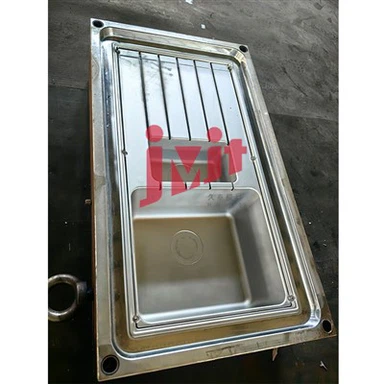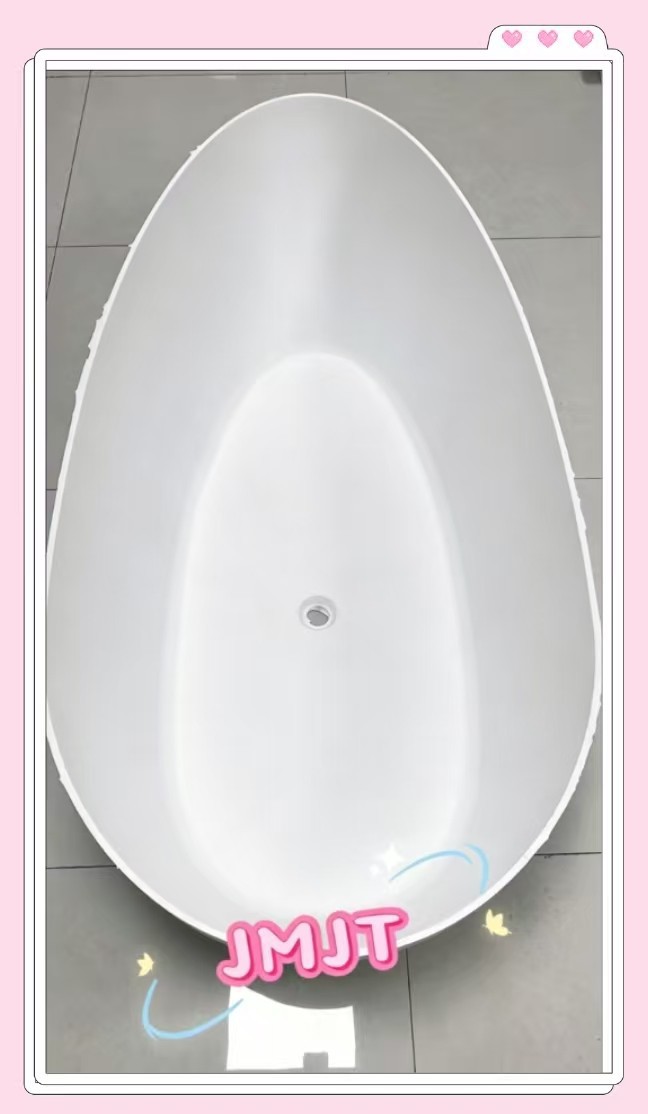
Melamine Bathtub Mold
I. Product Definition and Core Advantages MDF bathtub mold, officially known as a special hot-pressing mold for melamine formaldehyde resin (Marmite) bathtub production. It uses a large hydraulic press to melt and solidify the melamine molding powder under high temperature and high pressure to...
- Fast Delievery
- Quality Assurance
- 24/7 Customer Service
Product Introduction
I. Product Definition and Core Advantages
MDF bathtub mold, officially known as a special hot-pressing mold for melamine formaldehyde resin (Marmite) bathtub production. It uses a large hydraulic press to melt and solidify the melamine molding powder under high temperature and high pressure to form bathtub products. The core features are "large size, high precision, temperature resistance, and pressure resistance". It differs from small low-pressure melamine tableware molds. It is suitable for mass production in households, hotels, etc. The core advantages are as follows:
The product has strong adaptability: the impact resistance strength is ≥ 15 kJ/m², it is not prone to cracking, its weight is 1/3 of the ceramic bathtub of the same size, it can withstand hot water below 80℃, resistant to acid and alkali corrosion, and does not yellow easily, suitable for long-term bathroom use.
High forming efficiency and accuracy: One-time hot pressing molding can achieve the integration of complex curved surfaces, anti-slip textures (0.3-0.5mm), overflow ports (30-50mm), drainage ports (50-80mm), and handrail positions. No secondary processing is required. The forming accuracy is ±0.1mm/100mm.
High production efficiency: When producing in batches of ≥ 1000 pieces, the single-time molding cost is lower than that of SMC/BMC molds. The loss is low, maintenance is controllable, the cavity can be flexibly adjusted, and it can be adapted to standard sizes of 1.5m, 1.7m, 1.8m, etc.

II. Selection of Mold Materials
The material of the mold directly affects its lifespan, accuracy and product quality. It needs to be selected based on mass production, budget and product requirements. The specific parameters are as shown in the table below. Additionally, details of surface treatment are provided:
|
material type |
applicable scene |
Core advantage |
Core drawback |
Recommended hardness |
processing requirement |
|
|
P20/718H pre-hardened steel |
General mass production (single batch 1000 - 5000 pieces), the products have no special surface requirements, and are suitable for 1.5 - 1.7m regular bathtubs. |
High processing performance, no need for quenching, moderate cost (30%-40% lower than H13), stable size, suitable for conventional hot pressing parameters |
Thermal fatigue generally occurs when the temperature is between 160-175℃ and the pressure is 15-20 MPa. After 30,000 to 50,000 mold cycles, the cavity of the mold is prone to wear and scratches, and polishing maintenance is required. |
HRC 30–34, with uniform surface hardness, with a deviation of ≤±1HRC |
The cavity is polished to an Ra value of ≤ 0.1 μm, and the surface is electroplated with hard chromium. |
|
|
H13 Heat-Treated Die Steel |
Mass production with high frequency (single batch ≥ 5,000 pieces, annual production capacity ≥ 100,000 pieces), suitable for deep cavity bathtubs of 1.8m and above, as well as products with high gloss/complex textures |
Excellent heat fatigue resistance, capable of withstanding 160-180℃ cycles, highly wear-resistant and tough, with a service life of ≥ 100,000 mold cycles, and the surface finish of the product is very high. |
The procurement and processing costs are high. It requires quenching and tempering. The processing cycle is 20-30% longer than that of P20. |
HRC 44–48, core hardness ≥ HRC 40 |
The cavity surface was polished to Ra ≤ 0.05 μm, followed by nitriding and hard chrome plating. |
|
|
aluminium alloy(7075/6061) |
Sample mold, small batch trial production (≤ 500 pieces), new product sample making, compatible with simple structure bathtub |
High heat conductivity (3-4 times that of P20), lightweight, low cost, short production cycle (7-10 days), suitable for rapid prototyping |
High temperature and high pressure make it prone to deformation (≤160℃), with poor wear resistance and a service life of ≤10,000 mold cycles. It cannot be mass-produced. |
HB 150–180, surface anodizing |
The cavity is polished to Ra ≤ 0.2 μm, and basic anti-corrosion can be achieved. |
|
Additional surface treatment details: The cavity surface requires the following treatments to ensure the quality of the molding:
Hard chrome plating: Thickness 0.03–0.05mm, without pinholes or bubbles. It enhances demolding performance and corrosion
resistance. After plating, polishing is required.
Nitriding treatment: Applied to H13 steel molds, treated at 500 - 550℃, surface hardness ≥ HRC 55, extends service life.
Polishing treatment: General polishing (Ra ≤ 0.1 μm, matte finish), mirror polishing (Ra ≤ 0.05 μm, high gloss), avoiding scratches and blemishes.

III. Key Design Points of the Structure
The melamine bathtub mold is a large deep cavity hot-pressing mold. The structural design affects the molding efficiency, product quality and the lifespan of the mold. The key points are as follows:
1. Parting surface and draft angle
- The parting surface determines the flash and demolding effect. The draft angle helps prevent scratches. Specific requirements:
- Parting surface: The preferred horizontal parting line is set 5-10mm above the upper edge of the bathtub. For complex shapes, a combined parting surface is used.
- Inclination angle of riser: 1.5°–3° in regular areas, 3°–5° in deep cavity areas, ≥5° in areas with texture, and the direction of the pattern should be consistent with the demolding direction.
- Notes: The parting surface should be polished to an Ra value of ≤ 0.2 μm and a burr size of ≤ 0.05 mm; the draft angle should be uniform to avoid difficulties in demolding.
2. exhaust air system
- The hot pressing of melamine powder will produce condensed water and volatile gases. Failure to exhaust these gases in time may lead to defects in the products. Design requirements:
- Exhaust position: On the parting surface, at the base of the pattern, around the edge of the cavity, and around the overflow drainage outlet. For large deep cavities, 1-2 auxiliary exhaust holes are additionally provided.
- Exhaust parameters: The width of the exhaust groove is 2-5mm, the depth is 0.03–0.05mm, and the length is 50-100mm; the diameter of the exhaust holes is 1-2mm, all of which are connected to the outside.
- Notes: The depth of the exhaust groove should be ≤ 0.05mm. Clean it once for every 100 production cycles to prevent blockage.
3. Heating/Cooling System
- Temperature control is crucial for the molding process. Heating ensures the melting of the material, while cooling ensures the solidification and demolding. Specific requirements are as follows:
- Heating system: Built-in copper tubes (10-15mm, spacing 50-80mm), zone temperature control, upper mold 165–175℃ (±2℃), lower mold 160–170℃ (±2℃), temperature difference ≤ 5℃.
- Cooling system: Built-in cooling water pipes (12-16mm), flow rate 1-2m/s, inlet water temperature 25-30℃, outlet water temperature ≤ 50℃, demolding temperature ≤ 80℃.
- Notes: Ensure the pipelines are securely fixed. The temperature sensor should be 5-10mm away from the cavity. Regularly inspect the pipelines.
4. Insertion piece and ejector mechanism
- The embedded components need to be formed through inserts and ejector mechanisms. The design requirements are:
- Insert: Made of 304 stainless steel, polished to Ra ≤ 0.1 μm, with a mating clearance of 0.02 - 0.03 mm. It is detachable and after installation, it is flush with the cavity.
- Core-pulling mechanism: Hydraulic type. Core-pulling force: 5 - 10 MPa. Speed: 5 - 10 mm/s. It is linked with the opening and closing of the mold and lubricated once a week.
5. Guiding and locking mechanism
- The mold is large in size and heavy in weight. It needs to be stabilized through a guiding locking mechanism. Specific requirements are as follows:
- Guiding mechanism: 4 to 8 sets of guide columns and guide bushings (guide columns 30-50mm, length 200-300mm), the guide columns are quenched to HRC 50-55, the clearance is 0.01-0.02mm, and they are lubricated before production.
- Locking mechanism: Locking force redundancy ≥ 20%, 4-6 sets of locking bolts (20-30mm), and check the tightening condition every 50 mold cycles during production.

IV. Forming Process Parameters
Following the "preheating - loading - hot pressing - exhaust - curing - cooling - demolding - post-processing" process, the parameters are as follows:
1. raw materials preparation
- Select Grade A5 melamine molding powder (compliant with GB/T 9690-2015), with colors custom-blended as required. Pre-treatment requirements:
- Pre-drying: Dry at 80–100°C for 2–3 hours to ensure a moisture content of <0.3% and prevent blistering.
- Pre-heating: Pre-heat at 40–50°C for 30–60 minutes to soften the powder and reduce molding time.
2. Thermal pressing molding parameters
- Mold Preheating: Install the mold on the hydraulic press; heat the upper mold to 170±5°C and the lower mold to 165±5°C. Maintain this temperature for 30–60 minutes, ensuring the temperature difference remains ≤5°C.
- Material Loading: Uniformly pour the preheated powder material into the mold cavity. The charge volume should exceed the actual required volume by 5–10%; level the material to prevent uneven accumulation.
- Mold Closing and Initial Pressing: Close the mold at a speed of 5–10 mm/s. Apply an initial pressure of 10 MPa and hold for 10–15 seconds.
- Degassing: Release the pressure to 5 MPa and hold for 5–10 seconds; perform this degassing cycle 1–2 times.
- Final Pressing and Curing: Apply a final pressure of 15–20 MPa. Adjust the curing time according to the wall thickness (8–10 mm: 60–80 seconds; 10–12 mm: 80–100 seconds; 12–15 mm: 100–120 seconds).
- Cooling and Demolding: Allow the mold to cool for 15–20 minutes until the temperature reaches ≤80°C. Open the mold at a speed of 3–5 mm/s. Use soft tools for demolding to prevent surface scratching or damage.
3. Post-processing (to eliminate internal stress and improve quality)
After demolding, a secondary curing process is required to eliminate internal stresses. The steps are as follows:
Constant temperature baking: Bake at 80 - 100℃ for 30 - 60 minutes to complete the secondary curing process;
Surface cleaning: Cool to room temperature, wipe the surface, remove burrs and stains;
Quality inspection: Check dimensions, surface and sealing performance. Items that pass the inspection will be stored in the warehouse..

V. Quality Control and Daily Maintenance
Quality control is carried out throughout the process. Daily maintenance helps extend the lifespan of the molds. Specific requirements:
1. Quality Control (QC) projects and standards (precisely implementable)
Dimension accuracy: Measured using a vernier caliper and projector. The accuracy is ±0.1mm per 100mm. Any deviation exceeding the standard should be adjusted promptly.
Surface quality: No defects such as flow marks, bubbles, or color differences. The glossiness meets the requirements (matte Ra ≤ 0.1 μm, mirror surface Ra ≤ 0.05 μm).
Demolding angle: Measured with an angle gauge, ensuring it is within the range of 1.5° to 5° to avoid scratches.
Pressure-resistant sealing: Fill with water at 25-30℃ and keep for 24 hours. There is no leakage and the overflow drainage outlet is well sealed.
2. Daily maintenance operation procedure
(Daily Maintenance)
Cleaning the cavity: Use neutral cleaner and wipe with a soft cloth. Do not use hard objects to avoid scratching.
Inspect the piping: Check the connection of the heating and cooling pipes, and ensure that the temperature sensors are functioning properly.
Lubrication guidance: Apply lubricating grease to the moving parts to ensure smooth operation.
Mould storage: Apply anti-rust oil after closing the mould to prevent oxidation.
(2) Weekly maintenance
Clean the exhaust system: Use fine copper wire to clean the exhaust grooves and holes to avoid blockage;
Check locking bolts: Tighten loose bolts;
Check inserts: Repair or replace worn or deformed inserts.
(3) Monthly maintenance
Full polishing: Polish the cavity to remove scratches, restore smoothness, and reapply anti-rust oil;
Check accuracy: Use a projector to detect the cavity size, and adjust deviations in time;
Replace wear-prone parts: Replace aged heating tubes, cooling tubes, and seals.
3. Mold life management
H13 steel mold: Service life ≥ 100,000 mold cycles. Scrap if there is severe wear, cracks or excessive size deviation;
P20/718H steel mold: Service life 3 - 50,000 mold cycles. Can be polished and repaired. It is recommended to scrap after 3 - 4 repairs;
Aluminum alloy mold: Service life ≤ 10,000 mold cycles. Directly scrap if there is deformation and damage; Do not recommend repair.
VI. Supplementary Notes
- Mould and hydraulic press collaboration: It is necessary to be compatible with a hot pressing machine with a capacity of 500-1200 tons. The accuracy of mold closure and pressure stability affect the lifespan of the mould and the quality of the products. Ensure that the tonnage is sufficient.
- Two-color/wood-grain effect: It can be achieved through secondary molding or in-mold stamping process. The mold needs to be designed with dual-color cavities or stamping positioning structures.
- Common Faults and Solutions:
- Product bubbles: High moisture content in raw materials, incomplete exhaust, high temperature; Solution: Extend drying time, increase exhaust, adjust temperature.
- Product flash: Incomplete parting surface, insufficient clamping force, too deep vent groove; Solution: Tighten the clamping mechanism, repair the parting surface, adjust the groove depth.
- Demolding difficulty: Small draft angle, high temperature, no
- demolding treatment; Solution: Increase draft angle, extend cooling time, perform hard chrome plating.
- Safe operation: Installed and disassembled by professionals; transported using a crane; Do not touch the hot mold products; Regularly inspect the equipment and molds.
Hot Tags: melamine bathtub mold, China melamine bathtub mold manufacturers, factory, mould for camping products, mould for makeup products, mould for mental health products, mould for paper bags, mould for satellite products, mould for solar panels
No Information