TV Plastic Housing Mold
As a core component of the entire TV set, the TV housing not only protects precision internal parts such as circuit boards and display screens but also directly determines the product's appearance quality, structural stability, and user experience. A high quality TV housing relies on the...
- Fast Delievery
- Quality Assurance
- 24/7 Customer Service
Product Introduction
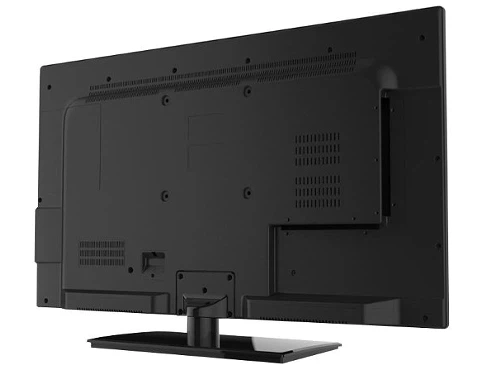
As a core component of the entire TV set, the TV housing not only protects precision internal parts such as circuit boards and display screens but also directly determines the product's appearance quality, structural stability, and user experience. A high quality TV housing relies on the coordinated integration of mold design, precision manufacturing, and injection molding technology-mold design is the core origin, manufacturing precision is the quality baseline, and process optimization ensures mass production. These three links are interlocked and jointly determine the final quality of the housing and the product's market competitiveness. This paper systematically analyzes the full process technical solution for TV housing molds around these three core aspects.
I.Mold Design: Precise Blueprint for Source Control
(1)Material Adaptation and Shrinkage Control
Housing materials: Mainstream materials are ABS and PC/ABS alloy, balancing toughness, rigidity, processing fluidity, and cost. Thin wall or high appearance models can use HIPS or flame retardant modified ABS to meet fire resistance and lightweight requirements.
Mold steel: Core cavities prefer 718H, S136 (for mirror/high polishing needs), and 2738 (for general appearance); mold bases use standard P20 to ensure wear resistance and thermal stability. The material shrinkage rate (typical 0.5%–0.7% for ABS) must be accurately calculated via CAE simulation, with reasonable shrinkage allowance reserved to avoid dimensional deviation, sink marks, and deformation after molding.
(2)Optimization of Core Structural Details
1.Parting surface: Strictly avoid Class A appearance surfaces, place on non visible edges, and control parting line clearance ≤0.02 mm to prevent flash and burrs while ensuring appearance and smooth opening/closing.
2.Hot runner system: Adopt multi point submarine/point gates evenly arranged according to housing size and shape to avoid weld marks and flow marks. Sequential valve hot runners are recommended for large housings to achieve step by step uniform melt filling.
3.Cooling system: Conformal waterway + zonal temperature control; water channel spacing 40–50 mm, distance from cavity surface 15–20 mm. CAE simulation ensures consistent cooling rates across all areas to suppress warpage.
4.Ejection and venting: Combined ejector pins + ejector plates to avoid ejector marks and whitening. Venting grooves with depth 0.01–0.02 mm, placed at melt ends and dead corners to prevent gas burning and bubble defects.
5.Draft angle and wall thickness: Draft angle ≥1° for appearance surfaces, ≥0.5° for inner surfaces. Uniform wall thickness 2.0–2.5 mm; rib root thickness ≤0.7 times the main wall thickness to avoid sink marks and stress concentration.
(3)CAE Aided Verification
Mold flow analysis via software such as Moldflow is mandatory in the design phase to simulate filling, packing, and cooling processes. It optimizes gate position, runner size, and cooling layout, and identifies potential defects such as weld lines, insufficient filling, and warpage in advance.
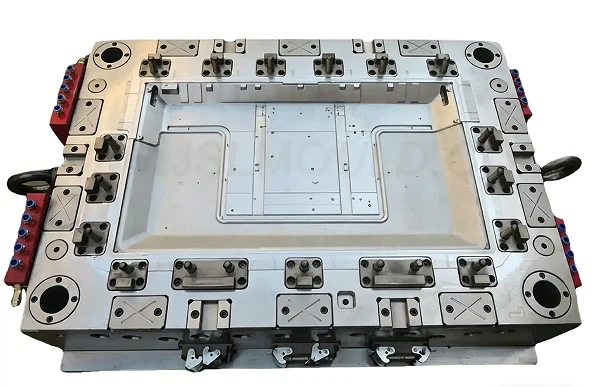
II.Precision Manufacturing: Realizing Accuracy from Drawing to Entity
1.Processing equipment and technology: Adopt 5 axis CNC milling, EDM, and slow wire cutting to control cavity dimensional tolerance within ±0.01–±0.02 mm. Mold core surface treatment is selected as needed: mirror polishing (Ra ≤0.02 μm for high gloss housings), chemical texturing (MT11–13 for matte texture).
2.Assembly and trial molding:Guide pins and bushes use H7/g6 fit to ensure opening/closing precision. Conduct multiple trial moldings, gradually adjust injection parameters (temperature, pressure, speed, cooling time), resolve defects such as flash, sink marks, and color difference in trial production, and finalize the optimal process plan.
3.Quality inspection: Full-size inspection by a three-coordinate measuring machine, mold hardness testing, and waterway sealing performance testing are carried out to ensure that all key indicators meet the design standards.
III.Injection Molding Process Optimization: Stable Improvement in Mass Production
- Temperature control:Barrel temperature 200–230 °C (ABS), mold temperature 60–80 °C to avoid melt degradation or uneven cooling.
- Pressure and speed:Injection pressure 80–120 MPa, holding pressure 60%–70% of injection pressure; staged injection speed control to prevent melt turbulence.
- Cycle and post processing: Molding cycle 30–60 s depending on housing size. Annealing is used when necessary to relieve internal stress and improve dimensional stability.
- Automation support::Reserve automation interfaces on the mold for automatic demolding, gate cutting, and inspection to improve production efficiency and consistency.
Hot Tags: tv plastic housing mold, China tv plastic housing mold manufacturers, factory, industrial injection mould, injection mould for complex shapes, injection mould for multi cavity, injection mould production, injection mould testing, precision injection mold
No Information