


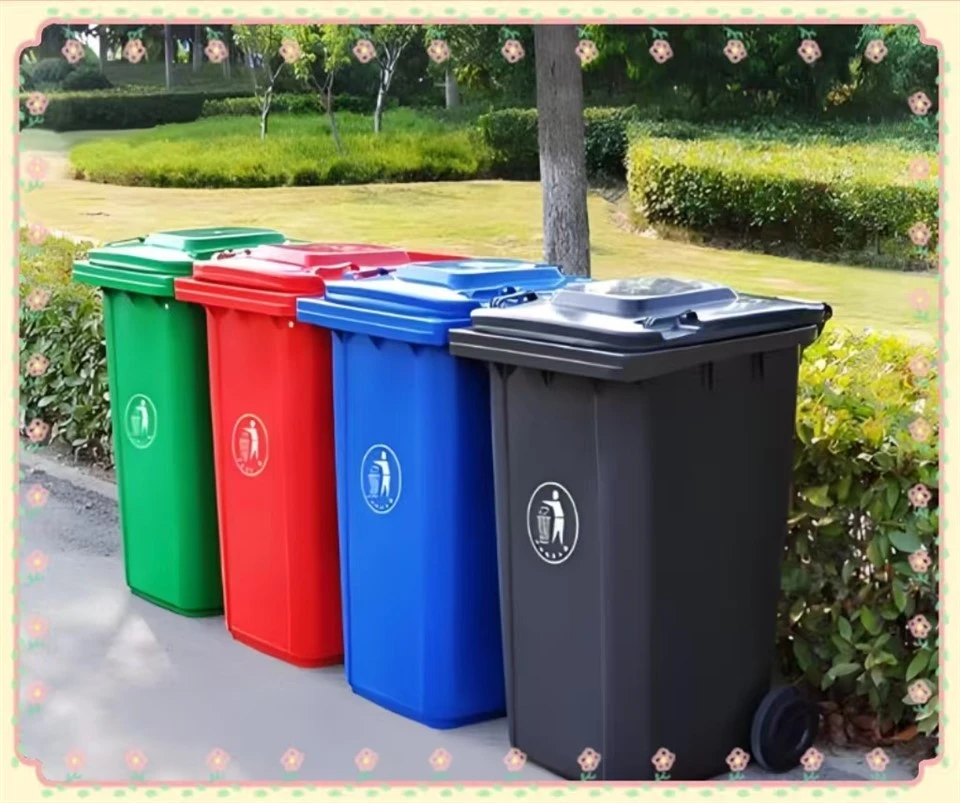
Sanitation Plastic Trash Can Mold
The sanitary plastic trash can mold is the core equipment for achieving standardized and large-scale production of sanitary plastic trash cans. Its quality directly determines the structural stability, usage performance and production efficiency of the trash cans. 1. Mold Materials: Precisely...
- Fast Delievery
- Quality Assurance
- 24/7 Customer Service
Product Introduction
The sanitary plastic trash can mold is the core equipment for achieving standardized and large-scale production of sanitary plastic trash cans. Its quality directly determines the structural stability, usage performance and production efficiency of the trash cans.
1. Mold Materials: Precisely match production requirements to ensure mold durability
The material selection for the sanitary plastic trash can mold needs to take into account mold lifespan, molding accuracy and production cost. The core materials are divided into core and cavity materials, mold frame materials and standard accessory materials. Specific selection can be customized according to the customer's production volume requirements and product precision requirements:
Core and cavity material: As the core forming components of the mold, the mainstream materials selected are pre-hardened steel (such as P20, 1.2311, P20 + Ni), hard steel (such as H13, 1.2344, NAK80), and stainless steel (such as ASSAB Stavax). Among them, pre-hardened steel is suitable for regular production requirements, with a hardness of up to HRC 30-32, and the mold life is not less than 20-300,000 mold cycles; hard steel, after heat treatment, has a hardness of up to HRC 50-52, and the life can reach 60-800,000 mold cycles; stainless steel has excellent corrosion resistance and the life can exceed 100,000 mold cycles, suitable for producing trash can molds for special environments.
Frame material: It is recommended to use Longji standard frames. The mainstream materials are S50C or P20. The pre-hardening hardness should be greater than 30HRC, which can effectively ensure the overall structural strength and assembly accuracy of the molds.
Standard accessories: We uniformly select international standard components such as DME and HASCO for all parts, including guide columns, guide sleeves, and push pins, which can enhance the stability of the mold operation and facilitate subsequent maintenance and component replacement.
In addition, the surface of the mold can be treated with texture or polished with a high gloss according to product requirements; the ejection method of the core can be flexibly adopted through structures such as motors, hydraulic cylinders, ejection templates, and pins; the flow channel system supports cold flow channels, hot flow channels, or a combination of cold and hot flow channels, further optimizing production efficiency and product quality.

II. Product Capacity: Covers all scenarios, standardized specifications
Based on the customized production capacity of molds, the sanitation plastic trash bins can cover all specifications and capacities. The mainstream capacity range is from 20L to 660L, which can precisely adapt to the different amounts of garbage generated in different scenarios. The conventional core specifications and key parameters are as follows:
1.Small capacity (20L - 50L): Covers specifications such as 20L, 30L, 40L, and 50L. Suitable for small public places or enclosed spaces. For instance, the 40L dual-bucket classified trash cans are commonly used in office buildings and small supermarkets; the 50L trash cans are suitable for community unit buildings, small canteens, etc. Their barrel wall thickness is ≥ 3mm and the barrel bottom thickness is ≥ 4mm, ensuring both portability and durability.
2. Medium capacity (100L - 120L): 100L and 120L are the most commonly used outdoor specifications in daily life, widely applied in residential areas, schools, parks, urban streets and other scenarios. Taking the 120L trash can as an example, its wall thickness is ≥ 4mm, the bottom thickness is ≥ 5mm, and it is equipped with rollers with a diameter of ≥ 185mm, which makes it convenient to move and can meet the needs of centralized collection of medium-sized garbage.
3. Large capacity (240L - 660L): 240L and 660L are the core specifications for municipal sanitation. They are suitable for scenarios with high garbage production such as streets, large communities, industrial parks, and transportation hubs. Among them, the 240L trash can can be adapted to various operation modes of garbage trucks. The dimensions of the long × wide × height are divided into 740 × 585 × 1070mm (side step type) and 710 × 570 × 1070mm (middle step type) according to structural differences; the 660L trash can is specially designed for compressive garbage trucks and has an automatic dumping function. The wall thickness is ≥ 5mm and the roller diameter is ≥ 200mm, which can easily meet the requirements of high-intensity handling and garbage carrying.

III. Application: Covers all aspects of waste management, adaptable to various scenarios
The sanitation plastic trash can mold can produce trash cans of various specifications and structures, and is widely used in the entire chain of urban garbage collection and management. The core application scenarios and corresponding parameters are as shown in the table below
|
Application scenario category |
Specific scene |
Compatible capacity specification |
Core adaptation requirements |
|
Municipal public space |
City streets, parks, squares, tourist attractions, stations, subway stations, etc. |
Medium-sized (100L - 120L), Large-sized (240L) |
Standardized design for easy batch deployment; stable structure, resistant to outdoor environmental erosion |
|
Residential and office settings |
Residential communities, office buildings, schools, hospitals, etc. |
Small (20L - 50L), Medium (100L - 120L) |
The hospital-specific model should support foot-operated/sensor-operated opening and closing to ensure hygiene and safety; the size is suitable for both indoor and outdoor confined spaces. |
|
Industrial and commercial scenarios |
Factories, industrial parks, large supermarkets, farmers' markets, etc. |
Large (240L and above) |
High-strength structure, capable of bearing heavy industrial waste/ commercial garbage; compatible with garbage truck operation mode |
|
Temporary event scene |
Concerts, festivals, sports events and other large-scale temporary activities |
Medium-sized (100L - 120L), Large-sized (240L) |
Lightweight and easy to deploy, it can quickly carry out centralized garbage collection; it meets the needs of short-term and frequent garbage collection. |
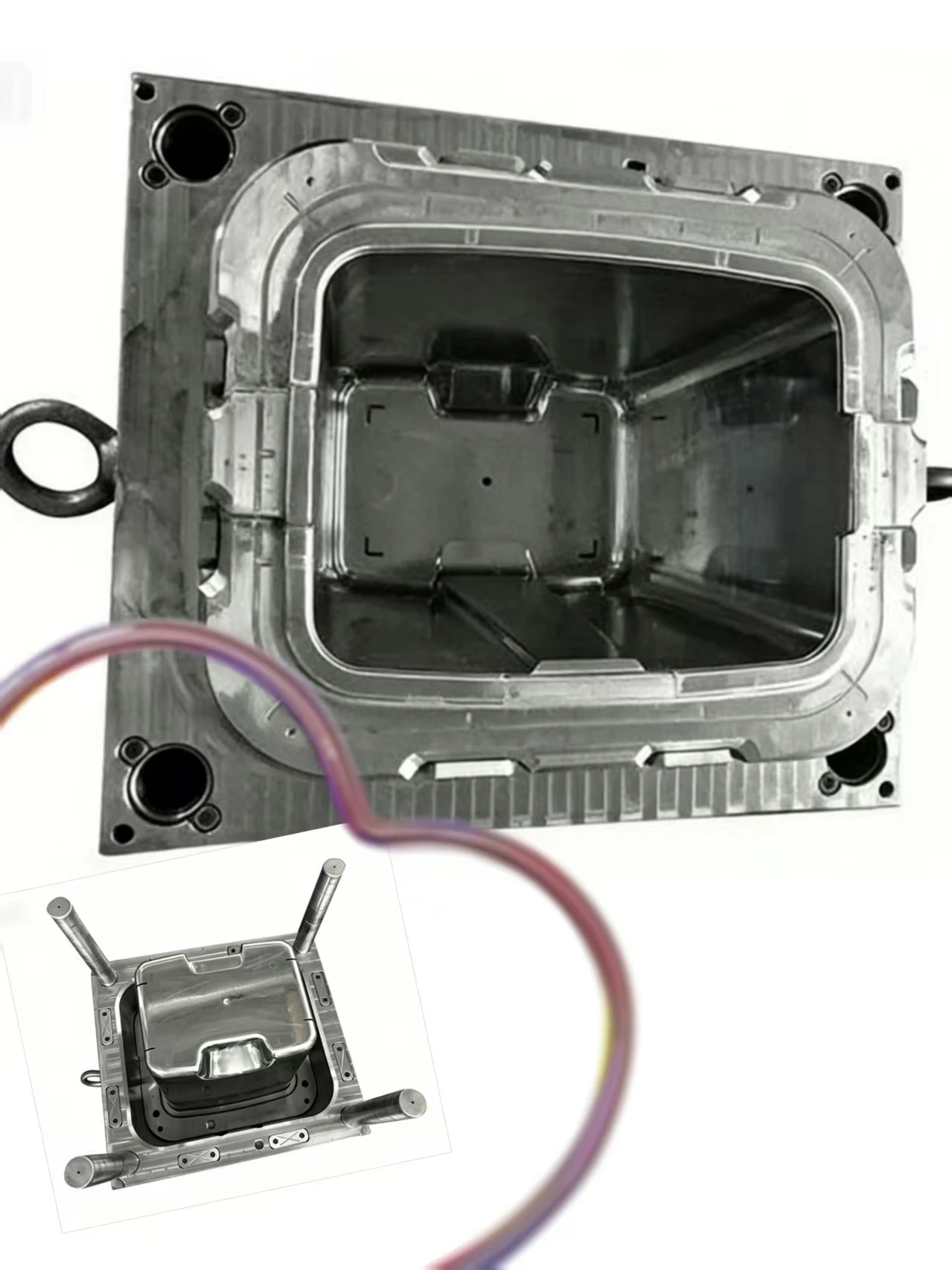
IV. Benefits: Empowering both production and application ends, achieving two-way value enhancement
The application of the plastic trash can molds for sanitation can realize two-way value enhancement between the production end and the application end. It not only helps production enterprises reduce costs and increase efficiency, but also optimizes the management experience of the sanitation application end. The specific application value is reflected in:
For manufacturing enterprises: It enables standardized mass production. The high-precision design of molds can reduce the scrap rate of products. High-quality mold materials and optimized cooling systems (such as the circulating water cooling design) can shorten the molding cycle and enhance production efficiency. At the same time, molds support customized design, which can adapt to the production needs of different specifications and structures of trash cans, thereby enhancing the enterprise's market adaptability.
For the application end in sanitation: The molds used for producing trash cans have high dimensional accuracy and stable structure. The lid of the trash can fits tightly with the can body, which can reduce the leakage of garbage and the spread of odors. The special mold structure designed for outdoor environments can enhance the anti-aging and corrosion resistance of the trash cans, and reduce the costs of later maintenance and replacement. Some of the mold designs, such as the foot-operated and sensor-controlled opening and closing structures, can also improve the convenience of use and hygiene safety.
Regarding the social environment: It helps promote garbage classification and standardized garbage management. The classified trash bins produced by the molds can precisely match the collection requirements for different types of garbage; at the same time, plastic trash bins can be recycled, and the efficient production of the molds can reduce resource waste, which is in line with the development trend of environmental protection.
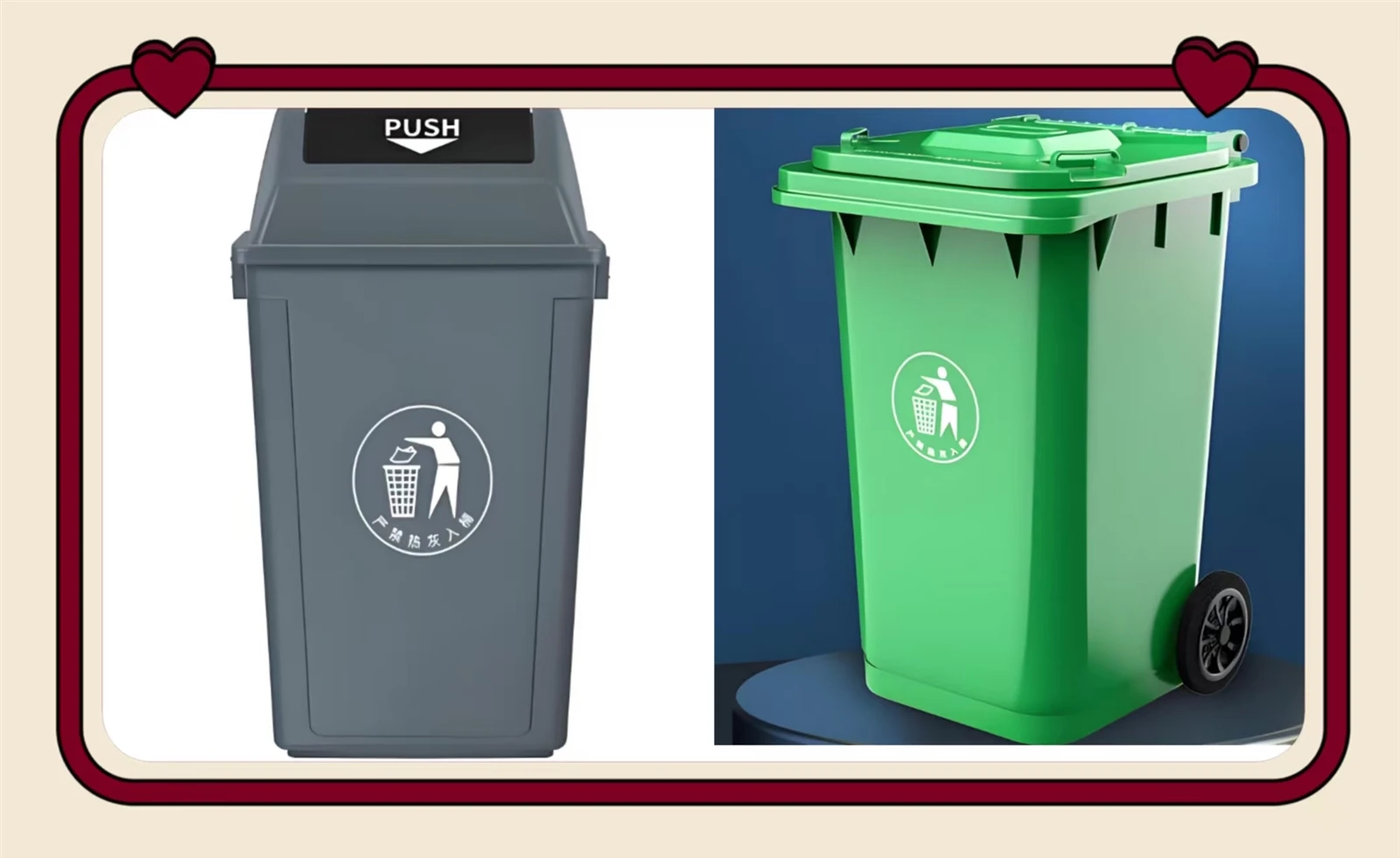
V. Core Advantages: Dual guarantee of technology and performance, highlighting competitive value
Compared with traditional molds or other material trash bin molds, the sanitary plastic trash bin molds have significant technical advantages and performance highlights. The core competitiveness is as follows:
Long service life and excellent cost performance: Using high-quality mold steel materials, after being strengthened through processes such as nitriding and heat treatment, the molds have high hardness and excellent wear resistance. Conventional hard steel molds can last for 60,000 to 80,000 mold cycles, and stainless steel molds can even last over 100,000 mold cycles. Long-term mass production can significantly reduce the unit cost; at the same time, major manufacturers offer a one-year warranty service, with free repairs during the warranty period, further reducing the usage risks.
High forming accuracy and stable product quality: Through refined design using professional design software such as UG and PROE, combined with precise CNC processing equipment, the geometric accuracy of the mold cavity is high, the surface roughness is excellent, the size of the produced trash cans is precise without burrs or protrusions, and the lid and body of the trash can fit tightly. At the same time, the optimized flow channel and cooling system can avoid problems such as uneven filling of plastic melt, cold material, and welding marks, thereby enhancing the structural strength and surface finish of the trash can.
High customization capability and wide scene adaptability: We can customize molds with different capacities, structures (such as foot-operated, lid-opening, automatic opening and closing), and surface styles (such as leather texture, polished finish, imitation wood/stone texture) according to customer needs. This not only meets the standardized requirements of municipal sanitation but also can adapt to the personalized needs of special scenarios such as scenic spots and hospitals.
High production efficiency and controllable delivery cycle: Equipped with an efficient hot runner system and cooling system, it can reduce waste generation, shorten the injection molding cycle, and increase production efficiency by over 20%; standard molds have a delivery period of only 35 to 50 days, while high-demand precision molds have a delivery period of 55 to 85 days, enabling rapid response to market demands.
Green and environmentally friendly, in line with industry standards: The mold production process adopts environmentally friendly techniques to reduce pollutant emissions; the plastic trash bins produced comply with international standards such as EN 840, featuring anti-corrosion, anti-pollution, and anti-aging properties, and can adapt to harsh outdoor environments. They are also recyclable and reusable, aligning with the green development concept.
VI. Summary
The sanitary plastic trash bin mold is the core supporting equipment for large-scale production of high-quality sanitary trash bins. Its value runs through the entire chain from material selection, product adaptation, scene application, and industrial empowerment. At the material level, through graded selection (pre-hardened steel, hard steel, stainless steel, etc.), the mold's lifespan and forming accuracy are guaranteed; the capacity covers all specifications from 20L to 660L, precisely matching the diverse needs of municipal, residential, and industrial scenarios. In terms of usage, it realizes standardized management of all types of garbage, not only reducing costs and improving efficiency for production enterprises, strengthening customization capabilities, but also optimizing the usage experience for the sanitation application end and reducing maintenance costs. It also helps with garbage classification and green development. Its core advantages are mainly reflected in long lifespan, high precision, wide adaptability, high efficiency, and greater environmental friendliness, which can fully meet the development needs of modern sanitation for standardization, efficiency, and greenness.
Hot Tags: sanitation plastic trash can mold, China sanitation plastic trash can mold manufacturers, factory, custom injection mould, injection mould repair, injection mold supplier, injection mold cooling system, injection mould delivery, injection mould productivity


