Injection Mold For Car Engine Hood
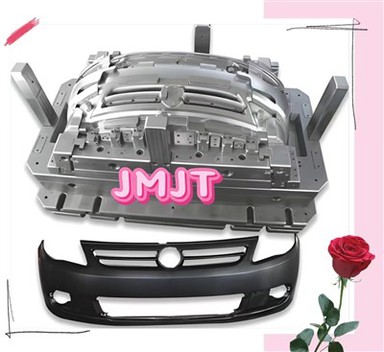
The injection mold for the car engine hood is a specialized precision mold used for mass production of the car engine outer cover / inner guard plate. The core of this mold is to form through high-pressure injection of thermoplastic materials ( such as PA6+GF, PP-T20 ), meeting automotive-grade...
- Fast Delievery
- Quality Assurance
- 24/7 Customer Service
Product Introduction
The injection mold for the car engine hood is a specialized precision mold used for mass production of the car engine outer cover / inner guard plate. The core of this mold is to form through high-pressure injection of thermoplastic materials (such as PA6+GF, PP-T20), meeting automotive-grade requirements such as dimensional accuracy of ±0.2mm, A-class surface, and high-temperature resistance of -40℃ to 140℃.
I. Overall Design of the Mold
1. Cavity Layout
Standard solution: One mold with one cavity (for large products with complex structures and multiple core-pulling requirements).
Small covers: One mold with two cavities (balanced layout).
2. Parting Surface Design
Principle: Select the largest contour of the product, taking into account demolding, venting, and processability.
Common for engine covers: Planar parting at the lowest point, combined with local piercing or abutment treatment for height differences.
3. Molding Parts (Core / Cavity)
Materials: Commonly used for cavities and cores are P20, 718H, and 2738 (pre-hardened HRC32~38); for sliders and inclined cores, SKD61 and H13 (quenched HRC50~54) are used.
Structure: Complex areas are modularized (for ease of processing, maintenance, and venting); ensure uniform wall thickness and balanced cooling.

II. Key System Design
1.Pouring system (mainly hot runner)
Type: Hot runner + cold runner multi-point gate injection (5 to 8 side gates / point gates).
Function: Balance filling for large flat surfaces, prevent short shots, reduce weld lines, and lower internal stress.
Design: Gate selection on non-visible surfaces and at wall thickness areas; equipped with cold slug wells; hot runner temperature control is precise (±1℃).
2. Lateral Core-pulling and Demolding
· Snap-fit / Interlocking: Oblique core pin (oblique ejector pin) (angle 3°~8°).
· Side hole / Side recess: Oblique guide pin slider / Bent pin slider (wear-resistant block, quenched guide surface).
· Ejection: Combination of ejector pin + ejector tube + ejector block; equipped with pre-reset and anti-white mark structure.
3. Temperature control (cooling) system
· Conformal cooling channels (8~12mm from cavity surface), diameter 8~12mm, temperature difference between inlet and outlet ≤2℃.
· Purpose: Uniform cooling, shorten cycle (45~60s), reduce warpage deformation.
4. Guidance and Exhaust
·Guiding: 4 sets of guide pins and bushings + conical surface positioning (mold closing accuracy ±0.02mm).
·Venting: Venting grooves on the parting surface (0.02~0.05mm deep) + venting through the gap between inserts and ejector pins; exhaust inserts are set in the trapped air area at the end.

III. Key Points of Design and Manufacturing
1. Moldflow Analysis: Validate filling, holding pressure, cooling, warpage, and optimize gate and process.
2. Processing: High-speed milling (HSK-E63), mirror EDM, deep hole drilling; surface polishing Ra ≤ 0.8 μm.
3. Mold Tryout: Focus on validating filling, warpage, core-pulling smoothness, and appearance defects.
4. Taizhou Huangyan Jiutai Mould Co., Ltd. specializes in automotive engine hood molds, adopting hot runner, strong cooling, and modular core-pulling, suitable for PP/PA+GF materials, meeting the requirements of a million mold cycles and lightweighting for new energy vehicles.
Hot Tags: injection mold for car engine hood, China injection mold for car engine hood manufacturers, factory