The Principle Of Compression Mold Forming
May 18, 2026
Compression molding of composite thermosetting materials The principle of the forming technology, taking into account different material types and actual production processes, can be specifically divided into three parts: the core mechanism, the principle of material differentiation, and the key process. The details are as follows:
I. Core General Principles (Applicable to All Molded Types)
The essence of molding is "Model cavity constraint + thermal pressing synergy + material form transformation",The specific process of the core logic is:
1. Pre-treatment: The formed materials (powder, granules, sheet-like, agglomerated, etc.) are pre-processed (such as drying, preheating) to remove moisture and impurities from the materials, or to soften the materials in advance to prepare for subsequent filling.
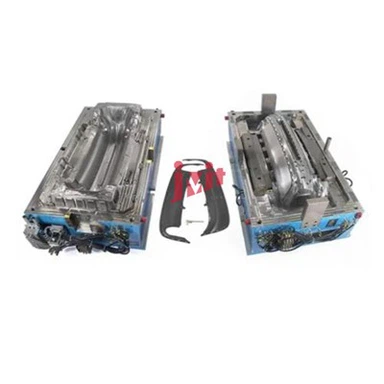
2. Loading: Place the pre-treated materials evenly into the mold cavity (the cavity shape is exactly the same as the final product, including detailed patterns, holes, etc.). Control the loading quantity to avoid excessive filling which causes the product to overflow, or insufficient filling which leads to insufficient filling.
3. Mold closing and pressure application: Close the mold and apply a certain pressure (usually ranging from several tens to several hundred MPa) using a press machine. Under the pressure, the material gradually fills every corner of the cavity and expels the air inside the cavity, ensuring a perfect fit between the material and the cavity.
4. Temperature and Pressure Stabilization: Depending on the type of material, the mold temperature is controlled (ranging from room temperature to several hundred degrees Celsius). Under the combined effect of "pressure and temperature", the material undergoes physical or chemical changes, achieving stabilization - either cooling and solidification or cross-linking and curing, resulting in a stable product form.
5. Demolding and Removal: Once the material has completely set, remove the pressure, open the mold, and take out the formed product. If necessary, perform subsequent finishing processes such as trimming and polishing.
II. Detailed Principles by Material (Key Differences)
The core difference in the molding principles of various forming materials lies in the "material changes during the setting stage". The details are as follows:
1. Molding of thermosetting composite materials (such as phenolic resin, epoxy resin): Principle: Heat the mold to the curing temperature of the resin. The material fills the cavity under the pressure and undergoes a cross-linking reaction (chemical change) while the resin becomes insoluble and non-meltable, transforming from a plastic state to a solid state; It is necessary to maintain temperature and pressure for a certain period of time to ensure the complete cross-linking reaction and prevent bubbles and cracking in the product. After the curing is complete, the mold is removed.
2. Rubber molding (such as natural rubber, synthetic rubber): Principle: Place the rubber compound (containing rubber, vulcanizing agent, etc.) into the mold, heat it to the vulcanization temperature, and simultaneously apply pressure to allow the rubber compound to fill the cavity; the vulcanizing agent initiates the cross-linking of rubber molecules, forming a stable three-dimensional network structure. The rubber changes from an elastic body to a formed rubber product. After vulcanization is completed, the mold is removed (the core of this process is the chemical change of "vulcanization cross-linking").
3. Composite material molding (such as fiber-reinforced plastic FRP): Principle: Mix fiber-reinforced materials (such as glass fibers, carbon fibers, etc.) with resin matrix, place them in a mold, and under certain temperature and pressure conditions, the resin melts or solidifies, while the fibers are evenly distributed in the resin, forming a composite material product that combines the high strength of fibers and the toughness of resin; During the molding process, pressure and temperature need to be controlled to ensure that the resin fully penetrates the fibers and avoid fiber agglomeration and resin voids.
III. Key Supporting Principles (Ensuring Mold Forming Quality)
1. Exhaust principle: During the molding process, when the material fills the mold cavity, it will expel the air inside the cavity and the gases emitted by the material itself. If the exhaust is insufficient, it will cause defects such as bubbles and depressions in the product. Therefore, molds usually have exhaust grooves designed, or they use segmented pressure application to assist in exhaust.
2. Pressure transmission principle: The pressure from the molding machine is transmitted through the mold cavity to the material, ensuring that the material is uniformly subjected to force. This prevents uneven filling in certain areas or excessive compression, which could result in inconsistent product thickness and incomplete edges or corners.
3. Temperature Control Principle: Through the heating / cooling system of the mold, the temperature of each part of the cavity is precisely controlled to be uniform, avoiding excessive temperature in certain areas that could cause material decomposition or carbonization, or insufficient temperature in other areas that could lead to incomplete shaping and difficulty in demolding.

IV. Conclusion
The efficient molding technology has completely overcome the cost and efficiency bottlenecks in the large-scale application of thermosetting composite materials molds through innovative breakthroughs in the three core aspects of temperature control, pressure, and automation. It has achieved the production goal of "high efficiency, high quality, and low cost". The promotion and application of this technology not only promotes the large-scale popularization of thermosetting composite materials in fields such as automobiles, rail transportation, and new energy, but also helps related industries achieve lightweighting and green upgrading. With the integration and development of intelligent and multi-functional technologies, the efficient molding technology will continue to lead the transformation of the thermoplastic composite material mold industry, providing core support for the high-quality development of the manufacturing industry.