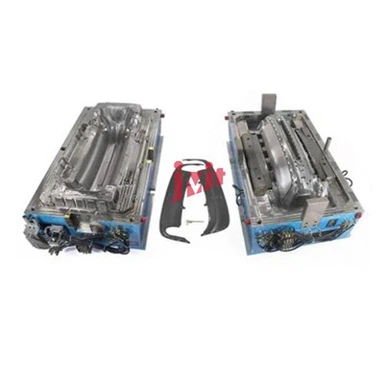
Research And Development And Process Of Melamine Bathroom Chassis Molds
Oct 19, 2026
Driven by the dual drive of prefabricated decoration and the rapid popularization of integrated bathrooms, melamine bathroom chassis has been upgraded to become the core component for integrated bathrooms to achieve leak-proofing, easy cleaning, and quick assembly and delivery. The core of this lies in large melamine molding molds. The design level of the molds directly determines the product's molding yield, production cycle, material utilization, and later assembly compatibility with wall panels and floor drain systems.
I. Market-driven
With the continuous implementation of policies for prefabricated buildings and integrated bathroom industries, residential and commercial spaces are increasingly demanding waterproofing, slip resistance, and cleanliness in bathrooms. Integrated bathrooms have become the core tool for iterating in hotels, apartments, rental housing, and fully furnished residential products. Melamine bathroom chassis is installed on the bathroom floor, and through integrated molding, it handles showers, washing, and daily water use. Combined with the floor drain system, it effectively avoids traditional pain points such as tile slope alignment and joint leakage, ensuring long-term dryness and cleanliness in bathrooms .
With its high gloss appearance, excellent stain and chemical corrosion resistance, high surface hardness, integrated molding of complex curved surfaces, and lightweight design, melamine materials have gradually become the mainstream solution for integrated bathroom bottom basins, driving continuous growth in upstream demand for melamine molding molds.
Currently, the bathroom industry is rapidly evolving toward customization and multi-specification iterations, with huge differences in the shapes and dimensions of bathroom bases for different room types and specifications. Overall bathroom manufacturers require molds to meet both large-scale, stable mass production needs and rapid modification of multiple versions, which places higher demands on manufacturers' synchronized development capabilities and quick mold modification response. At the same time, overseas bathroom export orders are increasing, and overseas customers have strict standards for component dimensional tolerances, high-gloss A-grade surfaces, aging resistance, and anti-slip performance, further raising the technical threshold for melamine bathroom base molds .

II. Core technical challenges of molds
Melamine bathroom chassis are large-sized, thin-walled melamine products, with a wide overall profile, large surface spans, complex curved transitions, locally distributed downspouts, water-blocking edges, anti-slip patterns, and reinforcing ribs. Their mold development differs significantly from conventional melamine tableware molds, with technical challenges mainly focused on the following areas. To address these industry pain points,JMJT.MOULD. has carried out specialized technical breakthroughs, overcoming various technical challenges one by one .
1.Mold filling and material flow control
The base of the melamine bath has a large forming surface and relatively thin walls, resulting in uneven distribution of water outlets, reinforcement ribs, and water-blocking edges. The fluidity of melamine molding plastic is limited. If the blank placement position and mold cavity layout are unreasonable, defects such as material shortages, local weld marks, and bubbles are easily found. During the design phase, JMJT.MOULDcombined CAE material flow simulation to optimize the blank placement position, silo layout, and overflow trough structure, ensuring synchronized advance of the material flow during mold pressing, achieving complete cavity filling and reducing part scrap rates .
2. Exhaust system design
The air enclosed during the closed-mold molding process is the main cause of bubbles, pinholes, and surface pitting. Large bases at the corners, downspit bases, and deep areas of anti-slip grooves easily cause air trapping. JMJT. MOULD precisely arranges micro-exhaust grooves and vent pins, with some high-end solutions equipped with vacuum exhaust systems to quickly expel internal gases from the cavity, ensuring high-gloss Class A appearance quality of bathroom surfaces and reducing post-processing and grinding steps.
3. Temperature equalization and curing control
The melamine molding process ranges from 150-180°C, and the bathroom bottom basin mold area is large and the wall thickness changes significantly, making it easy for mold surface temperature differences to occur. Excessively high local temperatures can cause the resin to become overly ripe, brittle, and uneven in color; Low temperatures can lead to incomplete curing, and parts may not meet mechanical properties and water resistance standards. JMJT MOULD adopts an internal zoned oil circuit design to achieve uniform mold surface temperature, control temperature difference range, ensure consistent curing of the entire mold product, reduce the risk of warping and deformation, and keep dimensional errors within the 0.5mm assembly tolerance requirement ± complete bathroom installation
4. Molded surface high-gloss and wear-resistant treatment
The bathroom bottom basin is exposed to soap liquid, detergents, and water flow for long periods, requiring high surface gloss, wear resistance, and corrosion resistance. The bottom basin mold cavity is generally made from high-quality mold steel such as P20, 718, S136, or H13, which is vacuum quenched to achieve hardness above HRC48. Combined with mirror polishing and hard chrome plating, it resists the erosion and wear of fillers and water flow, maintaining a high-gloss mirror A-grade surface for long-term mass production, extending mold service life and reducing frequent polishing maintenance costs.
5. Design the demolding and draft angles
Melamine bathroom bottom basins have multiple curved inverted hooks and grooves such as drain outlets, water barriers, and anti-slip textures. Unreasonable draft angle design can easily scratch the product surface and cause cracking during demolding. JMJT.MOULD differentiate by setting draft angles for the curved main body, deep ribs, and groove positions, while optimizing the ejection system layout for multi-point balanced ejection to prevent twisting and deformation of large parts during demolding
6. Deep integration between molds and production lines
A fully functional melamine bathroom chassis mold cannot be limited to static surface machining accuracy; it also needs to fully match the real production conditions of downstream melamine molding production lines, achieving seamless adaptation between tooling equipment and on-site production
In the early stages of mold project development, the technical team needs to fully coordinate with the customer's existing equipment parameters, including the rated tonnage of the hydraulic press, effective dimensions of the worktable, mold opening and closing stroke, and pressure plate parallelism. Based on these, they design the overall mold structure, mold cavity layout, and clamping force accordingly, adapting to the standard production process window of 15-40MPa mold pressure and corresponding curing cycles. At the same time, fully considering automation production needs, the mold height, ejection mechanism, and pick-up space are professionally optimized, compatible with intelligent operation modes such as automatic feeding and robotic automatic part picking, effectively compressing the single-piece forming cycle and fully meeting the requirements for large-scale, continuous mass production and delivery of bathroom components.
Entering the mold trial validation stage, multiple rounds of iterative debugging are required. By precisely controlling the overflow amount in the overflow tank, optimizing the cavity venting point and vent groove specifications, and reasonably compensating for melamine shrinkage rate based on material properties, the system systematically solves typical molding defects common to large-size parts such as warping, pitting, bubbles, weld lines, and local material shortages. After prototype trial production is completed, the verification process is not simply finished with appearance and dimensional inspection; it is also necessary to coordinate with customers to simultaneously conduct supporting verification tests on water resistance, boiling resistance, chemical corrosion resistance, anti-slip performance, and assembly sealing, comprehensively verifying the overall performance of components. This ensures that molds can be directly connected to customers' production lines for stable mass production after delivery, significantly shortening the R&D and iteration cycle for new products from bathroom manufacturers and accelerating the rollout of new products.

III. Advantages of integrated compression molding
Relying on the integrated molding capability, the melamine bathroom chassis can form multiple functional features such as anti-slip patterns, drain openings, water-blocking edges, reinforcing ribs, and positioning slots in one step, replacing the traditional multi-component split assembly model. This forming method effectively reduces the total number of components, eliminates the need for subsequent splicing, bonding, and slope adjustment and other subsequent steps, significantly lowering assembly time and labor costs, and fundamentally minimizes quality risks caused by joint leakage, helping bathroom manufacturers continuously reduce overall manufacturing costs. This is also the most prominent core competitive advantage of melamine integrated molding solutions compared to split assembly processes.
IV. Conclusion
Melamine bathroom chassis molds are the key hub connecting melamine material technology with the overall performance of bathroom products. Facing the wave of bathroom assembly and rapid installation, only by overcoming technical challenges such as large-plane filling, venting, thermal balance, wear resistance, and demolding, while balancing mass production yield and full lifecycle costs, can stable and reliable melamine bathroom molding solutions be provided, supporting the high-quality development of China's bathroom industry .