Development And Process Of SMC Truck Deflector Mould
Oct 05, 2026
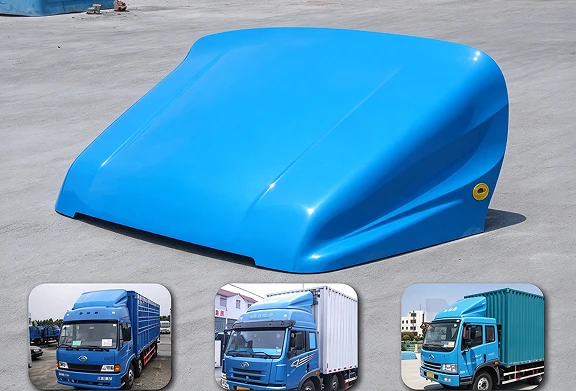
Driven by both the energy-transition trend and fuel-economy regulations,SMC truck deflector have become a core solution for commercial vehicles to achieve vehicle-level lightweighting,cut energy consumption, and improve driving range and fuel-economy performance. The key to realizing these benefits lies in large-size SMC compression moulds. Mould design quality directly determines the forming yield, production cycle time, material utilization rate and final vehicle assembly matching accuracy of finished parts.
I. Market Drivers
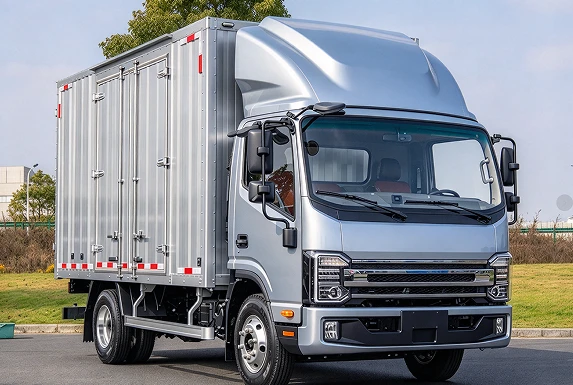
As domestic heavy-duty truck emission regulations keep tightening and the logistics industry raises higher requirements for vehicle energy-saving control, aerodynamic optimization has become a core priority for OEM product iteration. Truck fairings are mounted on the top and both sides of the cab. By guiding airflow, they effectively reduce wind resistance at high-speed driving conditions and deliver a 3%-5% fuel saving. For new-energy heavy-duty trucks equipped with fairings, driving range can be significantly improved.
Sheet Molding Compound (SMC) features high strength, weather and corrosion resistance, capability of integral forming for complex curved surfaces and lightweight properties. It has gradually become the mainstream material option and triggered surging demand for upstream SMC compression moulds.
The domestic commercial-vehicle industry is shifting toward customization and fast iteration of multiple vehicle models. Fairings for different tractors and cargo trucks vary greatly in curved-surface geometry. OEMs require moulds capable of stable mass production as well as rapid modification for multiple versions. This places higher demands on mould suppliers for concurrent development competence and fast mould-revision response. Meanwhile, growing export orders for commercial vehicles mean overseas customers enforce strict standards on part dimensional tolerances, Class-A exterior surfaces and ageing resistance, further raising the technical bar for SMC fairing moulds.
II. Core Technical Challenges for Moulds
SMC truck deflector are large size, large curvature thin wall SMC components with broad overall outlines and complex, varied curved transitions. Their mould development differs substantially from that of conventional SMC parts. Major technical challenges are summarized below. Targeting these industry pain points, JMJT MOULD CHINA has carried out special technical research to resolve each difficulty item by item.
1.Runner and Filling Control
Fairings feature undulating curved surfaces with unevenly distributed local reinforcing ribs and mounting bosses. Given the limited flowability of SMC materials, improper gate layout will easily lead to short shot, fiber agglomeration and local weld-line defects. At the design phase, JMJT Mould leverages CAE material-flow simulation to optimize blank placement position, overflow grooves and flow-choke runner structures. This ensures synchronous advancement of the flow front during compression, achieves complete cavity filling and lowers part scrap rates.
2.Venting System Design
Air trapped during closed-mold compression is the primary cause of blisters, pinholes and surface blemishes on finished products. Air traps tend to occur at corners and deep rib sections of large-curvature fairings.JMJT Mould precisely arranges micro-vent grooves and vent pins. For premium solutions, vacuum venting systems are integrated to rapidly evacuate air inside the cavity. This guarantees Class-A exterior surface quality and reduces post-processing sanding operations.
3.Full-Area Uniform Temperature Control
The SMC compression-molding process window ranges from 140 ℃ to 160 ℃. Due to the large surface area of fairing moulds, temperature differences across the mould face are highly likely. Excessive local temperature causes over-cured brittle resin; insufficient temperature results in incomplete curing and sub-standard mechanical performance of parts. JMJT Mould adopts zoned internal oil-circuit design to homogenize mould-face temperature and limit temperature deviation. It ensures consistent curing across the whole mould, mitigates warpage risk, and keeps dimensional error within the OEM-specified tolerance of ±0.5 mm.
4.Wear Resistance and Surface Treatment
Cavities for deflector mould generally adopt hot-work tool steel treated by vacuum quenching to reach hardness above HRC50. Combined with mirror polishing and surface coating, the steel resists erosive wear from glass fibers. It maintains Class-A mirror surfaces throughout long-run mass production, extends mould service life and cuts costs from frequent polishing maintenance.
5.Demolding and Draft-angle Design
Fairings contain multiple curved undercuts and reinforcing-rib features. Improper draft-angle design will scratch part surfaces or trigger cracking upon demolding.JMJT Mould applies differentiated draft angles for main curved surfaces and deep-rib zones. The ejection-system layout is also optimized for multi-point balanced ejection to prevent distortion of large-size components during demolding.
III. Deep Integration between Mould and Production Line
A high-performance SMC truck deflector mould depends not merely on static mould-face machining precision. It must fully match real-world operating conditions of downstream SMC compression-molding production lines for seamless compatibility between tooling and on-site manufacturing.
At the early project-development stage, the technical team thoroughly collects parameters of customers' existing equipment, including key indicators such as hydraulic press rated tonnage, effective platen size, mold-opening-closing stroke and platen parallelism. Based on these data, targeted design is completed for overall mould structure, cavity layout and clamping-force distribution, adapting to standard process parameters: 310 MPa compression pressure and a 24-minute curing cycle. Requirements for automated production are also fully considered. Professional optimizations are implemented for mould height, ejection mechanisms and part-removal clearance to support intelligent operations such as automatic blank loading and robot-aided part pick-up. Cycle time per component is effectively shortened to satisfy high-volume continuous-production delivery demands for commercial-vehicle parts.
Multiple rounds of iterative commissioning are required in the mould-tryout phase. By precisely adjusting overflow volume from overflow grooves, optimizing vent positions and vent-groove specifications of the cavity, and compensating SMC shrinkage ratio according to material properties, typical forming defects common in large-size parts - such as warpage, surface pitting, blisters, weld lines and local short shots are systematically addressed. After prototype samples are manufactured, verification is not finished by simple appearance and dimensional inspection. Further joint validation with the customer is performed, covering part stiffness check, outdoor weathering performance, paint-film adhesion and coating compatibility. Comprehensive performance of components is fully validated. Upon mould handover, direct connection to customer production lines for stable mass-production is realized. This significantly shortens R&D iteration cycles for OEM new-vehicle components and accelerates new-product launch.
Benefiting from integral compression-molding capability, truck deflector can form multiple functional features in one single step: spoiler structures, mounting bosses, reinforcing ribs, positioning slots and more. This replaces conventional multi-component bolt-on / bonded assemblies. Such forming technology reduces total part count and eliminates multiple downstream procedures including welding, bonding and assembly. Assembly man-hours and labor costs are greatly lowered, together with quality risks induced by assembly tolerances. Component manufacturers achieve sustained reduction of overall production costs, which constitutes the most prominent competitive advantage of the monolithic SMC compression-molding solution versus segmented assembly processes.
SMC Truck Deflector Mould serve as a critical link connecting composite-material technology and overall commercial-vehicle performance. Amid the trends of energy-saving and electrification for commercial vehicles, only by overcoming technical hurdles including large-curvature filling, venting, thermal balance and wear resistance while balancing mass-production yield and full-lifecycle costs can stable and reliable SMC exterior part solutions be delivered, supporting high quality development of China's commercial vehicle industry.