Innovation Of Intelligent Vehicle Chassis Materials
Jul 18, 2026
The lightweight competition among new energy vehicles has expanded from vehicle body interior and exterior parts to core structural components of chassis suspensions. As the core parts undertaking load-bearing, shock absorption and handling functions of the whole vehicle, suspensions play a decisive role in driving performance.
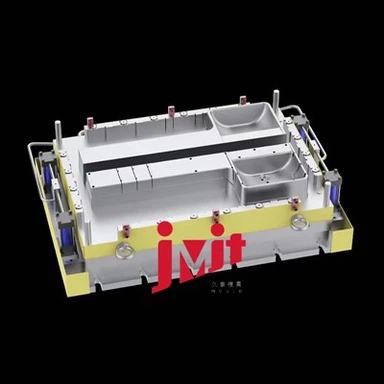
JMJT MOULD CHIAN, a high-tech enterprise specializing in R&D of automotive composite material moulds, has achieved all-round innovations in mould structure, temperature control and fiber positioning systems. Its solutions strike a perfect balance between ultra-high rigidity, lightweight design, impact resistance and mass production cost control, delivering viable mass-production mould solutions for chassis suspensions of all types of new energy vehicles.
Limitations of Single-Fiber Suspensions for Full-Range Vehicle Manufacturer Layouts
· Carbon Fiber Reinforced Polymer (CFRP) Suspensions
Advantages: Outstanding specific strength and modulus. They reduce the weight of steel suspensions by 50%–60%, drastically cutting unsprung mass for faster chassis response. Featuring excellent long-term vibration fatigue resistance and a near-zero thermal expansion coefficient, they maintain stable dimensions under high and low temperatures.
Drawbacks: Carbon fiber raw materials cost 5 to 8 times more than glass fiber, pushing up component procurement costs for large-scale vehicle application. The material is brittle and prone to integral cracking under minor collisions, leading to high maintenance costs. Hard carbon fiber filaments cause severe abrasion to mould cavities; ordinary moulds suffer dimensional deviations after only 300,000 shots, resulting in high maintenance costs during mass production. Such suspensions are only suitable for high-end performance vehicles and cannot be widely adopted in mass-market passenger cars.
· Glass Fiber Reinforced Polymer (GFRP) Suspensions
Advantages: Raw material costs are low, roughly one-fifth of carbon fiber. The material features excellent flowability during molding, causes minimal wear to molds, and delivers outstanding impact energy absorption. In collisions, fiber delamination dissipates impact force, preventing complete structural fracture. It is ideal for mass production of compact battery electric vehicles and new energy commercial vehicles.
Disadvantages: Limited rigidity and lightweight potential. GFRP suspensions weigh over 35% more than carbon fiber suspensions of the same volume. They are prone to bending deformation under heavy loads or aggressive driving, and fiber debonding may occur after long-term bumpy travel, failing to meet the chassis handling requirements of high-end vehicles.
Against this backdrop, hybrid carbon-glass fiber suspensions have emerged as the optimal industry solution. Carbon fibers are laid at the main stress ribs and bushing connection points of the suspension to provide rigid support and maximum weight reduction, while glass fibers form the main body of the suspension to enhance overall impact toughness and cut raw material costs. However, carbon fiber and glass fiber differ drastically in density, shrinkage rate, resin wettability and layup flow behavior. Conventional universal molds will produce fatal defects such as fiber delamination, partial material shortage, molding warpage and interface debonding. Therefore, special forming molds have become the bottleneck restricting the implementation of material innovation.

II.Core Technologies of Special Forming Molds for Hybrid Carbon-Glass Fiber Suspensions
Focusing on two mainstream chassis components, namely suspension control arms and composite leaf springs, JMJT Mould CHINA has completed full technical iteration of hybrid fiber molds and resolved all technical challenges throughout the co-forming process of carbon fiber and glass fiber.
1. Partitioned Preinstalled Positioning Inserts
Removable carbon fiber positioning slots are embedded in the stress-bearing zones of the suspension mold cavity, while stations for placing glass fiber preforms are reserved in the main cavity area. Mechanical limiting structures inside the mold precisely lock the layup positions of the two fibers, eliminating mixed flow and delamination of carbon fiber and glass fiber during molding. The fiber stress trajectories under bumping and extrusion working conditions of suspensions are simulated. Layered fan-shaped divergent runners are adopted for mold gates to balance the filling flow velocity difference between the two fibers. After molding, the uniformity of fiber distribution inside suspensions is increased by 96%, completely eliminating stress fractures and surface whitening defects, and the fluctuation of mechanical properties of components is controlled within ±3%.
2. Independent Zoned Closed-Loop Temperature Control System
The thermal expansion coefficients of carbon fiber and glass fiber differ by nearly 40%. As long-size special-shaped structural parts, suspensions are highly prone to bending and torsional deformation during cooling after molding, which directly impairs the assembly accuracy of bushings.The mold adopts an independent oil-circuit zoned temperature control design: two separate hot oil circulation modules are equipped for carbon fiber reinforced zones and glass fiber main zones respectively, with the temperature difference of mold cavity controlled precisely within ±0.5℃ to match the different curing temperature requirements of carbon fiber and glass fiber. The mold cavity substrate is 718H pre-hardened steel, and nano-ceramic wear-resistant coatings are sprayed on friction-prone stress areas. This not only offsets the cooling shrinkage difference between the two fibers, but also greatly reduces the abrasion of the mold cavity caused by hard carbon fibers, enabling stable mass production of more than 1.2 million pieces per set of molds.
3. Multi-stage Vacuum Venting & High-pressure Resin Injection System
Suspension control arms and composite leaf springs generally feature wall thicknesses ranging from 8 mm to 15 mm. Stacked hybrid fibers greatly increase the difficulty of resin impregnation, which easily leads to internal pores and debonding at the fiber-resin interface, resulting in fatigue fracture of chassis components. The mold is equipped with three tiers of vent slots (main, secondary and micro), and full vacuum negative pressure pumping is implemented before mold clamping. The injection system adopts countercurrent mixed injection under high pressure of 1–6 MPa, allowing resin to penetrate carbon and glass fiber layers rapidly. The porosity of molded parts is less than 0.3%, and the impact strength is increased by 45% compared with parts made via traditional molds, fully passing the 300,000-cycle chassis pulsating fatigue safety test.
Integrated Mold Structure with Embedded Metal Bushings
The bushing mounting points at both ends of the suspension serve as core load-bearing areas. The mold is fitted with built-in automatic positioning inserts for bushings, which enable direct embedding of metal bushings while laying fiber preforms. The hybrid carbon-glass fibers are compression-molded in one step, forming a seamless bond between bushings and the composite substrate after molding. No subsequent press-fitting or bonding processes are required. The processing time for a single part is reduced by 60%, with assembly dimensional error controlled within ≤0.02 mm, meeting the automatic assembly line standards of vehicle OEMs.

III.Mould-driven Upstream and Downstream Industrial Collaboration
As a mould manufacturer, Taizhou Huangyan Jiutai Mould Co., Ltd. goes beyond merely supplying tooling. It has built a one-stop service system covering "material formula matching – customized mould development – mould trial verification – mass production process transfer".
The company operates an in-house composite material trial workshop equipped with tonnage moulding presses and high-speed injection moulding equipment. It can complete full-process sampling, mechanical performance testing and dimensional verification of hybrid carbon-glass fiber components, cutting new product development cycles for automakers by 30%.
The firm has developed mould technologies for recyclable thermoplastic composites to align with the low-carbon circular economy trend. Formed hybrid carbon-glass fiber parts can be recycled and remanufactured under high temperatures, helping vehicle manufacturers achieve carbon peaking and carbon neutrality emission reduction targets.
In addition, as automotive chassis develop toward intelligence and integration, glass fiber and carbon fiber suspensions will gradually incorporate sensing functions. Optical fiber sensors, strain gauges and other components can be embedded during composite molding to monitor real-time data such as suspension stress and vibration, supporting intelligent driving and active suspension control, and further improving vehicle safety and handling performance.

Glass fiber suspensions center on full-life-cycle cost advantages, satisfying mass-market vehicles' comprehensive demands for lightweight design, reliability and cost control. Carbon fiber suspensions feature ultimate performance strengths, empowering high-end and new energy vehicles to achieve all-round improvements in handling, driving range and ride comfort. With differentiated market positioning, the two types of suspensions jointly advance the transformation of automotive chassis materials from conventional steel to composites.
Moving forward, with continuous advances in material technologies and molding processes, glass fiber suspensions will evolve toward higher performance, carbon fiber suspensions will achieve cost reduction breakthroughs, and hybrid composite materials will become the optimal choice for mid-range vehicles. The three material solutions will jointly form a diversified landscape of automotive chassis materials, delivering tailor-made solutions for vehicles of all tiers and driving the sustainable development of the automotive industry toward lightweight, high-performance and eco-friendly manufacturing.