Composite Materials Lead The Way Lightweight Robots
Jul 20, 2026
As the mother of industrial manufacturing, molds serve as the core foundation for industries including automobiles, electronics, home appliances and precision components. Traditional mold production relies heavily on manual labor and heavy automated equipment, which are plagued by large floor space, high motion inertia, slow start-stop response and poor compatibility with precision processes. Especially for small and medium-sized precision molds and customized production with multiple varieties and small batches, heavy robots lack flexibility, consume excessive energy and are prone to positioning errors, failing to meet current demands for refined, flexible and efficient production. Against this backdrop, technological innovation in robot lightweighting has become a critical breakthrough for intelligent mold manufacturing.
I.Lightweighting Becomes a Core Trend for Robots
In 2026, the industrial robotics industry will usher in a wave of structural upgrades, with lightweighting, miniaturization, high flexibility, and low energy consumption becoming the core standards for robot R&D and iteration across the entire sector. As new technologies and materials such as magnesium-aluminum alloys, carbon fiber, and lightweight integrated joints achieve large-scale deployment, all categories of industrial robots, collaborative robots, and mobile robots will undergo comprehensive lightweighting innovations. These advancements will be widely applied across various industry scenarios, including electronics, automotive, hardware, logistics, and precision manufacturing, serving as a pivotal driver for the intelligent transformation of the manufacturing sector.
II.Building a Lightweight Technology System
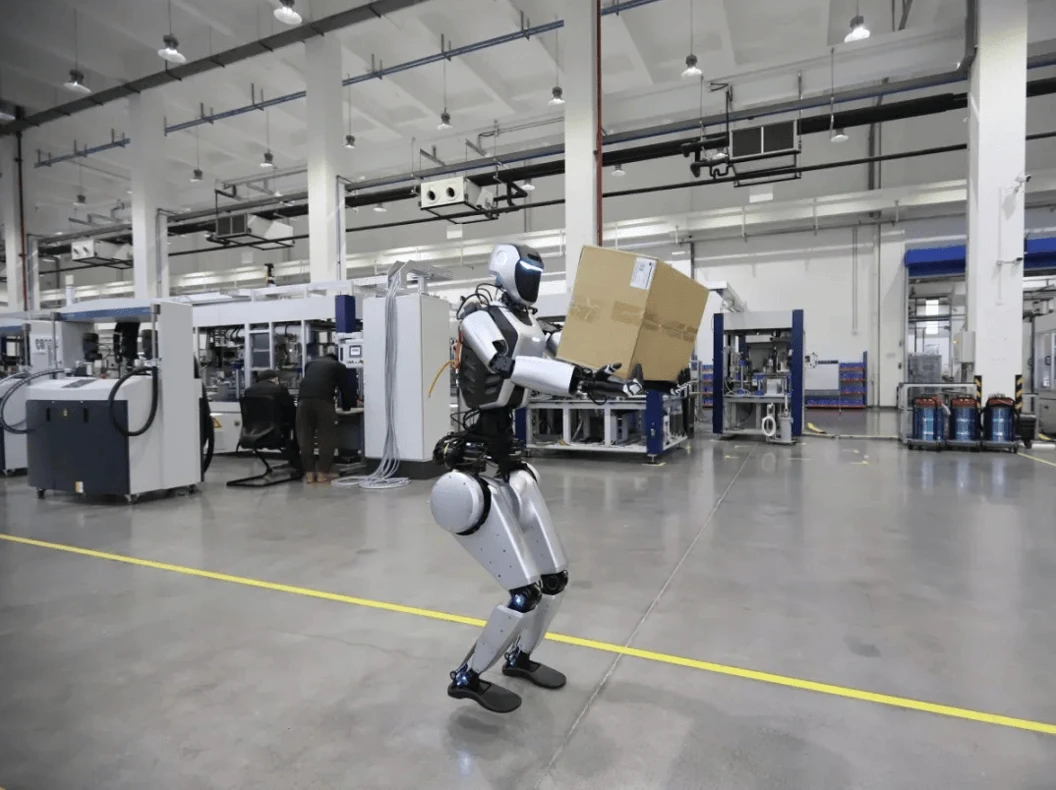
The robot industry has developed a mature lightweight upgrading framework built on three core technical approaches: replacement with new lightweight materials, optimized precision structural simulation, and weight reduction of core integrated components.
On the material front, manufacturers have phased out bulky all-steel frames and widely adopted lightweight high-strength materials including aluminum-magnesium alloys, carbon fiber composites and PEEK high-performance engineering plastics for robot frames, joint housings, transmission structures and other key parts. While guaranteeing structural rigidity, fatigue resistance and operational stability, these materials drastically cut overall machine weight. For some models adopting magnesium alloy lightweight solutions, weight of core joint components can be reduced by 40%, and overall energy consumption drops by over 10%, achieving effective weight reduction without sacrificing performance.
In terms of structure and components, enterprises leverage digital twins and CAE dynamic simulation technology to optimize robot motion trajectories, joint layouts and transmission systems. Paired with ultra-light harmonic reducers and lightweight electric quick-change devices, equipment size and weight are further minimized. At present, mainstream lightweight collaborative robots on the market weigh as little as 11 kilograms; core reducer parts can be reduced in weight by up to 68%, and end effector quick-change devices cut weight by over 40%. This greatly lowers motion inertia, enabling vibration-free high-speed start-stop and high-precision positioning to support refined operations across all industries.
III.Full-industry Application of Lightweight Robots
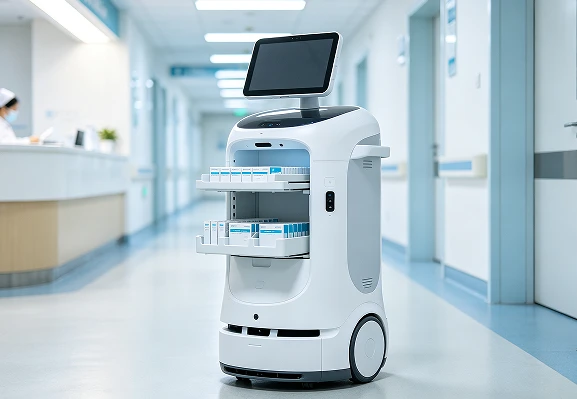
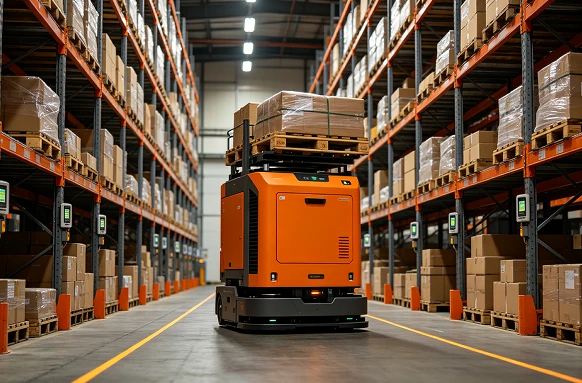
Boasting lightweight bodies, easy deployment and strong adaptability, lightweight robots have penetrated all manufacturing sectors:In the transportation and logistics industry, lightweight mobile robots complete automatic cargo transfer, stacking and last-mile delivery, suitable for closed transportation scenarios in warehouses and industrial parks;In automotive manufacturing, lightweight manipulators flexibly perform body welding, component assembly, interior processing and other multi-process flexible production;In warehousing and logistics, lightweight AMR mobile robots rapidly sort, transfer and palletize goods to handle high-frequency operations during e-commerce shopping peaks;In chemical and new energy sectors, lightweight explosion-proof robots access narrow and high-risk working conditions to replace human labor for repetitive tasks, greatly boosting operational safety and efficiency.

IV.Lightweight Robots Improve Production Efficiency
As lightweight robot technology matures, its application scenarios throughout the mold industrial chain keep expanding, delivering remarkable practical value. In mold production lines, automated production lines integrated with lightweight six-axis robots realize fully unmanned operations including in-mold part picking, product sorting and intelligent palletizing. Matched with high-speed injection molding equipment, production cycles are shortened and efficiency at single workstations rises by more than 30%. For mold repair, lightweight robot surfacing workstations accurately repair forging molds and precision injection molds. The traditional 72-hour repair cycle is cut to 18 hours, material waste falls by 40%, and mold service life is extended to 2.5 times the original level, significantly lowering corporate production costs.
Flexible collaboration and multi-equipment coordination are also core strengths of lightweight robots. Unlike heavy traditional robots that operate independently, new-generation lightweight composite mobile robots support "one-to-many" equipment coordination. A single unit can link up to 9 mold processing machines to complete loading/unloading, transfer and inspection in one stop, drastically improving equipment utilization and shortening the return on investment cycle to within one year. In addition, the drastically reduced self-weight eliminates the need for complex foundation reconstruction for rapid deployment, lowering the threshold of digital transformation for small and medium-sized mold enterprises.
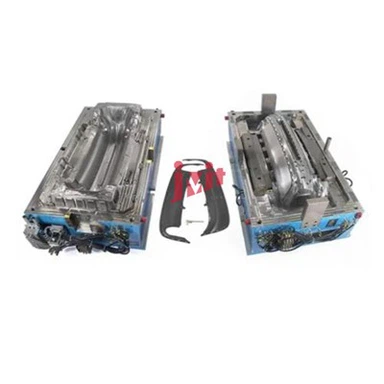
Furthermore, lightweight robots independently developed and manufactured by mold enterprises deliver strong industrial synergy. Leveraging integrated mold forming advantages, manufacturers can rapidly iterate lightweight robot component solutions. Besides upgrading their own production lines, they supply high-precision lightweight structural parts, customized molds and complete machine supporting services for intelligent equipment, humanoid robot and automation manufacturers. This forms a closed industrial chain of "mold manufacturing – independent robot R&D – lightweight upgrading – equipment supporting", extending the value chain of the mold industry. At present, many leading domestic mold enterprises have reached strategic cooperation with robot manufacturers, and the penetration rate of supporting lightweight mold robots keeps rising.
Driving Comprehensive Upgrading of the Manufacturing Industry
The widespread adoption of lightweight robots breaks the application barriers of traditional automation equipment and reshapes manufacturing production models. Compared with heavy conventional robots, lightweight equipment cuts energy consumption by 10%–20% and deployment costs by over 25%, greatly shortening the return cycle. They fit not only large intelligent factories for mass production but also meet the demand of small and medium manufacturers for low-cost intelligent transformation. In high-end manufacturing fields such as molds and precision components, lightweight robots drive the shift from extensive processing to refined, intelligent and green production, supporting domestic substitution of high-precision molds and precision components.