


BMC Sink Mold
I. Definition and Application BMC sink molds are specialized tools specifically designed for the compression/transfer molding of BMC (Bulk Molding Compound) composite material sinks, mainly for kitchen and bathroom settings. BMC material is composed of unsaturated polyester resin, chopped glass...
- Fast Delievery
- Quality Assurance
- 24/7 Customer Service
Product Introduction
I. Definition and Application
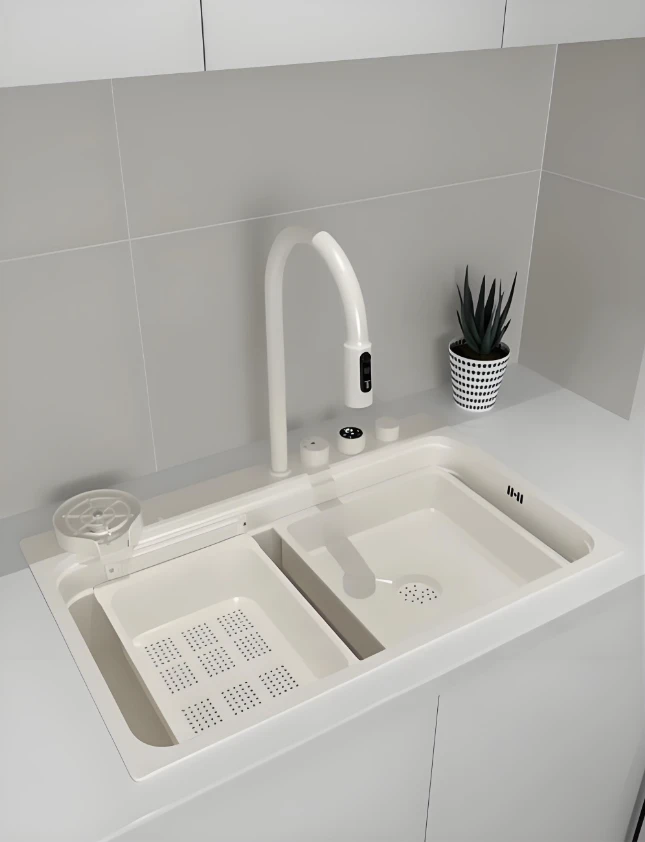
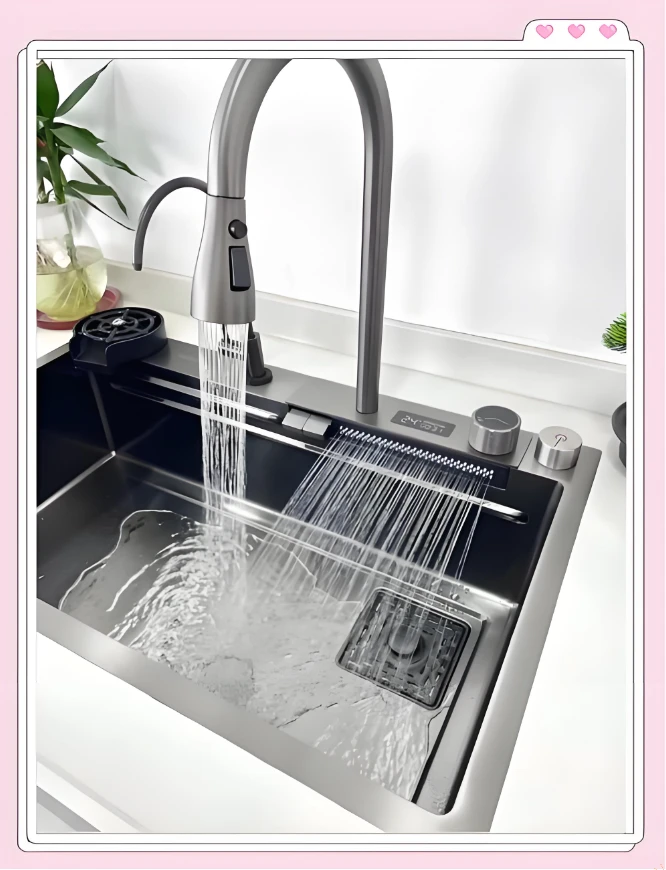
BMC sink molds are specialized tools specifically designed for the compression/transfer molding of BMC (Bulk Molding Compound) composite material sinks, mainly for kitchen and bathroom settings. BMC material is composed of unsaturated polyester resin, chopped glass fiber, mineral fillers, and various additives. Sinks formed through molds made of BMC material have core advantages such as high rigidity, corrosion resistance, heat resistance, low shrinkage, and a smooth surface, effectively replacing traditional stainless steel and ceramic sinks. The corresponding BMC sink molds need to withstand high temperatures, high pressures, and the abrasion of glass fibers during the molding process for a long time, and thus fall into the category of high-precision hot-press molds.
II. Core Design Parameters and Structure
1.Cavity and parting surface
Shrinkage compensation: The shrinkage rate of BMC is 0.2%–0.8%, and the mold cavity needs to be compensated in the opposite direction in terms of size; mirror polishing with Ra ≤ 0.4μm to enhance the surface texture of the water tank.
Draft angle: 1°–2° (the inner surface can be slightly smaller, while the outer surface should be sufficient) to prevent mold sticking and edge chipping.
The parting surface should be a plane as a priority. For complex structures, stepped parting should be used, and flash should be controlled by matching the overflow groove.
2. Exhaust System: Curing will release small molecule gases. At the flow end, rib positions, and corners, exhaust grooves with a depth of 0.01–0.03mm (width 3–5mm) must be set. For large water tanks, vacuum-assisted exhaust can be equipped. It is strictly prohibited for the exhaust grooves to be too deep, which may cause overflow.
3. Temperature control system: Mold temperature 140–160℃, with a temperature difference controlled within ±5℃; zonal temperature control (gate and thick wall areas independently controlled), heated by heating rods / oil circulation, with multiple thermocouple monitoring points; to prevent local overheating and uneven curing.
4. Ejection and Guidance: Wear-resistant guide pins and bushings (HRC58+) are used. Ejector pins are evenly distributed on the non-visual surface to prevent deformation during ejection. For large molds, a return mechanism and safety lock are added.
5. Gate and runner: The transfer mold uses a circular main runner + fan-shaped / side gates. The runner needs to be smooth and have sufficient cross-sectional area; BMC has high viscosity, so avoid long and narrow runners to reduce filling resistance.

III. Mold Materials and Surface Treatment
|
working condition |
Recommended steel materials |
surface treatment |
Life expectancy reference |
|
Batch size ≤ 100,000 times |
P20H, 718H (pre-hardened to 32–36 HRC) |
Chroming, nitriding |
80,000 to 100,000 mold cycles |
|
Batch size > 100,000 times |
H13, 2344 (quenched to HRC 48–52) |
CrN PVD and TD coating layers |
200,000 + test runs |
IV. Key Points of the Forming Process
1. Feeding: Preheat the BMC material to 40–60℃ and feed it in a quantified manner (excessive feeding may cause flash, insufficient feeding may result in material deficiency).
2. Molding and pressure: The unit area pressure should be 30–50MPa. Large water tanks require large hydraulic presses.
3. Curing: Cure at around 145℃. The curing time is calculated based on the maximum wall thickness (1.2–1.5 min/mm).
4. Demolding and post-treatment: Demold when the temperature drops below 80℃. Remove the flash and apply a matte or antibacterial coating if necessary.

V. Common Defects and Solutions
1. Bubbles / Pinholes: Inadequate venting or too low mold temperature → Deepen vent channels, increase mold temperature, and activate vacuum.
2. Excessive flash: Uneven clamping pressure or overly deep vent channels → Adjust pressure, optimize parting surface, and reduce vent channel thickness.
3. Surface flow marks: Improper filling speed or uneven temperature → Adjust injection / packing speed, and implement zoned temperature control.
4. Mold sticking: Insufficient draft angle or failed surface treatment → Increase draft angle, and reapply chrome plating / PVD coating.
VI. Mold Maintenance and Care
1. Each time the machine is shut down for cleaning the cavity, use a dedicated cleaning agent to remove resin residues. Do not scrape the mirror surface with hard tools.
2. Regularly check the lubrication of the guide pins and ejector pins, as well as calibrate the heating system and temperature control accuracy.
3. If the machine is not used for a long time, anti-rust treatment should be done and it should be sealed and stored in a dry environment.
VII. Conclusion
As the core precision hot-pressing tooling for the molding of BMC sinks, the design rationality, material selection science, process standardization, and timely maintenance of BMC sink molds directly determine the molding quality, production efficiency, and service life of BMC sinks. In practical applications, three key points need to be strictly controlled: first, precisely control the shrinkage rate of BMC materials and optimize the cavity design; second, ensure the uniformity of mold temperature and smooth exhaust to avoid molding defects; third, reasonably select mold steel and surface treatment methods based on production volume, balancing cost and service life. At the same time, regular cleaning, lubrication, and calibration of the molds can effectively extend their service life and reduce production costs. Additionally, it is necessary to be clear about the compatibility differences between BMC and SMC materials. BMC materials are more suitable for thin-walled, complex-shaped, and high-surface-precision small sinks. The corresponding mold design should focus on the exhaust system and temperature control to ensure that the molded products meet the application requirements of kitchen and bathroom scenarios.
Hot Tags: BMC Sink Mold, China BMC Sink Mold manufacturers, factory, bmc mould for electrical components, bmc mould for sporting goods, bmc mould for industrial use, bmc mould for musical instruments, bmc mould for water treatment equipment, bmc mould for 3d printing


