SMC Molds Drive The Development Of The Automotive Industry
Nov 02, 2026
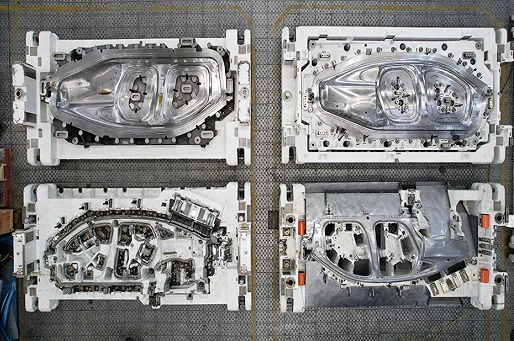
Recently, driven by the evolving trend of lightweighting in new energy vehicles and commercial vehicles, as well as multiple demands such as metal weight reduction, corrosion resistance, Class A exterior surface, and insulation protection,Sheet Molding Compound SMC with its advantages of high rigidity, excellent weather resistance, insulation and flame retardancy, good dimensional stability, and achievable Class A appearance surface, its application in commercial vehicle exterior parts, new energy vehicle protective components, and body functional cover parts continues to expand.SMC molds as the core carrier for compression molding of thermosetting composite materials, the mold structure design, zoned heating temperature control system, exhaust and shear edges, and cavity wear resistance treatment directly determine the glass fiber distribution, product compactness, appearance quality and mass production yield, becoming the key to the large-scale mass production of SMC parts. Relying on mature composite material mold R & D and precision manufacturing capabilities, we have targeted development of complete sets of SMC compression molds solutions adapted to automotive working conditions, providing commercial vehicle and new energy vehicle customers with one-stop molding solutions from early product docking, compression simulation, mold manufacturing to on-site process debugging.
Different from ordinary injection molds and LFT thermoplastic molds, SMC is a glass fiber reinforced thermosetting sheet molding compound. During the high-temperature and high-pressure compression molding flow cross-linking curing process, it is very easy to produce molding defects such as bubble pores, local material shortage, excessive flash, surface pitting, exposed glass fiber, uneven curing, and local warping deformation. Ordinary molds without special optimization are directly used for the production of automotive SMC parts, which are prone to problems such as poor exhaust and trapped gas, unbalanced mold temperature field, cavity erosion wear, and shear edge failure, resulting in the surface of the parts not meeting the Class A surface requirements of automobiles, internal pores, reduced impact resistance and weather resistance, and unable to meet the strict appearance and reliability standards of the whole vehicle.
1.Specialized optimization of the SMC mold structure to accommodate the characteristics of thermosetting compression molding for automotive components
In view of the molding characteristics of SMC materials, including high-temperature and high-pressure flow and resin crosslinking curing, the R&D team has carried out systematic customized design of the mold. In terms of material flow and shear edge design, combined with the product features of large curved surfaces and complex ribs of auto parts, the feeding area and material flow path are reasonably planned, the shear edge gap structure is optimized, the flash thickness is accurately controlled, excess overflow is reduced, and the workload of subsequent trimming processing is lowered; in terms of the exhaust system, multi-stage controllable exhaust grooves are set at the end of the material flow, corners and rib intersections, and a vacuum exhaust structure is matched for large-scale auto body panels, which can quickly discharge the air trapped during mold closing and the volatile gases released during resin curing, eliminate defects such as bubbles, burnt spots, material shortage and surface pits, and ensure the internal density of auto parts and the quality of Class A appearance surfaces.
SMC materials contain high-hardness short-cut glass fibers. Under long-term scouring of high-pressure material flow, the cavity and parting surface are very prone to wear and chipping, which will damage the mirror surface and grained appearance of auto parts. The key molding surfaces of the mold cavity and core are made of high-wear-resistant mold steel, and with the combination of hard chrome plating, high-precision mirror polishing and automotive-specific graining treatment processes, the scouring and wear resistance of the mold is significantly improved; under the condition of continuous mass production, the grained texture of the parts is complete and clear, the mirror surface is not prone to whitening and wear, and the appearance level required by the whole vehicle is stably maintained. In terms of the temperature control system,SMC molds adopt heat transfer oil or electric heating systems, and adopt a zone-following heating layout, which strictly maintains the curing process range of 140-160℃, reduces the temperature difference inside the mold cavity, avoids the problem of local overburning or incomplete curing, and ensures that the curing degree of mass-produced auto parts is consistent and the dimensional accuracy is stable and controllable.
The demolding and ejection mechanism is also optimized accordingly. SMC products have high hardness and relatively high brittleness after curing, and ejection whitening, ejection cracking and ejection dents are not allowed for automotive appearance parts. The mold adopts a distributed multi-point ejection and push plate combined demolding scheme. The ejection points are deliberately avoided from the Class A appearance surface of the vehicle, which evenly disperses the ejection force, reduces the demolding stress, adapts to the smooth demolding of large-size and complex curved automotive SMC parts, and effectively reduces mass production scrap.
2. Take into account vehicle-wide performance standards and meet the stringent operating-condition requirements for automotive components
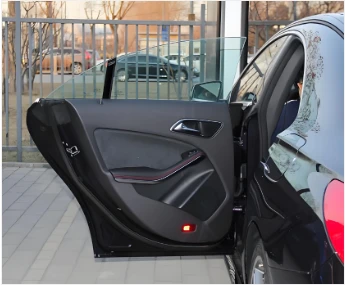
Automotive parts such as commercial vehicle exterior cover panels, new energy vehicle battery protective housings, motor insulation shields, front face decorative components, roof rack bases, and bumper support substrates are increasingly using SMC materials to replace steel. These automotive components need to withstand outdoor sun and rain, alternating high and low temperatures, and gravel impact, and have vehicle-level rigid assessment indicators for weather resistance, insulation and flame retardancy, bending resistance, impact resistance, and assembly dimensional accuracy. A qualified set of automotive SMC molds not only completes product molding, but also fully releases the inherent performance advantages of SMC materials. Through the collaborative design of feeding simulation, material flow path, exhaust, and heating system, the glass fiber distribution and flow orientation during the molding process are regulated to ensure the overall compactness of the product without pores. The molded automotive smc part meet the standards of weather resistance, UV resistance, insulation and flame retardancy, withstand high and low temperature cycles and gravel impact, are not prone to aging, deformation, and cracking after long-term outdoor use, and successfully pass the vehicle environmental reliability test; while achieving body weight reduction, they have better anti-corrosion capabilities than metal parts, effectively controlling the comprehensive cost of components.
3. Ensure mass-production stability and meet the automotive industry's needs for automated production and cost reduction
Automotive parts have extremely high requirements for consistency and assembly compatibility. SMC products have internal pores, residual stresses and dimensional fluctuations, which will directly cause vehicle assembly problems such as assembly dislocation, uneven gaps and sealing failure. The SMC mold specially optimized for automotive working conditions can stably control the curing uniformity of the products, reduce the dimensional drift caused by molding defects, ensure the consistency of assembly gaps of parts, and avoid the risk of assembly interference after installation. At the same time, the mold can be matched with large-tonnage automatic compression molding production lines, optimize the mold opening and closing, forced exhaust and flash overflow structures, stably control the standard molding cycle of 2-4 minutes, reduce the frequency of mold shutdown polishing and repeated mold testing, adapt to the mass continuous production mode of the automotive industry, balance the yield and production efficiency, and meet the core demands of OEMs for cost reduction and efficiency improvement.
At present, the technical routes for automotive lightweighting are developing in a diversified manner, and thermoset SMC and thermoplastic LFT form complementary applications. SMC materials continue to expand their applications. In addition to traditional commercial vehicle exteriors, they are constantly penetrating into fields such as new energy passenger vehicle protective parts and rail transit vehicle components. As a key equipment in the industrial chain, SMC mold enterprises continue to accumulate practical experience in compression molding simulation analysis of automotive parts, SMC molding process, and trial mold adjustment of whole vehicle parts, open up the complete whole chain of "pre-design of whole vehicle products - compression molding simulation - mold processing and manufacturing - on-site process debugging", and continuously overcome the molding difficulties of large-size thin-walled, complex curved surfaces and automotive Class A appearance SMC products. In the future, we will continue to iterate automotive SMC mold technology, cooperate with the upgrading of resin and glass fiber material formulas, promote the implementation of more high-performance SMC parts, and help the high-quality development of the domestic automotive composite material industry.