


SMC Molding Dies: Core Equipment For High-Performance Composite Molding
Apr 14, 2026
Against the backdrop of rapid development in new energy vehicles, power equipment, rail transit, sanitary ware, building materials and other industries, market demand for high-performance composites featuring lightweight, high strength, corrosion resistance, insulation and flame retardancy keeps rising. With outstanding comprehensive performance, SMC (Sheet Molding Compound) has become a mainstream material replacing metals and traditional plastics. As the key carrier for efficient, stable and precise molding of SMC products, SMC molding dies directly determine product quality, production efficiency and manufacturing cost. This paper gives a comprehensive and systematic introduction to SMC molding dies from the perspectives of core definition, technical advantages, main functions, application scenarios, development trends and prospect judgment.
I.Basic Concept and Working Principle of SMC Molding Dies
1.Core Definition
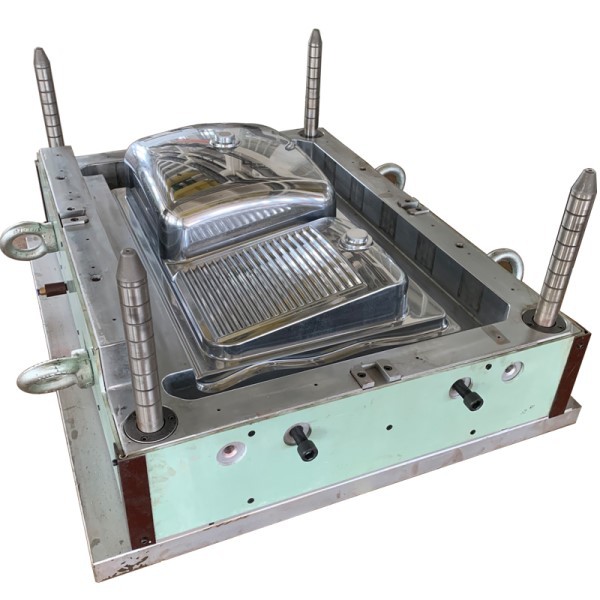
SMC molding dies are special precision molds designed exclusively for the thermosetting molding of SMC. They are usually used with hydraulic presses. Through the complete process of heating, mold closing, pressurization, pressure holding, curing, mold opening and ejection, sheet glass fiber reinforced thermosetting materials are pressed into qualified products in one step.
2. Working Principle
SMC material softens when heated in the mold cavity, fills the cavity under high pressure, and then undergoes a chemical cross-linking and curing reaction at the set temperature and pressure, forming a rigid and stable three-dimensional network structure. The mold ensures stable compliance of product dimensions, appearance and strength through precise temperature control, balanced pressure application, smooth venting, reliable guiding and ejection.
II.Core Technical Advantages of SMC Molding Dies
1. High molding precision and strong dimensional stability
SMC molding dies feature sufficient overall rigidity, uniform temperature control and precise guiding and positioning. The dimensional tolerance of molded products can be stably controlled within ±0.1mm. No deformation or warpage occurs in long-term mass production, perfectly meeting high-precision assembly requirements.
2. Integrated molding of complex structures
Capable of one-step molding of complex structures such as reinforcing ribs, mounting posts, buckles, grooves and threaded inserts. It integrates multiple parts into one, greatly reducing subsequent processing and assembly procedures and improving production efficiency.
3. Excellent surface quality, applicable for Class A appearance surfaces
The mold cavity can be processed by mirror polishing, texturing or chemical etching. Molded products have no flow marks, ripples or sink marks, directly meeting the requirements of automotive exterior Class A surfaces and eliminating the need for secondary spraying.
4. High production efficiency, suitable for large-scale mass production
Fast material curing speed, with a single molding cycle usually 60–180 seconds. The service life of the mold can reach 100,000 to 500,000 cycles. Combined with automated production lines, continuous, efficient and stable large-scale production can be realized.
5. Strong material adaptability, meeting high-performance molding requirements
The mold is resistant to high temperature, wear and chemical corrosion, stably molding SMC products with high strength, high insulation, high flame retardancy, weather resistance and aging resistance, adapting to various application scenarios.
6. High material utilization rate, green, low-carbon and environmentally friendly
Less flash and overflow in the molding process, with material utilization rate up to more than 90%. Integrated molding reduces cutting, welding, assembly and other processes, effectively lowering energy consumption and waste emissions, in line with the trend of green manufacturing.
7. Strong adaptability and wide application range
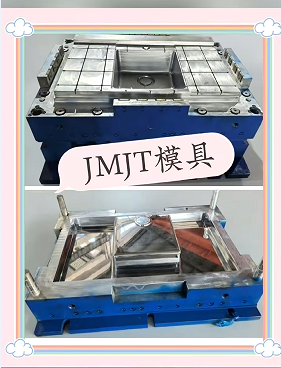
Capable of producing products of different specifications, from small electrical accessories to large automotive panels, battery boxes and carriage components, meeting customized demands of automobiles, electric power, rail transit, sanitary ware and other industries.

III.Core Functions of SMC Molding Dies
1. Endow products with precise shape and structure
As the carrier of products, the mold directly determines all key parameters such as shape, wall thickness, ribs, mounting holes and assembly positions of the products, ensuring complete structure and accurate matching.
2. Control the molding process and improve product qualification rate
Effectively eliminate common defects such as bubbles, insufficient filling, delamination, warping, deformation and scorching through uniform temperature control, uniform pressurization, reasonable venting and optimized material flow, greatly improving the product qualification rate.
3. Ensure consistency in mass production
With a stable temperature control system, precise guiding system and reliable ejection system, it ensures high uniformity of each molded product in dimensions, appearance and performance, meeting the requirements of industrial continuous mass production.
4. Reduce the full-life-cycle manufacturing cost
Relying on the advantages of long service life, low maintenance and integrated molding, the mold significantly reduces the unit amortization cost, labor cost, material loss and post-processing cost, improving overall economic benefits.
5. Support lightweight strategy and high-end manufacturing upgrading
SMC composites efficiently replace steel and aluminum, achieving a weight reduction of 30%–60% for components, strongly promoting the lightweight and high-end development of new energy vehicles, power equipment, rail transit and other fields.
IV.Main Application Fields
New energy vehicles:
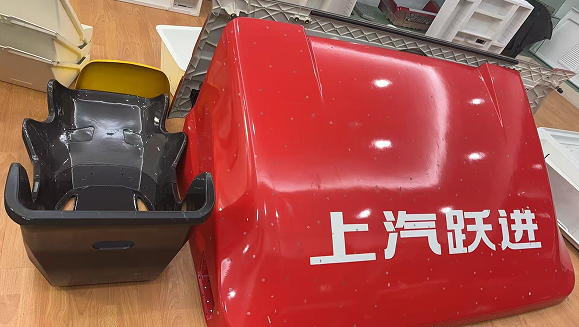
Battery pack upper and lower cases, bumpers, fenders, cabin covers, roofs, anti-collision beams, chassis guards, etc.
Electric power and electrical
Switchgear boxes, insulation partitions, transformer housings, cable trays, wind turbine blade accessories, etc.
Rail transit:
Interior decorations, equipment covers, seat frames, roofs, side panels of subways/high-speed rails, etc.
Sanitary ware:
Integrated bathroom basins, bathroom cabinets, toilet lids, shower trays, etc.
Construction and industry:
Decorative plates, ventilation equipment housings, anti-corrosion components, mechanical covers, etc.
V.Development Trends of SMC Molding Dies
Large-scale and integrated:
For new energy vehicles, rail transit and other fields, it can meet the one-step compression molding of ultra-large integral components, greatly improving structural strength and assembly integrity.
High-precision and mirror-finished
Continuously improve the cavity precision and surface finish of molds, perfectly adapting to high-end appearance parts and meeting high-quality requirements such as automotive Class A surfaces and spray-free finishing.
High-efficiency and low-consumption
Optimize runner and venting design to realize fast curing, less overflow and flash-free molding, extend mold service life and effectively reduce production costs.
Digital design
CAE mold flow simulation, 3D design and virtual mold closing greatly shorten the development cycle and improve the success rate of one-time mold testing.

VI.Prospect Judgment of SMC Molding Dies
Short term (1–3 years): Strong certainty of high growthDriven by sustained demand release from new energy vehicles, energy storage and wind power, orders for SMC molds are full, bringing simultaneous growth in revenue and profit.
Medium term (3–5 years): Acceleration of high-end upgrading and domestic substitution Technological breakthroughs drive up unit price and gross profit margin. Domestic enterprises seize the international market and become major global suppliers.
Long term (over 5 years): Become core equipment for composites With the deepening of carbon neutrality and lightweighting, SMC molds will upgrade from supporting parts to key basic equipment for high-end manufacturing, with continuously expanding application scenarios and broad growth space.
VII.Conclusion
SMC molding dies are the core equipment connecting SMC materials and high-end composite products. With the advantages of high precision, high efficiency, high stability and high integration, they can meet the needs of modern manufacturing for lightweight, high-strength, corrosion-resistant, insulated and flame-retardant products. With the continuous expansion of new energy and high-end equipment industries, SMC molding dies will keep upgrading toward large-scale, precise, intelligent and efficient development, becoming a key support for promoting the progress of the composite material industry.


