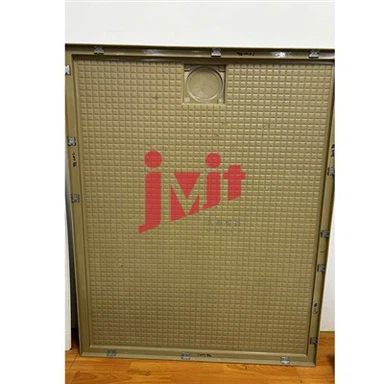
Market Dynamics Of Melamine Bathroom Trays
Aug 17, 2026
Against the backdrop of expanding global demand for prefabricated compact bathrooms, mobile cabin restrooms and economical apartment supporting facilities overseas, melamine bathroom trays have gradually become the mainstream material for simple shower bases. Boasting stain resistance, easy formability and low cost, they are rapidly replacing traditional acrylic and low-cost urea-formaldehyde trays in this niche segment, reshaping the material selection system for compact bathrooms both domestically and internationally.
I.Market dynamics
1. Rising Demand for Melamine Shower Trays
Hot-pressed melamine shower trays feature water resistance, anti-fouling performance and porcelain-like texture, and their market demand has surged in hotel apartments, indemnificatory housing and prefabricated bathroom projects. The domestic market size of melamine sanitary trays increased by 7.2% year-on-year, with engineering orders accounting for 61% of total sales. The retail market for household use favors products with matte texture, integrated water retaining edges and one-piece drainage structures, while orders for small-sized and irregular non-standard trays keep growing.
Traditional ceramic trays are fragile upon impact, whereas melamine trays are lightweight and impact-resistant, making them an important alternative for prefabricated bathroom solutions. More glass fiber reinforced modified melamine trays have been launched in the industry, which improve the flexural and crack resistance of bases and solve the deformation issue of large-size trays.
2. Industrial Cluster of Melamine Sanitary Molds
Production capacity of small-scale melamine sanitary molds has been released. Huangyan in Taizhou has become a major cluster for melamine sanitary molds. Local mold manufacturers have ramped up the development of melamine hot-pressing molds. JMJT MOULD CHINA , which originally produced traditional melamine basins, has successively developed molds for square and rectangular simple melamine shower trays. These molds are compatible with glass fiber reinforced melamine pellets and support matte and solid-color surfaces, shortening the delivery cycle for small-batch customization. Exports of melamine sanitary molds have also grown, with products shipped to melamine product manufacturers across Southeast Asia.

II. New Process Iteration
1. Modular Hot-Pressing Mould Process with Layered Temperature Control
Conventional melamine molds adopt integral temperature control, which leads to uneven temperature distribution. When forming flat surfaces of large-size shower trays, defects such as air bubbles, flow marks and surface floating fibers frequently occur, with the overall yield rate hovering at around 70%.
New molds launched in 2026 feature independent layered oil circuit temperature control, limiting the temperature difference inside the cavity to within 2°C. Equipped with high-precision guide pin clamping structures, they effectively reduce molding flash and cut polishing workload by 30%. The molds are pre-fitted with embedded floor drain nut cavities and integrated water retaining edge profiles. After one-shot forming of shower trays, secondary hole drilling and bonding are eliminated, lifting assembly efficiency by 30%.
2. Integrated Co-Molding Technology for Decorative Surfaces
This process abandons traditional post-forming film lamination and secondary spraying. Stone-imitation texture, anti-slip antibacterial decorative paper and glass fiber reinforced melamine sheets are stacked layer by layer and integrally cured at 155–170°C. The decorative layer forms molecular bonding with the substrate, eliminating quality risks such as peeling and color fading. Process innovation has greatly improved the appearance and durability of melamine products.
Core advantages: The complete spraying and drying production lines are no longer required, cutting single-piece production time by 40%. The whole process generates no VOC pollution from coatings, complying with EU environmental regulations on low volatile emissions. The trays are molded with micro-scale anti-slip textures without additional anti-slip coatings, and their wet and dry friction coefficients stably meet international anti-slip standards for sanitary ware.
3. Integrated Twin-Screw Pre-Mixing and Pelletizing Process
The traditional manufacturing process relies on manual mixing of melamine powder, glass fiber and various additives, resulting in inconsistent material ratios and significant fluctuations in mechanical strength between batches. The new twin-screw extrusion pelletizing equipment performs integrated vacuum compounding of melamine resin, alkali-free glass fiber and anti-aging additives, controlling material ratio error within 0.5‰ and realizing uniform glass fiber dispersion, fundamentally eliminating whitening defects caused by floating fibers on finished products.
Pelletized melamine materials deliver stable flowability, enabling full cavity filling during the production of large-size trays. Batch fluctuation of product flexural strength is controlled within 5%. The pellets are compatible with automated continuous hot-pressing production lines, boosting daily output of a single production line by 60%.
III. New Modified Melamine Material Technologies
From 2025 to 2026, global R&D patents for melamine materials will focus on modified formulas specifically for bathroom bases, phased optimizations to address three major industry shortcomings: high brittleness of traditional pure melamine materials, significant risk of formaldehyde release, and easy aging during long-term water immersion; a threetier differentiated material supply system has now been established.
1. Hybrid Glass Fiber Reinforced Melamine Molding Compound
This material blends 20%–35% chopped alkali-free glass fiber with melamine resin, paired with special interfacial compatibilizers to strengthen bonding between resin and glass fiber. The flexural strength of finished products rises by 120%, and impact resistance improves by 90%. It enables stable mass production of standard shower trays of 800 mm and above, fundamentally solving the industry-wide problem of cracking under foot load for pure melamine trays.Performance comparison: Ordinary pure melamine products can only bear a maximum load of 120 kg, while glass fiber reinforced modified products support up to 300 kg, suitable for high-traffic scenarios such as hotels and construction sites. Hot water aging resistance is tripled; no surface chalking or whitening occurs after long-term cyclic immersion in 60°C hot water. This material is the mainstream raw material for export orders at present.
2.Modified Melamine Resin with Low Free Formaldehyde
Traditional melamine powder contains high residual free formaldehyde, while the EU REACH Regulation 2026 imposes strict limits on formaldehyde emissions from indoor melamine sanitary products. The new modified monomer resin adopts molecular chain end-capping technology to drastically reduce residual unreacted formaldehyde. Even with simplified post-curing procedures, finished products still meet testing standards in Europe and America.
A derivative subcategory is halogen-free antibacterial melamine resin compounded with inorganic silver ion antibacterial powder, which long-term inhibits mold and Escherichia coli growth in bathroom environments. It is mainly supplied to medical cabins and temporary school restroom projects, commanding a 15%–20% premium over ordinary melamine raw materials.