Lightweight Carbon Fiber Molds
Apr 29, 2026
In the field of industrial manufacturing, molds, as the core equipment that determines product precision, production efficiency and manufacturing costs, are hailed as the "Mother of Industry". The advent of carbon fiber reinforced molds, with their unparalleled lightweight advantages and excellent comprehensive performance, has successfully addressed industry pain points and become the "secret weapon" driving the manufacturing industry towards high efficiency and green transformation, redefining the development landscape of high-end molds.
The core secret of lightweight: Inherent advantages of material properties
The lightweight capability of carbon fiber reinforced molds stems from the inherent advantages of carbon fiber materials. The key highlight lies in achieving a perfect balance of "light yet strong". The density of carbon fiber is typically between 1.7 and 2.0 g/cm³. This extreme strength-to-weight ratio enables molds to significantly reduce weight without compromising structural rigidity or load-bearing capacity.
The weight reduction effect of carbon fiber reinforced molds is extremely prominent: in the aerospace field, the weight of traditional metal molds often exceeds 1 ton, while carbon fiber molds can keep the weight within 200 kilograms, achieving a weight reduction of up to 80%; in the automotive manufacturing field, carbon fiber molds can reduce weight by 50% to 70% compared to steel molds, and even achieve an ultra-thin wall thickness design of 1.2mm, significantly reducing equipment operation load and transportation costs. It is worth noting that this lightweighting is not simply "weight reduction", but through the synergistic effect of materials, it has achieved a triple breakthrough of "lightweight + high strength + high stability", which is also the key reason why it can become a core solution for lightweight manufacturing.
In addition to its lightweight advantage, carbon fiber material also possesses a series of excellent auxiliary properties: its coefficient of thermal expansion is only 1/10 that of steel, maintaining excellent dimensional stability in high-temperature environments, effectively avoiding deformation of the mold due to thermal expansion and contraction, and ensuring the precision of product molding; its fatigue resistance far exceeds that of metal materials, and during long-term high-frequency use, it can effectively distribute loads and reduce the occurrence of cracks, extending the service life of the mold by 3 to 5 times compared to traditional metal molds; it also has good corrosion resistance, and in harsh environments such as marine and chemical industries, it does not require frequent maintenance, further reducing the life cycle cost of the mold.
Manufacturing Process: The Dual Possibility of Lightweight and High Precision
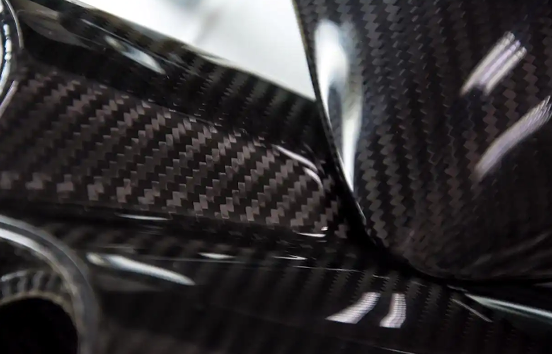
The excellent performance of carbon fiber reinforced molds not only depends on the advantages of the material itself, but also cannot be separated from precise and efficient manufacturing processes. The core manufacturing process covers key steps such as pre-impregnated material layering, hot pressing, and precision machining. Through precise control of fiber orientation, layering sequence, and curing conditions, it achieves the unification of high rigidity, low thermal expansion, and good surface replication of the mold, firmly maintaining the lightweight advantage while fully considering the precision of product molding.
In the early days, due to the complex manufacturing process and high production costs, the application of carbon fiber molds was mainly concentrated in high-end fields. However, with continuous technological iterations, domestic enterprises have achieved independent control of key manufacturing processes and successfully broken through the cost barrier through process optimization: for example, after optimizing the layering design and hot pressing parameters, the mold cost can be reduced by 40%, while the surface accuracy of the product can reach ±0.05mm, meeting the strict requirements of high-end products such as new energy vehicle battery casings; by adopting automated processes such as resin transfer molding (RTM) and compression molding, the efficiency of batch production is effectively improved, further promoting the popularization and application of carbon fiber reinforced molds.
Nowadays, the integration of new technologies such as additive manufacturing and digital twins has further empowered and upgraded carbon fiber reinforced molds: through 3D printing technology, complex internal cavity structures and topology-optimized molds can be formed in one piece, breaking the limitations of traditional processing methods; digital twin technology applied in the mold design verification stage can accurately predict thermal deformation and stress distribution, optimize structural layout, and further enhance mold performance and service life; laser projection positioning technology has successfully solved the problem of precise laying of molds for large curvature and irregular parts, with positioning accuracy reaching ±0.1mm, providing technical support for the manufacturing of complex molds.
Multi-field penetration: Comprehensive implementation of lightweight advantages
With the dual core advantages of lightweight and high performance, carbon fiber reinforced molds have gradually expanded from the high-end aerospace field to multiple industries such as automobiles, medical care, marine, and sports equipment, becoming the core support for promoting lightweight upgrades in various fields. The continuous expansion of application scenarios fully demonstrates its core value as a "secret weapon".
Aerospace field: The core choice for weight reduction and efficiency improvement
The aerospace field has the most stringent requirements for equipment lightweight and high precision, and carbon fiber reinforced molds have become the preferred equipment in this field. They are widely used in the manufacturing of aircraft winglets, satellite brackets, C919 aircraft interior parts, etc. Their lightweight characteristics can significantly reduce the fuel consumption of aircraft - according to industry research data, for every 1% reduction in aircraft structure weight, fuel efficiency can be improved by 2% to 3%, and at the same time, it can effectively increase load capacity and flight safety.
Automotive industry: A key driver for the transformation to new energy
Under the backdrop of the rapid development of new energy vehicles, lightweighting of the vehicle body has become the core path to improving vehicle range and reducing energy consumption, and the application of carbon fiber reinforced molds is becoming increasingly widespread. They are mainly used in the production of new energy vehicle battery boxes, lightweight body panels, and other core components. Not only can they significantly reduce the weight of the molds themselves, but also shorten the molding cycle by 30%, reduce scrap rates, and effectively ensure the sealing and structural strength of battery boxes. A well-known automotive parts manufacturer has adopted carbon fiber molds to produce battery casings, which not only meets the lightweighting requirements of new energy vehicles but also achieves dual improvements in production accuracy and efficiency, providing strong support for the transformation of the new energy vehicle industry.
Other fields: Innovative applications in diversified scenarios
In the medical equipment field, high-precision carbon fiber molds are widely used in the manufacturing of artificial joints, CT scanning bed plates, and other products. Their excellent biocompatibility and X-ray transmissibility are superior to traditional metal materials, ensuring product forming accuracy while significantly enhancing the user experience of medical equipment. In the marine industry, carbon fiber molds, with their outstanding corrosion resistance, are used to manufacture ship components, which can resist salt fog corrosion for a long time and significantly extend the service life of components. In the sports equipment field, bicycle frames and golf club heads produced by carbon fiber molds achieve extreme weight reduction while ensuring structural strength, helping athletes improve their performance. In the wind power field, the service life of carbon fiber molds can reach more than 8 years, eliminating the need for frequent shutdowns for maintenance, and significantly extending the service life compared to traditional metal molds, effectively reducing the operation and maintenance costs of wind power equipment.
Industry status and future outlook: Continuous upgrading of the lightweight track
Currently, the global carbon fiber mold market is showing a steady growth trend. According to industry reports, the market size of carbon fiber molds in China has continued to rise from 2019 to 2023, and it is expected to maintain a stable growth trend from 2024 to 2030.
In the future, carbon fiber reinforced molds will continue to develop in the directions of multi-functional integration, intelligence and greenness: In terms of intelligence, they will integrate sensor components and intelligent temperature control systems to achieve real-time monitoring and closed-loop regulation of temperature, pressure and curing degree during the molding process, significantly improving the first-time pass rate of products; in terms of customization, the modular and reconfigurable mold architecture will accelerate its development to better meet the production demands of small batches and multiple varieties; in terms of greenness, degradable release agents, low-energy curing processes and mold recycling and reuse technologies will be given priority promotion. It is reported that the energy consumption of carbon fiber production is 60% lower than that of steel, and the recyclability rate is over 85%, which is fully in line with the global carbon neutrality development trend.