Three Major Development Directions Of The Injection Molding Industry in 2026
Aug 07, 2026
Since 2026, the injection molding industry has developed rapidly in three directions: intelligence, large-scale, and greening, with a large number noteworthy news events emerging from industry trends, technological breakthroughs, and corporate dynamics.
I. Industry Overview & Trends
The landscape of industrial competition is undergoing profound transformation. The market has stepped away from blind capacity expansion and vicious low-price competition. Instead of competing merely on production scale and pricing, enterprises now compete in comprehensive strengths including technological innovation, product performance, integrated system solution capabilities and global service support. Sustained demand from downstream sectors such as new energy vehicles, medical devices, home appliances and packaging for large precision molding equipment, intelligent forming processes and low-carbon manufacturing solutions has pushed the entire industrial chain to accelerate transformation and upgrading.
II. Key Technological Breakthroughs
In 2026, China's injection molding equipment sector made a series of landmark breakthroughs in ultra-large tonnage machinery and intelligent molding processes.
(1) Upgrading of Molding Equipment Driven by New Energy Vehicles
Background: Adapting to the high-precision, multi-color integrated molding requirements of new energy vehicle through-type headlight covers, large optical interior parts.
(2) Innovations in Intelligent Molding Processes
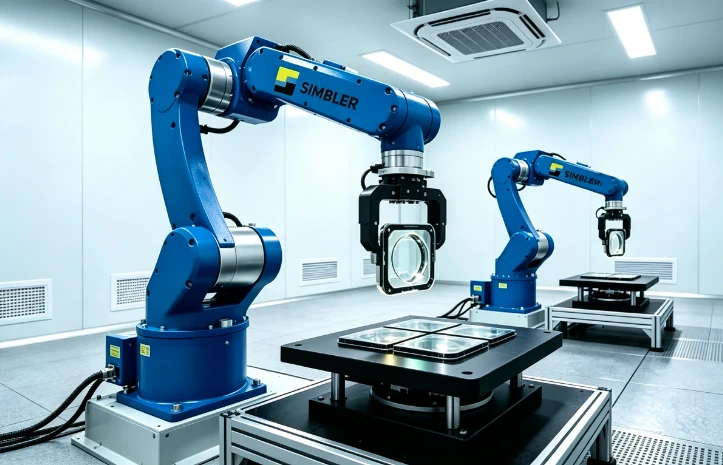
Breakthrough: The Institute of Intelligent Manufacturing under the Academy of Sciences proposed an online optimization method for multi-cavity hot runner injection molding based on embodied intelligence.
Core Technology: This solution integrates digital twin models with real-time data collected from on-site physical sensors to build a closed-loop iterative learning framework, which dynamically adjusts mold filling, temperature and pressure parameters.
Significance: It abandons the conventional fixed constant-temperature parameter control mode and enables adaptive regulation of multi-cavity balance, part warpage and batch consistency. It delivers a new generation of forming technology for precision electronics and miniature medical components.
III. Green Manufacturing
Green manufacturing stands as the third core development pillar of the injection molding industry in 2026, with advances spanning equipment energy conservation, low-carbon processes, recycled material utilization and waste gas treatment.
Rising market penetration of energy-saving all-electric molding machines: Intelligent energy management modules can track power consumption per molding cycle in real time to guide lean production scheduling and off-peak electricity utilization.
Accelerated industrialization of low-carbon microcellular foaming processes: Supercritical physical foaming injection molding has moved beyond laboratory trials to mass production for automotive interior trims and home appliance housings. It reduces part weight by 10% to 30%, cuts raw material consumption and shortens cooling cycles, thus lowering overall energy consumption.
Large-scale adoption of recycled plastic injection molding: Downstream manufacturers of furniture, daily consumer goods and automotive interiors are increasing the use of modified recycled materials. Some manufacturers produce up to 90% of their products with recycled plastics, supported by dedicated integrated injection molding systems equipped with raw material drying, filtering and impurity removal functions that address stability issues during recycled material forming.
Replication and promotion of the low-carbon factory model: A group of benchmark low-carbon injection molding factories has emerged in the industry, featuring online and reuse of scrap materials and workshop photovoltaic facilities, achieving a significant reduction in energy consumption per ton of product; the "equipment energy saving digital management raw material recycling" trinity green model gradually becoming popular.
IV. Conclusion
Looking at the public news of the injection molding industry in 2026, the development trend is clear: the overall market maintains steady growth, and industry competition shifted from price to technology, complete solutions, and global service capabilities.
Large-scale: Breaking through the bottlenecks of ultra-large clamping force, large injection volume, and multi-component rotary table precision positioning, supporting the of large components for infrastructure and new energy vehicles;
Intelligent: AI process parameter tuning, digital twins, and human-robot collaboration moving from concept to mass production, reducing mold trial and labor dependency;
Green manufacturing: Energy-efficient machinery, weight-reduction foaming processes, recycled plastic molding and low-carbon factory construction are being advanced in tandem.
The overlapping of three major directions jointly drives the injection molding industry to transform from pure equipment manufacturing into an integrated service provider of "equipment-process-digitalization-low-carbon".