


The Market Prospects Of Melamine Molds And Melamine Bathtubs
Mar 27, 2026
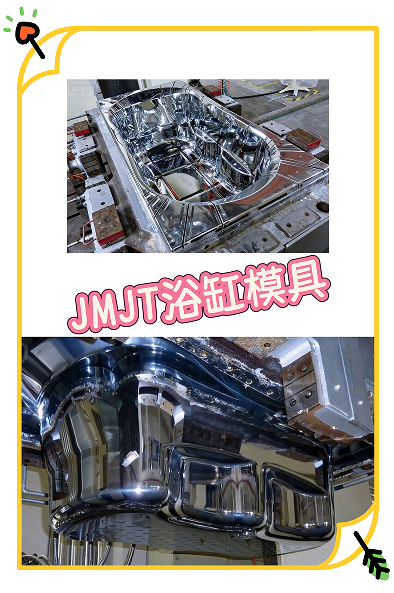
In the field of bathroom product manufacturing, the rational combination of bathtub molds and melamine materials is the core key to achieving a balance among the product's appearance level, usage performance, and cost-effectiveness. Melamine (the full name is melamine formaldehyde resin), with its outstanding advantages of being resistant to impact, chemical corrosion, non-toxic, moisture-proof, and easy to clean, has gradually replaced traditional resins and become the preferred material for bathtub production. The degree of compatibility between it and the bathtub mold directly determines the forming accuracy, surface texture, and service life of the bathtub. The so-called "compatibility code" essentially refers to the deep integration and coordinated adaptation of mold characteristics, melamine performance, and forming processes. Only by cracking the internal compatibility logic of these three aspects can high-quality melamine bathtubs that are both practical and aesthetically pleasing be stably produced.
Prospect One: "Bidirectional Adaptation" of Mold Materials and Melamine Properties
When choosing the material for the bathtub mold, it is necessary to precisely match the thermosetting molding characteristics of melamine material. During the melamine molding process, a cross-linking and curing reaction under high temperature and high pressure environment occurs. Therefore, the mold must have sufficient heat resistance and pressure resistance, and at the same time, it must avoid adhering to the melamine to ensure smooth demolding. This matching logic directly determines the durability of the mold and the qualification rate of the product. It is the basic prerequisite for the combination of the two and also the core guarantee for the smooth progress of subsequent production.
Glass fiber reinforced plastic molds: Suitable for the production of mid-to-low-end melamine bathtubs or products with complex shapes (such as embedded or irregular-shaped bathtubs). Glass fiber reinforced plastic molds have relatively low costs and extremely strong plasticity. They can quickly produce complex cavities according to design requirements, accurately presenting the personalized shapes of the bathtubs. At the same time, they are lightweight, making them easy to transport, install and maintain. The core key point for their adaptation is that a professional anti-sticking coating (such as Teflon coating) must be applied on the mold surface to prevent the melamine from adhering to the mold after curing; at the same time, the molding pressure and temperature must be strictly controlled to prevent the mold from deforming due to high pressure and high temperature. These molds are suitable for small-batch, personalized melamine bathtub production, conforming to the "unafraid of complex shapes" advantage of the rotational molding process, and can effectively reduce the cost of personalized production.
Key misunderstandings to avoid: Using ordinary plastic molds or molds without anti-sticking treatment will result in the molded melamine adhering to the molds, causing scratches on the product surface, and even the molds deforming and being scrapped under high temperature and high pressure; conversely, overly pursuing mold hardness and selecting molds with excessive high strength that exceed production requirements will significantly increase the cost of mold procurement and maintenance, and violate the principle of cost-effective production.
Option Two: "Synchronous Frequency Matching" between Mold Structure and Melamine Molding Process
The mainstream molding processes for melamine bathtubs mainly involve hot pressing molding and rotational molding. The structural design of the molds must be synchronized with the process requirements to ensure that the melamine raw materials are fully filled in the cavities and uniformly cured, effectively avoiding common molding defects such as bubbles, shrinkage, and flash. The core logic of this aspect is "mold structure adapted to the process, and process matching melamine properties", and it is also the key link to solve the problem of the combination of the two.
Cavity design: Adapting to the flow and curing patterns of melamine.
The fluidityof melamine resin is relatively poor, and it will rapidly undergo cross-linking and curing reactions under high temperature and high pressure conditions. Therefore, the design of the mold cavity must strictly follow the core principle of "smooth filling and uniform curing". The curvature and wall thickness transition of the cavity should be smooth and gradual, avoiding sharp corners and sudden changes in wall thickness - sharp corners will hinder the flow of melamine resin, resulting in incomplete cavity filling; a too large wall thickness difference will cause uneven cooling and lead to internal stress cracking in the product, which is highly related to the characteristic of "cross-linking gradient is prone to cracking" during the curing process of melamine. Scientific cavity design is needed to reduce stress concentration.
At the same time, the surface of the mold cavity needs to undergo fine polishing treatment. The roughness must be strictly controlled below Ra0.4. This not only significantly enhances the surface gloss of the melamine bathtub but also effectively reduces the demolding resistance. For bathtubs with overflow holes and installation holes, the mold needs to integrate special punches or die structures to ensure precise positioning of the holes and avoid damage to the integrity of the melamine surface during subsequent secondary processing. This is also a direct manifestation of the core function of the mold, which is to "precisely replicate the product details".
2. Exhaust System: Solving the "Bubble Problem" in Molded Melamine
During the hot pressing or injection molding process of melamine, a small amount of volatile gases will be released. If the exhaust system of the mold is improperly designed or the exhaust is not smooth, the gases will be trapped inside the mold cavity, resulting in bubbles and marks on the surface of the bathtub, and even causing the internal structure of the product to become loose, significantly affecting the product's strength. Therefore, the mold needs to precisely open exhaust grooves at the dead corners and parting surfaces of the mold cavity where gases are prone to accumulate. The depth of the exhaust grooves should be controlled within 0.02 to 0.05 mm, which can not only ensure the smooth discharge of gases but also prevent the melamine melt from overflowing and forming flash edges. This is consistent with the core logic of exhaust in injection molds and is also a key detail for ensuring the quality of melamine molding.
For the melamine bathtubs produced by the injection molding process, the exhaust design of the molds needs to be more targeted - during the injection molding process, the molds rotate continuously, and the gas needs to be slowly discharged through the breathable holes reserved in the molds. At the same time, the size of the breathable holes must be strictly controlled to prevent the leakage of the melamine melt. This not only conforms to the advantages of the injection molding process, such as "high material utilization and no reprocessing materials", but also avoids waste of raw materials due to the exhaust problem.
3. Demolding System: Adapted to the curing characteristics of melamine
After being cured, the melamine material has a hard texture and moderate brittleness. If the force during demolding is uneven, defects such as scratches on the product surface and cracking at the corners are prone to occur. Therefore, the demolding system of the mold needs to follow the principle of "even force distribution and smooth demolding": when using the pin demolding method, the pins should be evenly distributed to avoid excessive local pin-out force that causes the product to be "painted white" or deformed. The clearance between the pin and the cavity needs to be strictly controlled within 0.01 to 0.03 mm to reduce the friction resistance during the demolding process; for complex-shaped bathtub molds, a slider or inclined pin demolding structure can be adopted to ensure that the product edges and corners are not damaged during demolding, and at the same time, the design of the slider guide rail needs to be optimized to prevent any jamming phenomenon, ensuring smooth demolding and production efficiency.
In addition, the demolding system needs to be used in conjunction with the anti-sticking coating to further reduce the demolding resistance; at the same time, the demolding timing must be strictly controlled - it must be carried out only after the melamine has fully cured and the temperature has dropped to normal. This is to avoid product deformation due to insufficient curing, which is in line with the characteristic of melamine that "it is less likely to deform after high-temperature curing", and is also an important detail for extending the service life of the mold and the product.

Scenario Three: "Precise Matching" of Process Parameters and Mold - Melamine
Even if the materials and structures of the mold and melamine are perfectly matched, if the process parameters for molding are improperly set, the combination will fail and the product quality will be affected. The key point is to precisely adjust the three key parameters of temperature, pressure, and time to allow the melamine to fully solidify and be perfectly molded in the mold cavity, achieving the "optimal synergy" between the mold and the melamine. This process requires a deep coupling control of the melamine's curing kinetics and the thermal management of the mold.
Temperature parameters: The conventional curing temperature of melamine is 120 to 140℃. The mold temperature must be synchronized with the curing temperature of melamine, and the temperature difference should be controlled within ±4℃. If the temperature is too high, the curing speed of melamine will be too fast, which may lead to problems such as incomplete internal curing and surface cracking; if the temperature is too low, the curing of melamine will be insufficient, resulting in insufficient product strength and easy deformation. The mold needs to be equipped with a distributed thermocouple array and a zone oil temperature control system to provide real-time feedback and adjust the temperature field, ensuring uniform cavity temperature and avoiding internal stress cracking caused by cross-linking gradients. This technology can effectively solve the industry pain points of "high-temperature hydrolysis" and "uneven curing" in melamine molding.
Pressure parameters: When using hot press molding, the pressure should be controlled within 7 to 15 MPa. If the pressure is too high, it will cause the mold to deform and the melamine resin to overflow, resulting in flash edges. If the pressure is too low, the melamine resin will not be fully filled, and the product is prone to have shrinkage marks and depressions. For injection molding, it is necessary to precisely control the rotational speed of the mold and the internal pressure to ensure that the melamine is evenly attached to the surface of the mold cavity, forming a product with uniform thickness, which conforms to the characteristic of the injection molding process that "the thickness at the corners is 15% - 20% thicker than the surface", further enhancing the durability of the product.
Time parameters: The curing time needs to be adjusted flexibly according to the thickness of the bathtub. Under normal circumstances, it is 5 to 10 minutes. The thicker the product, the longer the curing time. If the curing time is too short, the melamine will not be fully cured, affecting the strength of the product; if it is too long, the melamine will age and change color, while increasing production costs and reducing production efficiency. In addition, the melamine mixture needs to be preheated to 70 to 80℃ in advance, which can not only shorten the molding cycle but also ensure smooth melt filling, and is a key parameter for optimizing molding efficiency.
Prospect 4: Optimistic market outlook
·Compared with ceramics and cast iron, the polyamide bathtub has faster production speed and lower energy consumption. The unit cost can be reduced by 30% to 50%. It is highly suitable for scenarios where cost and construction period are sensitive, such as chain hotels,homestay renovations, and affordable housing.
· The performance is well-suited for essential scenarios, featuring water resistance, corrosion resistance, impact resistance, and flexible customization of patterns. It is lighter in weight than traditional materials, easy to install, and suitable for renovation of old residential areas and small-space bathrooms.
· The policies align with the "green building materials going to rural areas" and "kitchen and bathroom renovation" initiatives; leveraging the RCEP and the infrastructure boom in Southeast Asia, exports to markets such as Vietnam and Malaysia enjoy dual advantages of tariff and cost reduction. In industrial clusters like Taizhou in Zhejiang Province, a supporting cluster has already been formed.


