


Two RTM Processes Suitable For Large-scale High-performance Composite Materials
Jul 14, 2025
Resin transfer molding (RTM) is a typical liquid molding process for fiber-reinforced resin-based composite materials. The main process of this technique is as follows:
(1) Design the fiber preform according to the shape and mechanical performance requirements of the required part.
(2) Place the pre-designed fiber preform inside the mold, close the mold and apply pressure to achieve the desired volume fraction for the fiber preform.
(3) Under the dedicated injection equipment, the resin is injected into the mold at a certain pressure and temperature to expel air and wet the preformed fiber body.
(4) After the fiber preform is completely soaked in the resin, a certain temperature is applied for the curing reaction. The process continues until the curing reaction is completed, and then the final part is removed.

The resin transfer pressure is the main parameter that needs to be controlled in the RTM process. This pressure is used to overcome the resistance encountered when injecting the mold cavity and soaking the reinforcing material. The time it takes for the resin to complete the transfer is related to the system pressure and temperature. A shorter time can improve production efficiency. However, if the resin flow is too large, the adhesive cannot penetrate the reinforcing material in time, and an accident may occur due to the increase in system pressure. Therefore, it is generally required that the rate of the resin liquid surface rising into the mold during the transfer process should not exceed 25mm/min. The resin transfer process can be monitored by observing the outlet. Generally, it is believed that when all the observation ports on the mold have adhesive overflow and no more bubbles are discharged, and the actual amount of resin added is basically consistent with the expected amount, the transfer process is completed. Therefore, the setting of the outlet should be carefully considered.
Selection of reinforcing materials
In the RTM process, the reinforcing materials can be selected from glass fibers, graphite fibers, carbon fibers, silicon carbide and aramid fibers, etc. The types can be chosen as chopped fibers, unidirectional fabrics, multi-axis fabrics, braided materials, knitted materials, core materials, or preformed molds according to the design requirements.
From the perspective of product performance, the components produced by this process have a high fiber volume fraction, and they can be locally reinforced with fibers according to the specific shape of the components, which is conducive to improving product performance. From the perspective of production cost, 70% of the cost of composite material components comes from manufacturing costs. Therefore, how to reduce manufacturing costs is an important issue that needs to be urgently addressed in the development of composite materials. Compared with the traditional hot press tank technology for manufacturing resin-based composite materials, the RTM process does not require expensive tanks, which greatly reduces manufacturing costs. Moreover, the parts produced by the RTM process are not limited by the size of the tank, and the size range of the components is relatively flexible, enabling the manufacture of large and high-performance composite material components. Overall, the RTM process has been widely applied and rapidly developed in the field of composite material manufacturing, and is bound to become the dominant process for composite material manufacturing.
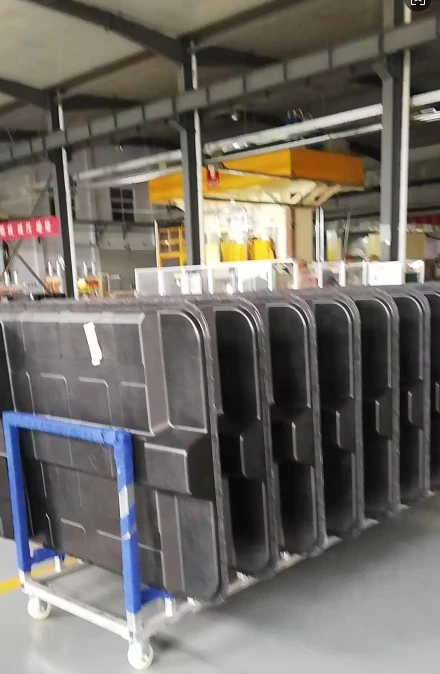
In recent years, in the aerospace manufacturing industry, composite material products have gradually shifted from non-load-bearing components and small parts to main load-bearing components and large integrated parts. There is an urgent demand for the manufacturing of large and high-performance composite materials. Therefore, technologies such as Vacuum Assisted Resin Transfer Molding (VA-RTM) and Light-Resin Transfer Molding (L-RTM) have been developed.
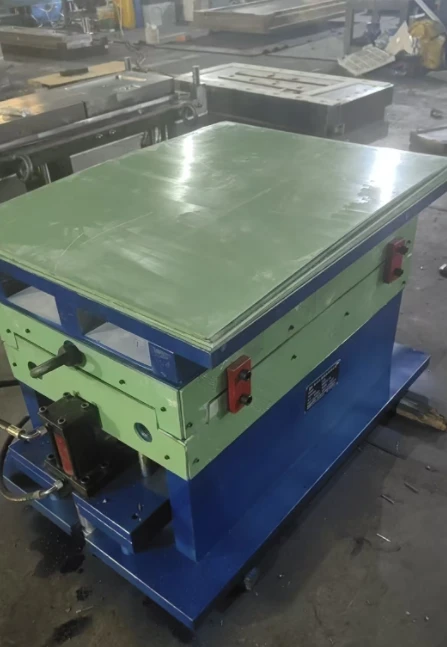
The mold is the biggest difference between these two processes. In RTM investment, due to the high injection pressure, a considerable portion of the cost is spent on the mold and the clamping device. This is not suitable for products with a small production volume in terms of price. The service life of the RTM mold can reach over 5,000 pieces, and the production efficiency is high, making it suitable for products with an annual production of over 2,000 pieces.
The greatest advantage of LRTM lies in its low mold production cost. The cost is approximately half of that of the conventional RTM mold, but the service life of the LRTM mold is lower than that of the RTM mold, making it suitable for products with an annual production of around 1,000 pieces. The products produced by the LRTM process can be larger than those of traditional RTM, usually ranging from a basketball cap-sized product to a 8-meter-long ship hull (about 25 square meters). However, this is not the final limit of the product size. The difficulty in making products smaller than a basketball cap is the laying of fibers, while products larger than 8 meters have difficulties in how to handle the upper mold.
The disadvantage of fiberglass mold is the short service life of the mold surface. To obtain excellent mold life and product repeatability and dimensional accuracy, the molds for both LRTM and RTM processes must have high quality and precise sections. In the composite material molding process, the cost of the final product surface requirement can reach 60% of the final product price. The composite material mold can reach 500 usage times for the surface quality of the automotive surface, and then the mold surface treatment is required. One method to increase the life is to use replaceable mold surfaces (ex-changeable mold skins), such as the patented ZIP RTM technology of JHm Technologies, which can be used for both RTM and LRTM processes. By using replaceable mold surfaces to replace the vulnerable mold surfaces, the mold life and quality can be extended, and the mold life can reach 8,000-10,000 times. When using several replaceable mold surfaces simultaneously, since the adhesive can be directly applied and heated on the replaceable mold surface outside the mold, the production efficiency is greatly improved.


