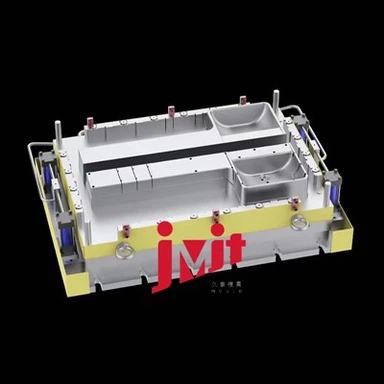
Ecological Construction Of Mold-Adaptive Carbon Fiber Prepregs For Aerospace New Materials
Mar 06, 2026
In the process of upgrading aerospace equipment towards deep space exploration and hypersonic flight, lightweight, high reliability, and adaptability to extreme environments have become core demands. Carbon fiber prepregs, as the core base material for aerospace structural components, their performance breakthroughs and application compatibility directly determine the technological ceiling of aerospace equipment. Currently, China's aerospace new materials field has witnessed a key breakthrough, with mold compatibility as the core orientation, promoting the transformation of carbon fiber prepregs from "single product supply" to "full-chain ecosystem construction", addressing long-standing issues such as incompatibility between prepregs and forming molds, insufficient process synergy, and low production efficiency, injecting core impetus into the domestication and high-end development of aerospace equipment.
I. Technological Breakthroughs in Aerospace Carbon Fiber Prepregs: Mold Compatibility as the Core Focus
Carbon fiber prepregs are the core intermediate carriers of carbon fiber reinforced composites. Through the precise combination of carbon fiber reinforcement and resin matrix, they deeply integrate the high specific strength and lightweight characteristics of carbon fibers with the formability and functionality of resins, serving as key materials for main load-bearing structural components of aerospace equipment (such as fuselage skins, wing main beams, rocket engine brackets, etc.). Previously, although China had achieved large-scale production of carbon fiber prepregs for aerospace applications, there were significant shortcomings in mold compatibility. The dimensions, curvatures, and forming processes of molds for different types of aerospace equipment vary greatly. Traditional prepregs were mostly produced in a standardized manner, leading to issues such as uneven fiber impregnation, insufficient adhesion to molds, and excessive dimensional deviations after curing. These problems not only affected the precision and reliability of aerospace structural components but also led to low production efficiency and high scrap rates.
In recent years, with the increasing demand for precision and integration in aerospace equipment, the breakthroughs in carbon fiber prepreg technology have focused on the core issue of "mold compatibility", achieving three key upgrades and breaking through technical bottlenecks:
The first is the breakthrough in customized resin systems. For the molding temperature and pressure parameters of different molds, we have developed compatible resin formulations, such as polyimide resin prepregs suitable for high-temperature molds and high-toughness epoxy resin prepregs suitable for complex curved surface molds. By introducing technologies such as nano-SiO₂ modification, the glass transition temperature of the cured prepregs has been increased to over 180°C, the flexural modulus has reached 140 GPa, and the strength retention rate within a wide temperature range exceeds 90%, perfectly matching the extreme molding requirements of aerospace molds.
Second, the intelligent upgrade of the preparation process, replacing the traditional constant-temperature process with a gradient temperature control process, through the design of precise temperature control in stages, the deviation of the resin crystallinity of the prepreg is controlled within ±2%, the fiber bundle impregnation rate is increased from 85% to 98%, and the interfacial shear strength is increased to over 55 MPa, solving problems such as poor adhesion of the prepreg and concentration of internal stress during complex mold forming.
Third, the ability to customize the size and shape has been enhanced. Pre-impregnated materials of different widths, thicknesses, and fiber layup directions can be customized based on the specific dimensions and surface complexity of the mold, meeting the full range of requirements from micro-precision component molds to large rocket body structure molds. For example, for the mold of the rocket engine short chamber, PEEK-based pre-impregnated materials are customized, with the temperature range expanded to -270°C to 1800°C, meeting the extreme temperature range forming requirements.
At the same time, China has continuously made breakthroughs in the domestic substitution of high-end pre-impregnated materials. The aerospace-grade pre-impregnated materials of enterprises such as Zhongfu Shenyi and Guangwei Composites have passed relevant verifications and are gradually applied to domestic passenger aircraft and aerospace equipment, breaking the international monopoly and laying a product foundation for the construction of a mold-adaptive ecosystem. From the perspective of industrial data, the self-sufficiency rate of T800 and above grade pre-impregnated materials in China has increased to 52%, and the mold-adaptive qualification rate of core pre-impregnated materials in the aerospace field has increased from 65% to 92%, significantly reducing the production cost and cycle of aerospace structural components.

II. Core Architecture of the Mold-Adaptive Carbon Fiber Pre-Impregnated Material Ecosystem: Full-Chain Synergy and Linkage
Building a mold-adaptive carbon fiber pre-impregnated material ecosystem is not just an upgrade of a single product, but a full-chain collaborative system centered on "mold requirements", integrating material research and development, mold manufacturing, production processing, testing and certification, and recycling. It achieves a closed loop of "demand - research and development - production - application - iteration", with its core architecture covering four key links, forming a mutually supportive and coordinated development ecosystem.
(1) Demand Side: Precise Matching of Mold and Aerospace Equipment Requirements
The starting point of ecosystem construction is the actual demand of aerospace equipment. By establishing a collaborative mechanism among aerospace equipment design, mold manufacturing, and pre-impregnated material research and development, the size parameters, forming processes, and performance requirements of the mold are precisely matched in advance, and the matching standards for pre-impregnated materials are clarified. For example, for the mold of the satellite radar cover, cyanate ester resin pre-impregnated materials are customized, and the fiber layup method is optimized to ensure the precise matching of the pre-impregnated material with the mold forming process. For the mold of the high-speed flight vehicle skin, polyimide resin pre-impregnated materials are developed to match the high-temperature curing parameters of the mold, achieving the synchronous matching of the performance of the pre-impregnated material and the forming requirements of the mold. At the same time, relying on the iterative demands of aerospace equipment, the collaborative upgrade of molds and pre-impregnated materials is promoted, forming a linkage mechanism of "equipment demand → mold optimization → pre-impregnated material iteration".
(2) Research and Development Side: Collaborative Innovation of Material and Mold Adaptation Technology
The research and development side focuses on the core of "material-mold" adaptation, establishing an integrated research and development platform, integrating technical resources in carbon fiber raw materials, resin systems, and mold design, and breaking through key core technologies.
On the one hand, continuously optimize the prepreg production process, promote the intelligence of the impregnation process, adopt laser online monitoring technology, and improve the control accuracy of fiber volume fraction to ±0.5%. Develop high-precision equipment such as electromagnetic induction heating rollers, optimize the temperature field distribution, reduce performance fluctuations caused by human intervention, and ensure the consistency of the prepreg and the mold.
On the other hand, by collaborating with mold manufacturing enterprises, compatibility tests between molds and prepregs are carried out. Based on parameters such as the complexity of the mold's surface and the forming pressure, adjustments are made to the fiber layup density and resin content of the prepregs to address issues such as poor adhesion and curing deformation that occur during the adaptation process. Additionally, the R&D end focuses on environmental protection and energy consumption requirements, developing bio-based resin prepregs that reduce VOC emissions by 90% and carbon footprint by 73.2%, aligning with the green development trend of the industry.
(3) Production end: Flexible production to meet diverse mold requirements
Breaking away from the traditional standardized production model, a flexible production system is established to achieve precise matching between prepreg production and mold requirements. By introducing automated production lines and intelligent control systems, the width, thickness, and fiber layup direction of the prepregs can be flexibly adjusted. Different production parameters for prepregs corresponding to various molds can be quickly switched, meeting the demands of diverse molds ranging from small precision components to large rocket body structures. For instance, for the precision molds of small satellite components, short-cut prepreg molding technology is adopted, reorienting 5-50mm short-cut carbon fibers, reducing the molding time from 40 minutes to 10 minutes, with a dimensional deviation of ≤±0.1mm. For large rocket body molds, automatic fiber placement (AFP) technology is used to achieve one-piece layup of 12m-long segments, reducing weld seams by 80% and weight by 30%. At the same time, the production process is optimized to achieve seamless integration between prepreg production and mold forming, shortening the production cycle and enhancing production efficiency. Some enterprises have already achieved an annual production capacity of over 2,000 tons per line, approaching international leading levels.
(4) Support end: Closed-loop support of inspection, certification, and recycling
A comprehensive inspection and certification system is established, with specialized inspection standards formulated for the performance indicators and compatibility accuracy of mold-adapted prepregs, covering key indicators such as fiber content, resin content, tensile strength, interfacial shear strength, and dimensional deviation, ensuring the reliability of the compatibility between prepregs and molds and meeting the strict requirements of aerospace equipment. For example, through infrared temperature feedback systems and near-infrared spectroscopy detection, the preparation process and compatibility effect of prepregs are monitored in real time to ensure stable product quality. At the same time, a recycling system for prepregs is established. For thermoplastic prepregs, mechanical crushing and regeneration processes are improved, with a retention rate of over 85% for the performance of recycled materials, reducing resource waste and production costs, and promoting sustainable ecological development.
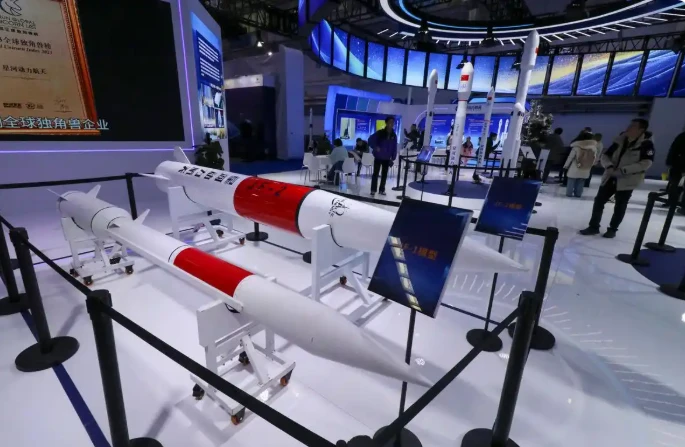
III. Value and Future Development Trends of the Ecosystem
The construction of the mold-adapted carbon fiber prepreg ecosystem not only resolves the core pain points in the application of prepregs in China's aerospace industry but also holds significant strategic value for the development of the aerospace and new materials industries. From the perspective of the aerospace industry, the improvement of the ecosystem has significantly enhanced the precision, reliability, and lightweight level of aerospace structural components, reduced production cycles and costs, and provided core material support for the development of high-end aerospace equipment such as deep space exploration and hypersonic flight, further promoting the domestication of China's aerospace equipment. From the perspective of the new materials industry, driven by aerospace demands, the iterative upgrading of carbon fiber prepreg technology is promoted, driving the coordinated development of related industries such as carbon fiber raw materials, resin systems, and mold manufacturing, and improving the industrial chain of China's new materials industry, enhancing the core competitiveness of the industry.
In the future, with the continuous upgrading of aerospace equipment and the continuous development of the new materials industry, the mold-adapted carbon fiber prepreg ecosystem will develop towards greater precision, intelligence, and greenness.
First, the fitting accuracy has been continuously improved. Relying on technologies such as AI and big data, intelligent matching between the preparation of pre-impregnated materials and mold forming has been achieved, further reducing dimensional deviations and enhancing the precision of aerospace structural components.
Second, the deepening of technological integration will promote the in-depth integration of carbon fiber pre-impregnated materials with 3D printing molds and intelligent forming equipment, achieving an integrated advancement from "mold design - pre-impregnated material production - structural component forming".
Third, expand application scenarios. Extend the mold adaptation technology from the aerospace field to high-end manufacturing areas such as automobiles, wind power, and unmanned aerial vehicles, promote the large-scale development of the carbon fiber prepreg industry, and at the same time, explore the demand potential in emerging fields such as hydrogen energy storage and 3C electronics to broaden the ecological boundaries.
Fourth, breakthroughs in core technologies, focusing on the domestic substitution of T800 and above grade prepregs, enhancing the capacity for core patent layout, breaking through international technological barriers, and promoting China to become a global leader in the carbon fiber prepreg industry.
The breakthroughs in aerospace new materials are not only a leap in technology but also a reconstruction of the industrial ecosystem. The carbon fiber prepreg ecosystem centered on mold adaptation will achieve the collaborative empowerment of materials, molds, and equipment, promoting the high-quality development of the aerospace industry. At the same time, it will provide a referenceable ecological model for the upgrading of China's new materials industry and help China occupy a more favorable position in the global high-end manufacturing field.