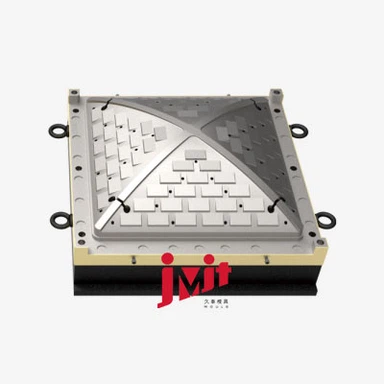
Analysis Of Opportunities For SMC Molds And Composite Material Molds
Nov 21, 2025
Opportunities in SMC Molds and Composite Material Molds
Driven by the transformation and upgrading of the manufacturing industry and the "dual carbon" goals, lightweighting, high performance, and greenness have become the core directions of industrial development. As the "mother of industry", molds directly influence the development of downstream industries through their technological iterations and category innovations. Among them, SMC molds and composite material molds, with their core advantages of adapting to the processing of high-performance materials and meeting complex working conditions, are experiencing unprecedented development opportunities. This article will start from the industry background, combine technical characteristics and market demands, deeply explore the opportunities of these two types of molds, and present the industry growth trend through data charts.
I. Industry Background: Dual-wheel Drive for Mold Industry Upgrading
Currently, the global manufacturing industry is undergoing a deep transformation from "scale expansion" to "quality improvement", and China has included high-end equipment manufacturing and new materials industries in the key cultivation scope of strategic emerging industries. From the policy perspective, the "14th Five-Year Plan for the Development of Raw Materials Industry" clearly states that "promote the industrialization application of advanced materials and the independent development of key equipment", and molds, as the core equipment for composite material forming, have received direct policy empowerment and guidance support for their development.
From the market demand perspective, the explosive growth in fields such as new energy vehicles, aerospace, wind power, and high-end building materials has increasingly strict requirements for the performance of core components. Traditional metal molds, which are adapted to metal components, have difficulty meeting the new demands in key indicators such as lightweighting, corrosion resistance, and fatigue resistance, while SMC molds and composite material molds precisely fill this gap and become the core hub connecting new material research and the mass production of end products. The following is the change trend of the market size of composite material molds and SMC molds in China from 2020 to 2024, visually presenting the growth vitality of the industry:

II. SMC Molds: Focusing on High-End Applications, Unlocking New Opportunities in Targeted Markets
SMC (Sheet Molding Compound) is a sheet-like composite material made through a special process using resins, glass fibers, fillers, etc. It boasts outstanding advantages such as high strength, lightweight, high molding efficiency, and great design flexibility. Its industrial-scale production relies on dedicated SMC molds. With the continuous expansion and deepening of downstream application scenarios, SMC molds have identified clear growth opportunities in the following three core areas:
1.New energy vehicles: The demand for lightweighting has led to an increase in mold production.
The range of new energy vehicles is strongly positively correlated with the lightweighting of the vehicle body. SMC components, due to their advantages of both lightweighting and structural strength, are gradually replacing traditional metal components in key parts such as body panels, battery casings, and chassis components. Industry data shows that using SMC components in a new energy vehicle can achieve a 15%-25% reduction in the vehicle's weight, directly boosting the range by 8%-12%. This core demand is driving the SMC molds to accelerate their upgrade towards "large-scale, high precision, and integrated" directions - for instance, the integrated SMC molds for the body need to achieve synchronous forming of multiple curved surfaces, with the dimensional tolerance strictly controlled within ±0.05mm. Such high-end molds can reach a market unit price of several million yuan, with a premium of over 300% compared to traditional small SMC molds. Currently, leading automakers such as BYD and Tesla have adopted SMC components in batches, directly driving the annual average growth rate of the SMC automotive mold market to over 25%, making it the largest growth pole in the SMC mold industry.
2. High-end Building Materials: Green Transformation Drives Mold Upgrade
Under the impetus of the "carbon neutrality" goal, the drawbacks of traditional building materials, such as high energy consumption and high pollution, have become increasingly prominent. SMC building materials (such as cable troughs, anti-theft manhole covers, decorative panels, etc.) have achieved rapid popularity due to their advantages of environmental friendliness, durability, and convenient installation. Compared with traditional building material molds, SMC building material molds need to be adapted to the requirements of large-scale mass production and possess core characteristics such as "long service life, easy demolding, and low loss". Taking the SMC manhole cover mold commonly used in municipal engineering as an example, its single-use service life can reach over 100,000 times, which is more than 5 times that of traditional cast iron molds, and the demolding efficiency is improved by 40%, significantly reducing the single-piece production cost. With the continuous advancement of new urbanization and the implementation of old residential area renovation projects, the demand for SMC building materials has grown significantly. It is expected that the market size of SMC building material molds will exceed 8 billion yuan in 2025.
3. Electrical Equipment: Expansion of Insulation Application Scenarios
SMC materials possess excellent electrical insulation properties and resistance to aging, and are widely used in components of electrical equipment such as high-voltage switch housings, transformer covers, and insulators. With the accelerated construction of China's ultra-high voltage power grid, the requirements for the high-voltage resistance and weather resistance of SMC components have continuously increased, thereby forcing SMC molds to upgrade towards a "precisionized and customized" direction. For instance, the special SMC molds for ultra-high voltage insulators need to precisely control the uniformity of the component wall thickness, with the error strictly controlled within ±0.1mm. Such customized molds can achieve a gross profit margin of over 40%, much higher than that of general-purpose molds.

III. Composite Material Molds: Diversified Technology Paths, Seizing the High-End Equipment Dominance
Composite material molds refer to the general term for equipment used for the molding of various reinforcing materials such as carbon fiber, glass fiber, and basalt fiber. The mainstream technical routes include hand lay-up, spraying, compression molding, winding, pultrusion, and other types. With the continuous release of demands from high-end fields such as aerospace, wind power, and marine engineering, composite material molds present an opportunity for "technological diversification breakthroughs, performance upgrading to the high-end level, and customized application implementation in specific scenarios":
1.Aerospace: High precision requirements drive the development of high-end molds
The aerospace industry has extremely strict requirements for the strength, precision and reliability of composite material components. For example, carbon fiber composite material components in aircraft fuselages need to be integrated and formed through high-precision molds. The dimensional accuracy of the molds directly determines the assembly accuracy and flight safety of the components. Currently, the carbon fiber composite material usage in China's commercial large aircraft C919 has reached 12%, and it is expected to increase to over 25% in the future. Corresponding composite material molds need to meet the three key requirements of "high temperature, high pressure, and high precision" - for instance, the working temperature of the autoclave mold needs to be above 300℃, and the pressure control accuracy needs to be ±0.02MPa. Such high-end aerospace composite material molds have long relied on imports, with a domestic production rate of less than 30%. With the acceleration of China's aerospace industry's self-reliance process, there is a huge potential for domestic substitution. It is expected that the related market size will exceed 5 billion yuan by 2025.
2. Wind Power Industry: Large-scale Trend Drives Mold Iteration
Wind turbine blades are the core application scenario for composite material molds. With the rapid growth of wind power installation capacity, the size of blades is showing a continuous large-scale trend - the current mainstream onshore wind turbine blades have a length of 70-80 meters, and offshore wind turbine blades have even exceeded 120 meters. The large-scale development of blades directly drives molds to evolve in the direction of "super-large, modular, and high precision". For example, the mold for 120-meter offshore wind turbine blades, with a single set length exceeding 130 meters, requires a modular design to solve the problems of transportation and installation, and the single set manufacturing cost can reach tens of millions of yuan. According to data from the China Renewable Energy Society, in 2024, China's new installed wind power capacity will reach 120 GW, driving the market size of wind power composite material molds to grow by 32% year-on-year. The accelerated layout of offshore wind power in the future will further expand this market opportunity.
3. Marine Engineering: Specialized Mold Innovation Driven by Corrosion Resistance Requirements
Marine engineering equipment (such as offshore drilling platforms, underwater oil pipelines, special ship components, etc.) is constantly exposed to high-salt spray and high-humidity heat corrosion environments. Traditional metal components are prone to rust and failure, while composite material components have achieved a continuous increase in application proportion due to their excellent corrosion resistance. The composite material molds tailored for marine engineering must possess core characteristics such as "resistance to heat and humidity aging, salt spray corrosion resistance, and long service life". For example, the composite material molds for underwater pipelines need to adopt special coating technology to enhance surface corrosion resistance, with a single-use life of over 80,000 times. With the deepening implementation of China's "Marine Powerhouse" strategy, the marine engineering equipment market is expanding, and composite material molds will enter a period of rapid growth. It is expected that the compound growth rate will exceed 28% in the next five years.

IV. Collaborative Development: Opportunities for the Integration of SMC Mold and Composite Material Mold
SMC molds are essentially an important subcategory of composite material molds. There are significant synergistic effects between the two in terms of technological research and development and market application. On one hand, the mature "large-scale molding" technology of SMC molds can provide reference for other composite material molds such as carbon fiber and glass fiber, effectively improving the production efficiency of composite material components. On the other hand, the technological breakthroughs in the "high-end and precision" fields of composite material molds can be returned to SMC molds, promoting their adaptation to more complex working conditions. For example, in the production scenario of battery shells for new energy vehicles, the industry has successfully integrated the large-scale advantages of SMC molds with the high-strength compatibility of carbon fiber composite material molds, developing a "SMC-carbon fiber hybrid molding mold", which not only meets the core requirements of lightweighting but also reduces production costs. Such integrated innovative products have been piloted in high-end models of automakers such as NIO and XIAOPING.

V. Conclusion: Grasp Core Strengths and Seize the Opportunity Window Period
The development opportunities for SMC molds and composite material molds are essentially the inevitable result of the rise of new materials industries and the upgrading of downstream high-end manufacturing demands. For industry enterprises, they need to focus on two core directions to seize the opportunities: First, technological innovation breakthroughs, increasing investment in R&D of high-end molds, focusing on breaking through core technologies such as high-precision size control, super-large structure design, and extreme environment tolerance, and accelerating the realization of domestic substitution in the high-end market; Second, in-depth exploration of scenarios, providing "molds + processes" integrated customized solutions for the individualized demands of key fields such as new energy vehicles, aerospace, and wind power. In the future, with the deepening of technological iterations and the expansion of application scenarios, SMC molds and composite material molds will become the core supporting forces of China's high-end equipment manufacturing industry, achieving dual improvements in market scale and technical added value.