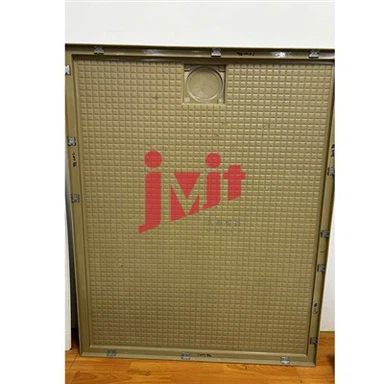
A Technical Overview Of The Co-molding Of SMC And Fiberglass Woven Fabric On The Body Of A Truck
Feb 26, 2026
The co-molding technology of SMC (Sheet Molding Compound) and fiberglass woven fabric is an innovative and advanced composite material forming process. Applied in the manufacturing of truck bodies, this technology, with its unique technical advantages, shows broad application prospects and huge market potential. The following is a detailed analysis of its technical core and application value.
I. Synergy of SMC and Fiberglass Woven Fabric Co-molding
SMC composite materials are a type of thermosetting molding composite materials composed of resin as the matrix, glass fiber as the reinforcing material, and fillers and other additives. They possess core advantages such as high strength, excellent weather resistance and corrosion resistance, and good molding processability. Fiberglass woven fabric, as a reinforcing substrate, is formed through a dedicated weaving process, which can significantly enhance the overall strength and toughness of the composite material.
The application of SMC and fiberglass woven fabric in co-molding technology, which is a process technology for forming two or more materials into an integral component in a single mold, in the manufacturing of truck bodies can efficiently achieve multiple goals such as lightweighting, high rigidity, high strength, and cost optimization of the body structure, creating high-performance body components.

II. Application of SMC and Fiberglass Woven Fabric Co-molding in Truck Bodies
(1) Significant Lightweighting and Reduced Operating Costs
The co-molding technology of SMC and fiberglass woven fabric is a core trend in the truck industry. Co-molded bodies are 30% to 50% lighter than steel bodies (reducing from 2-3 tons to 1-1.5 tons for medium-sized trucks), which can reduce fuel consumption (a reduction of 0.5-1 liter per 100 kilometers for every 1 ton reduction in self-weight), saving fuel costs by 3,500 to 7,000 yuan per year; it also increases the carrying capacity, reduces the risk of overloading, and is suitable for new energy trucks, alleviating range anxiety and facilitating their promotion.
(2) Excellent Mechanical Properties and Environmental Performance
Both SMC and fiberglass woven fabric are recyclable materials, in line with current environmental trends. The co-molding technology reduces waste generation and helps to minimize the negative impact on the environment.
(3) High Efficiency in Forming and Facilitates Large-scale Production
The forming process using SMC compression molds can achieve one-piece forming of the body, eliminating the need for complex welding, and the forming efficiency is more than 50% higher than that of steel bodies; it has a high degree of automation, good consistency in batch production, and a smooth surface after forming, eliminating the need for subsequent grinding and painting, reducing production energy consumption and costs, and the technology is mature and can be directly applied.
(4) Corrosion Resistance and Anti-aging, Prolonging Service Life
The co-molded materials can resist acid, alkali, salt spray, etc., with a service life of 8 to 10 years, which is 2 to 3 times that of steel bodies. They have excellent UV resistance and are suitable for special freight scenarios such as chemicals and seafood, reducing the risk of cargo leakage, and only require regular cleaning, with low maintenance costs.
(5) Flexible Design, Adapting to Diverse Demands
The co-molding technology of SMC and fiberglass woven fabric provides high design flexibility. The composition of materials and weaving methods can be adjusted according to actual needs to meet the requirements of different body structures and performances. It can achieve integrated functions such as insulation, flame retardancy, and anti-static, suitable for scenarios such as refrigerated transportation, dangerous goods transportation, and urban distribution; it can also achieve one-piece forming of the body and accessory parts, improving sealing and aesthetics.

III. Conclusion
To sum up, the co-molding technology of SMC and fiberglass woven fabric has great application potential in the manufacturing of truck bodies. It not only enables lightweight design, enhances strength and durability, but also optimizes cost-effectiveness, provides design flexibility and environmental performance. With continuous technological progress and innovation, this technology is expected to be more widely applied and promoted in the manufacturing of truck bodies.